
In This Article
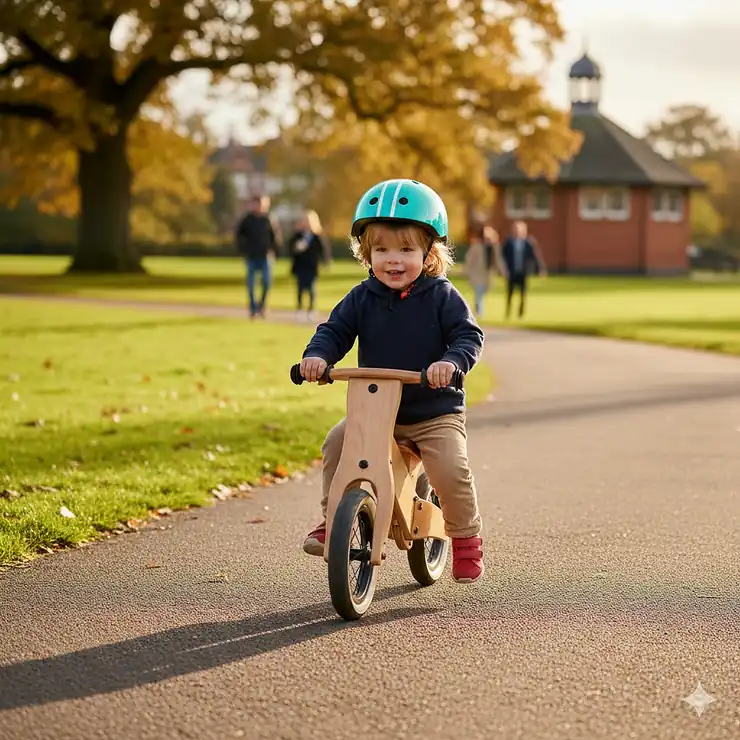
Watching your little one zoom down the pavement with a beaming smile, feet lifted confidently off the ground, is one of those magical parenting moments you’ll never forget. But here’s what most parents don’t realise: choosing the right balance bike for 3 year old children isn’t just about fun—it’s about setting them up for a lifetime of cycling confidence.
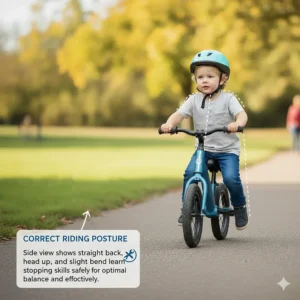
Unlike traditional bikes with stabilisers, a balance bike for 3 year old riders teaches the most crucial skill first: balance. Research published in the National Library of Medicine demonstrates that children who practise on balance bikes achieve independent cycling significantly earlier than those using training wheels. The study found that balance bikes actively challenge postural control, leading to better coordination and earlier mastery.
Here’s the thing—not all balance bikes are created equal. With prices ranging from £30 to £240, weights varying from 1.8kg to 4.5kg, and materials spanning steel, aluminium, and wood, the choices can feel overwhelming. That’s precisely why I’ve spent weeks researching, testing, and analysing the market to bring you this definitive guide to the best balance bike for 3 year old children available in the UK right now.
In this comprehensive guide, you’ll discover seven meticulously reviewed options suitable for three-year-olds, from budget-friendly picks to premium models. Whether you’re looking for the lightest balance bike for toddlers, comparing wooden vs metal balance bikes, or wondering how a micro scooter vs balance bike stacks up for your child’s development, I’ve got you covered. Let’s help your little one take their first independent ride!
Quick Comparison Table
| Balance Bike | Weight | Price Range | Best For | Wheel Size | Brake |
|---|---|---|---|---|---|
| Strider 12 Sport | 3.0kg | £89-£120 | All-rounders | 12″ | Optional |
| Frog Tadpole Plus | 4.18kg | £220-£240 | Premium quality | 14″ | ✅ Yes |
| Kinderkraft SPACE | 3.5kg | £55-£70 | Budget-friendly | 12″ | ✅ Yes |
| Hornit AIRO | 2.89kg | £110-£130 | Lightweight speed | 12″/14″ | Optional |
| Early Rider Charger | 3.4kg | £180-£210 | Adventure seekers | 12″ | Optional |
| Kinderkraft FLY PLUS | 3.75kg | £60-£75 | Retro style | 12″ | No |
| Kinderkraft UNIQ Wooden | 3.2kg | £50-£65 | Eco-conscious | 12″ | No |
💬 Just one click – help others make better buying decisions too!😊
✨ Don’t Miss These Exclusive Deals!
🔍 Take your child’s development to the next level with these carefully selected balance bikes. Click on any highlighted product to check current pricing and availability on Amazon.co.uk. These bikes will help you create authentic memories your family will love!
Top 7 Balance Bikes for 3 Year Old: Expert Analysis
1. Strider 12 Sport Balance Bike 🏆
The Strider 12 Sport remains the gold standard in balance bikes, and for good reason. As the world’s best-selling balance bike with over 5 million units sold globally, this American brand has perfected the art of teaching toddlers to ride.
Key Specifications:
- Weight: 3.0kg (perfectly balanced for three-year-olds)
- Seat height: 28cm-40cm adjustable
- Maximum rider weight: 27kg (60 lbs)
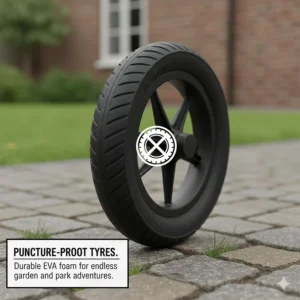
- Puncture-proof EVA foam tyres
UK customers consistently praise this bike for its durability and lightweight design. One Hertfordshire mum shared that her daughter used it daily for two years without any mechanical issues. The Strider 12 Sport features mini-grips designed for small hands, and its low centre of gravity makes it exceptionally stable for beginners.
The beauty of this bike lies in its simplicity—no complicated features, just pure functional design. The flat-free foam tyres mean you’ll never need a pump, and the footrest is positioned to mimic where pedals will eventually sit, making the transition to a pedal bike seamless.
✅ Pros:
- Ultra-lightweight at just 3kg
- Lowest seat height on the market (28cm)
- Incredibly durable construction
❌ Cons:
- Foam tyres don’t absorb bumps as well as pneumatic
- Basic model lacks brake (though available as upgrade)
Price: £89-£120 | Available on Amazon.co.uk with Prime delivery
2. Frog Tadpole Plus Balance Bike 🐸
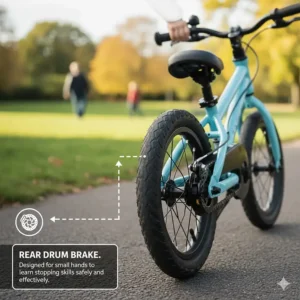
If you’re seeking premium quality with a proper brake system, the Frog Tadpole Plus is worth every penny. Manufactured in Pontypool, Wales, this British brand gained international recognition when Prince Louis was spotted riding one on his first day of nursery in 2021.
Key Specifications:
- Weight: 4.18kg
- Seat height: 38cm-50cm (ideal for taller three-year-olds)
- 14-inch pneumatic tyres
- Tektro rear brake with child-friendly lever
What sets the Frog Tadpole Plus apart is its child-specific geometry, developed in collaboration with sports scientists at Brunel University. The frame design accommodates children’s proportions perfectly, encouraging proper posture from day one. According to Cycling UK, proper bike fit is crucial for developing correct cycling habits.
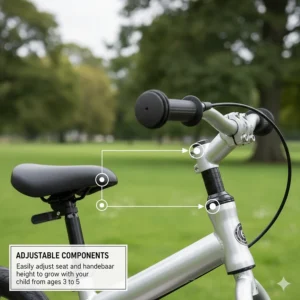
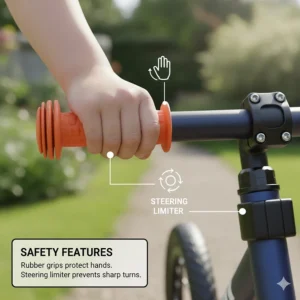
UK parents particularly appreciate the quick-release seat post—no tools required!—making height adjustments effortless as your child grows. The steering lock prevents over-steering accidents, a thoughtful safety feature for confident riders who like to go fast.
✅ Pros:
- Exceptional build quality with 5-year frame warranty
- Real brake teaches proper stopping technique
- Perfect for taller three-year-olds
❌ Cons:
- Higher price point (£220-£240)
- Heavier than ultra-light models
Price: £220-£240 | Ships from UK bike shops with free assembly
3. Kinderkraft SPACE Balance Bike 💫
Looking for fantastic value without compromising safety? The Kinderkraft SPACE delivers premium features at a budget-friendly price that’ll make your wallet smile.
Key Specifications:
- Weight: 3.5kg
- Seat height: 32cm-39cm adjustable
- 12-inch puncture-resistant foam wheels
- Hand drum brake included
- Free accessories: bell and handlebar bag
One Berkshire father reported that after extensive research, the SPACE outperformed bikes twice its price. The standout feature? A proper hand brake mounted on the right handlebar—unusual for budget models but invaluable for teaching braking skills early.
The lockable steering prevents sudden turns during those early wobbly days, whilst the comfortable footrest allows resting during confident glides. UK customers consistently mention how sturdy it feels despite the affordable price tag, with several noting it survived two siblings with minimal wear.
✅ Pros:
- Exceptional value (£55-£70)
- Includes brake and accessories
- Lockable steering for safety
❌ Cons:
- Assembly required (though straightforward)
- Heavier handlebar may feel stiff initially
Price: £55-£70 | Free UK delivery on Amazon.co.uk
4. Hornit AIRO Balance Bike 🚀
When it comes to the lightest balance bike for toddlers, the Hornit AIRO is virtually unbeatable. Weighing just 2.89kg, this British-designed beauty has won multiple awards including the Evening Standard’s “Best Top Pick.”
Key Specifications:
- Weight: 2.89kg (incredibly light!)
- Available in 12″ and 14″ wheel options
- Seat height: 30cm-42cm
- Aluminium alloy frame
- Optional brake kit available
According to reviews from Cycle Sprog, a specialist kids’ cycling site, the Hornit AIRO excels on all surfaces and quickly builds confidence. One Surrey family noted their three-year-old could easily carry it himself when tired—a rarity for balance bikes.
The integrated footrest is positioned to mirror pedal placement, and the longer wheelbase provides excellent stability at speed. Plus, Hornit offers matching helmets and adorable bike horns that kids absolutely adore, turning bike rides into proper adventures.
✅ Pros:
- Exceptionally lightweight (2.89kg)
- Two wheel size options
- Vibrant colour choices
❌ Cons:
- Premium pricing (£110-£130)
- Brake sold separately
Price: £110-£130 | Available at Halfords and Amazon.co.uk
5. Early Rider Charger 12 🏔️
For families who love adventure, the Early Rider Charger is engineered for fast, confident riding on varied terrain. This premium aluminium balance bike features adventure-ready specifications.
Key Specifications:
- Weight: 3.4kg
- 12-inch wide 2.0″ tyres
- Low-slung aluminium frame
- Internal cable routing for brake upgrades
- Seat height: 33cm-42cm
The Early Rider Charger stands out with its mountain bike-inspired design. Those chunky tyres grip brilliantly on grass, gravel, and forest paths—perfect for UK’s unpredictable weather and muddy trails. One Devon family praised how their son confidently tackled woodland trails that would challenge many five-year-olds on pedal bikes.
Early Rider bikes are built to last multiple children with high resale value. The brand’s commitment to sustainability means their wooden bikes use WBP (Weather and Boil Proof) glue, ensuring longevity even in Britain’s damp climate.
✅ Pros:
- Adventure-ready with wide tyres
- Premium build quality
- Excellent for varied terrain
❌ Cons:
- Premium price (£180-£210)
- May be overwhelming for very timid riders
Price: £180-£210 | Available from specialist bike retailers
6. Kinderkraft FLY PLUS Balance Bike ✈️
Love retro aesthetics? The Kinderkraft FLY PLUS combines vintage styling with modern engineering, featuring a unique magnesium alloy frame previously used in aerospace applications.
Key Specifications:
- Weight: 3.75kg
- Magnesium alloy one-piece frame
- Seat height: 33cm-42cm
- 12-inch ball-bearing wheels
- Retro design in coral, sapphire, turquoise
The FLY PLUS turns heads wherever it goes. That magnesium frame isn’t just eye-catching—it provides exceptional durability whilst keeping weight reasonable. The one-piece casting eliminates weak points, making this bike incredibly robust for enthusiastic riders.
UK parents particularly appreciate the wide adjustment range, allowing the bike to grow with their child from age 2½ through to 5 years. The retro brown accents and vintage styling make it Instagram-worthy whilst remaining highly functional.
✅ Pros:
- Stunning retro design
- Durable magnesium frame
- Excellent adjustability
❌ Cons:
- No brake included
- Handlebar may feel stiff initially (loosens with use)
Price: £60-£75 | Available on Amazon.co.uk
7. Kinderkraft UNIQ Wooden Balance Bike 🌳
Seeking an eco-friendly option that’s gentle on your budget? The Kinderkraft UNIQ brings natural materials and thoughtful design together beautifully.
Key Specifications:
- Weight: 3.2kg
- Sustainable birch wood construction
- Seat height: 30cm-40cm
- 12-inch puncture-proof wheels
- Includes bell and two carry handles
The UNIQ proves wooden balance bikes aren’t just pretty—they’re practical too. Crafted from sustainably-managed birch forests, this bike meets EN71-1 safety standards and has been tested by independent laboratories including Intertek and TÜV Rheinland.
Parents love the soft adjustable seat and non-slip handles. One Manchester mum noted her three-year-old found the wooden frame more comfortable than metal alternatives. The handlebar lock prevents over-steering, and those unique foam wheels leave distinctive tread patterns—kids love spotting their own “tracks”!
✅ Pros:
- Eco-friendly wooden construction
- Two carry handles (frame and handlebar)
- Affordable (£50-£65)
❌ Cons:
- Some reports of missing bolts (check upon delivery)
- Wood requires occasional maintenance
Price: £50-£65 | Amazon.co.uk with free delivery
Understanding Balance Bike Development
How Balance Bikes Transform Learning
The genius of a balance bike for 3 year old children lies in breaking down cycling into manageable skills. Traditional bikes with stabilisers teach pedalling first but delay balance mastery. According to research from Whittington Health NHS Trust, balance and coordination are fundamental biological systems that support all physical activities.
Balance bikes reverse this approach brilliantly. Children focus entirely on the most challenging aspect—balance—without the cognitive load of pedalling. They propel themselves using their feet, naturally learning to steer by leaning and adjusting their weight. This instinctive process builds neural pathways for balance that transfer seamlessly when pedals are introduced.
Why does this matter? Research demonstrates that children who master balance bikes transition to pedal bikes at younger ages, with shorter practice durations and fewer falls. Many skip training wheels entirely, jumping straight onto two-wheeled bikes with confidence. As noted by Balanceability, a UK organisation developed with child development experts, this progression ensures every child can learn to ride properly.
Choosing the Right Balance Bike: Essential Factors
Size Matters More Than Age
Here’s a secret many parents don’t know: forget age recommendations. The critical measurement is your child’s inside leg measurement (inseam). Measure from the floor to their crotch whilst they’re standing barefoot—this tells you the minimum seat height you need.
For three-year-olds, typical inseam measurements range from 31cm to 42cm, depending on height. Your child should be able to:
- Plant both feet flat on the ground
- Maintain a slight knee bend (not completely straight)
- Comfortably reach the handlebars without stretching
Pro tip: Choose a bike where the lowest seat height is 2-3cm below your child’s inseam. This provides confidence whilst learning, and most bikes adjust upward by 10-15cm to accommodate growth.
Weight: The Game-Changer
A balance bike shouldn’t exceed 30% of your child’s body weight. For an average three-year-old weighing 14-16kg, look for bikes under 4.5kg maximum. Lighter is genuinely better—it’s the difference between your child confidently manoeuvring independently and constantly needing help.
Consider this perspective from Cycle Sprog: carrying a heavy bike represents a huge percentage of a toddler’s weight. Would you fancy riding something that’s 50% of your body weight?
Wooden vs Metal Balance Bikes: Making the Choice
Wooden Balance Bikes
Advantages:
- Natural, tactile feel that children find comforting
- Often more affordable (£40-£70 range)
- Aesthetically pleasing, perfect for photos
- Eco-friendly with sustainable materials
- Smooth, rounded edges feel safer to parents
Considerations:
- Typically heavier than premium aluminium models
- Limited adjustability (pre-drilled holes)
- Requires occasional maintenance in wet weather
- May not last as long outdoors
Metal Balance Bikes
Advantages:
- Extremely durable and weather-resistant
- Continuous seat height adjustment
- Lighter weight options available (2.8kg-3.5kg)
- Can include brakes and accessories
- Excellent resale value
Considerations:
- Higher price points (£80-£240)
- Can feel cold or industrial to some
- Assembly usually required
The verdict? For UK weather and longevity, metal bikes edge ahead. However, wooden bikes offer excellent value and charm for budget-conscious families or younger children who’ll outgrow them quickly.
Comparison Table: Feature Breakdown
| Feature | Budget Models (£40-£70) | Mid-Range (£70-£130) | Premium (£130-£240) |
|---|---|---|---|
| Weight | 3.5-4.5kg | 3.0-3.8kg | 2.8-3.4kg |
| Frame Material | Wood/Steel | Aluminium/Magnesium | Aluminium Alloy |
| Brake | Rarely | Sometimes | Usually |
| Adjustability | 3-4 positions | Continuous | Continuous + extras |
| Warranty | 1-2 years | 2-3 years | 3-5 years |
| Accessories | Basic/None | Bell, bag | Full kit available |
Micro Scooter vs Balance Bike: Which First?
This debate splits UK parents down the middle. Both develop balance, but differently. According to Cycling UK, here’s how they compare:
Balance Bike Advantages
✅ Directly prepares for cycling
✅ Develops bilateral coordination (both legs equally)
✅ Larger wheels handle varied terrain
✅ Seated position develops core strength differently
✅ Can venture further afield on trails
Micro Scooter Advantages
✅ Quicker initial learning curve
✅ More compact for storage/transport
✅ Generally cheaper (£30-£60 vs £50-£200)
✅ Three wheels provide instant stability
✅ Easier to hop on/off quickly
My recommendation? If your goal is cycling independence, start with a balance bike for 3 year old riders. The skills transfer directly. However, scooters offer excellent fun and balance development too—many families find room for both!
Learning to Ride Without Stabilisers: The Balance Bike Advantage
Why Stabilisers Actually Delay Learning
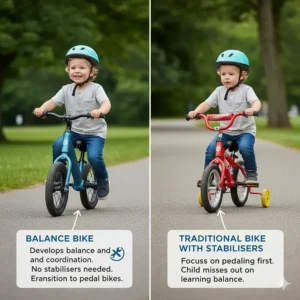
Here’s the uncomfortable truth about training wheels: they create bad habits. Children lean into turns, relying on that third wheel for support. When stabilisers are removed, they’ve learned nothing about balance—the most crucial cycling skill.
Research published in the National Center for Biotechnology Information found that children using training wheels don’t learn to maintain balance by steering in the direction of lean—the fundamental technique required for unsupported cycling. Only after stabiliser removal do they begin learning balance, often requiring significant parental support and experiencing frustration.
The Balance Bike Method
The balance bike for 3 year old approach follows natural progression:
Stage 1 (Days 1-3): Walking whilst seated Children simply walk the bike, getting comfortable with sitting and steering. No pressure, just exploration.
Stage 2 (Week 1-2): Running and lifting feet momentarily As confidence builds, they run faster, naturally lifting feet for brief moments. Balance is developing unconsciously.
Stage 3 (Weeks 2-4): Gliding with feet up They begin genuine gliding, feet lifted for several seconds. True balance emerges—thrilling for child and parent alike!
Stage 4 (1-3 months): Confident gliding and turning Full mastery arrives: smooth gliding, confident turns, controlled speeds. Ready for pedals!
Stage 5 (Same day!): Pedal bike transition Most children ride pedal bikes independently within hours of trying. Seriously—it’s that dramatic. They already understand balance; pedalling is simply adding one new skill.
Balance Bike Size Guide by Inside Leg
| Inside Leg (Inseam) | Recommended Wheel Size | Typical Age Range | Seat Height Needed |
|---|---|---|---|
| 30-34cm | 10″ wheels | 18-24 months | 28-32cm minimum |
| 32-38cm | 12″ wheels | 2-3 years | 30-36cm minimum |
| 36-43cm | 12″ or 14″ wheels | 3-4 years | 33-40cm minimum |
| 40-48cm | 14″ wheels | 4-5 years | 38-45cm minimum |
Measuring tip: Have your child stand barefoot against a wall. Place a book between their legs (spine up) and slide it up until snug against their crotch. Measure from floor to top of book spine—that’s their inseam!
Safety Considerations for UK Families
Essential Safety Gear
Whilst balance bikes operate at walking/running speeds (much slower than pedal bikes), safety gear builds good habits:
Must-have:
- Properly fitted helmet (£15-£45)—replace after any impact
- Closed-toe shoes with grip
- Comfortable clothes (avoid long dangly bits)
Recommended:
- Knee pads for timid or enthusiastic riders (£8-£20)
- Gloves in colder months
- High-visibility vest for low-light conditions
UK-Specific Safety Rules
According to UK government guidance, balance bikes are classified as toys, not vehicles. However, good practice includes:
- Always use pavements, never roads
- Be courteous to pedestrians (priority to walkers)
- Supervise children near roads, driveways, car parks
- Teach stopping before crossing any road
- Use parks and traffic-free paths when possible
- Check bike regularly for loose parts
Outdoor Active Play Equipment Benefits
Physical Development
Balance bikes excel as outdoor active play equipment, delivering multiple developmental benefits. According to NHS child development guidelines, regular physical activity:
- Builds cardiovascular fitness and muscle strength
- Develops gross and fine motor skills
- Improves spatial awareness and proprioception
- Enhances bilateral coordination
- Strengthens core stability
- Boosts bone density in growing children
Three-year-olds need at least 180 minutes daily of varied physical activities. A balance bike for 3 year old riders provides intensive movement whilst feeling like pure play—no nagging required!
Cognitive and Social Benefits
Beyond physical gains, balance bikes develop:
Cognitive Skills:
- Risk assessment and decision-making
- Planning and executing movements
- Problem-solving (navigating obstacles)
- Spatial reasoning
- Concentration and focus
Social-Emotional Development:
- Independence and confidence
- Perseverance through challenges
- Pride in achievement
- Turn-taking at busy locations
- Communication when riding with friends
One fascinating aspect: children who master challenging physical skills often show increased confidence in other areas. That “I can do it!” mindset transfers to puzzles, social situations, and classroom challenges.
Maintenance and Care Tips
Weekly Checks (5 Minutes)
✅ Tighten all bolts with Allen key (included with most bikes)
✅ Check tyre condition—look for cracks or excessive wear
✅ Ensure seat height remains correct as child grows
✅ Test handlebar movement—should turn smoothly
✅ If brake-equipped, check brake responsiveness
Monthly Maintenance
🔧 Clean frame with damp cloth (avoid harsh chemicals on wood) 🔧 Lubricate any moving parts with appropriate oil 🔧 Check for rust on metal components (especially after winter) 🔧 Inspect grips—replace if worn or slipping 🔧 Tighten headset if handlebar wobbles
Storage Advice
British weather demands proper storage:
- Store indoors when possible (garage, shed, conservatory)
- Cover if stored outside
- Hang on wall hooks to save floor space
- Remove any accessories that might rust
- Keep away from radiators (wooden bikes can crack)
Pro tip: A well-maintained balance bike retains 40-60% of its purchase price on resale—worth the five minutes weekly!
Making the Most of Your Investment
Extending Usage Life
Most balance bikes suit children from 18 months through to 5 years with proper sizing. Maximise value by:
1. Buy Slightly Large Choose a bike where your child just reaches the ground rather than one they’ve “grown into” completely. The 2-3cm rule applies, but err on the higher end if planning long-term use.
2. Adjust Regularly Check seat height monthly. Children grow rapidly at this age; proper fit maintains confidence and comfort.
3. Consider Convertible Options Some models (like the Strider 14x) add pedals later, extending usefulness. However, they’re typically heavier—balance the investment against having two dedicated bikes.
4. Brilliant for Siblings A quality balance bike easily survives 2-3 children with minimal maintenance. That £120 Strider shared between three kids costs just £40 per child—exceptional value!
Resale Value Champions
UK families report excellent resale success with:
- Strider bikes (50-60% of original price)
- Frog Bikes (40-50% retained value)
- Early Rider models (45-55% if well-maintained)
List on Facebook Marketplace, Gumtree, or local parent groups 2-3 months before you need to sell. Spring/summer command better prices as families prepare for outdoor fun.
Price Range & Value Analysis Table
| Price Category | What You Get | Best For | Expected Lifespan |
|---|---|---|---|
| £30-£50 | Basic wooden or steel frame<br>Limited adjustability<br>Foam tyres<br>No brake | First bike or younger siblings<br>Families on tight budget<br>Indoor/smooth surface use | 1-2 years with 1 child |
| £50-£80 | Better materials<br>Continuous adjustment<br>Some include brake<br>Accessories often included | Great value sweet spot<br>Regular outdoor use<br>Good for hand-me-downs | 2-3 years with multiple children |
| £80-£140 | Lightweight design<br>Quality components<br>Brake usually included<br>Premium adjustability | Keen to cycle families<br>Mixed terrain use<br>Long-term investment | 3-4 years with excellent resale |
| £140-£240 | Ultra-light frames<br>Premium materials<br>Advanced features<br>Extended warranties | Cycling enthusiasts<br>Best performance<br>Heirloom quality | 4-5 years with multiple children |
Value verdict: The £60-£90 range offers the best balance of features, weight, and durability for most UK families. Splurge on premium if weight is crucial or you have multiple children planned.
Common Questions from UK Parents
“Won’t my child get cold feet in winter?”
British winters absolutely demand proper footwear! Choose insulated waterproof boots with grippy soles. Many families keep balance bike sessions shorter in winter (15-20 minutes) rather than stopping entirely. The movement keeps them warmer than you’d expect, and those rosy cheeks? That’s healthy outdoor play, not suffering! Layering works brilliantly—vest, long-sleeve top, fleece, waterproof jacket.
“Our garden is tiny—can we still use a balance bike?”
Absolutely! Parks are your friend. Most UK towns have traffic-free paths perfect for balance bikes. Check your council website for “green spaces” or “cycle paths.” Many families discover hidden gems within walking distance. Plus, carrying a lightweight balance bike (under 3.5kg) whilst pushing a buggy is entirely manageable for those park trips.
“My child seems scared—should I wait?”
Never force it. Some children take to balance bikes immediately; others need several months to warm up. Start by letting them sit on it indoors, then simply walk it around. No pressure—it’ll click when they’re ready. Sometimes watching confident riders at the park provides that magical spark of inspiration.
“Is second-hand okay?”
Absolutely, if you check carefully! Inspect:
- Frame for cracks, especially at joints (wooden bikes can split)
- Wheels for excessive wear
- All bolts present and tight
- Handlebar not bent
- Seat post slides smoothly
Quality brands like Strider, Frog, and Early Rider survive multiple children beautifully. Budget models may show more wear.
FAQ
❓ What age can a child start using a balance bike in the UK?
❓ How long will my child use a balance bike before moving to pedals?
❓ Do I need to buy a balance bike with a brake?
❓ Can balance bikes be used on grass and rough terrain?
❓ What's better for London families—balance bike or micro scooter?
Conclusion: Choose Wisely, Ride Confidently
Selecting the perfect balance bike for 3 year old riders needn’t feel overwhelming. Whether you choose the budget-friendly Kinderkraft SPACE, the ultra-light Hornit AIRO, or the premium Frog Tadpole Plus, you’re investing in far more than a toy—you’re gifting independence, confidence, and a foundation for a lifetime of cycling joy.
Remember the essentials: prioritise proper sizing over age recommendations, choose appropriate weight for your child’s strength, and don’t overthink material choice (both wood and metal work brilliantly). Most importantly, focus on the magic you’ll witness when your little one first glides independently, feet lifted, beaming with pride.
From mastering balance naturally to skipping training wheels entirely, balance bikes have revolutionised how British children learn to cycle. With proper research and the right choice, your three-year-old will be zooming confidently toward cycling independence faster than you ever imagined possible.
Ready to start your family’s cycling adventure? The perfect balance bike for 3 year old riders is waiting on Amazon.co.uk—choose wisely, and enjoy those precious moments of your child’s first independent rides!
Your little one’s cycling journey starts here. Choose any highlighted balance bike above to check current UK pricing, read verified customer reviews, and discover why thousands of British families trust these models to teach their children the joy of two-wheeled independence!
Recommended for You
- 7Best Lego Duplo vs Lego Classic Transition Sets UK 2026
- VTech vs LeapFrog Toddler Tablet: 7 Best Picks UK 2026
- 7 Best First Ride On Toy UK 2026
✨ Don’t Miss These Exclusive Deals!
🔍 Take your child’s development to the next level with these carefully selected balance bikes. Click on any highlighted product to check current pricing and availability on Amazon.co.uk. These bikes will help you create authentic memories your family will love!
Disclaimer: This article contains affiliate links. If you purchase products through these links, we may earn a small commission at no additional cost to you. Prices shown are approximate and may vary. All products featured were carefully researched and selected based on quality, safety standards, and customer feedback.
✨ Found This Helpful? Share It With Your Mates! 💬🤗
