
In This Article
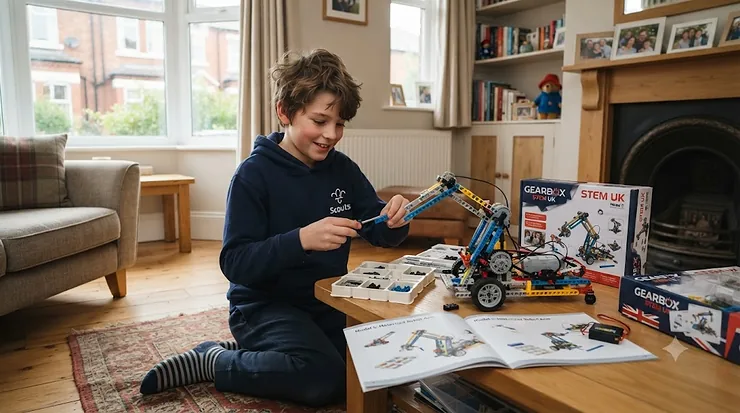
Buying an engineering construction toy for a 10 year old sounds simple until you’re stood in the toy aisle with forty boxes shouting “STEM!” at you and no clue which ones actually deliver. Ten is a funny age — old enough to be genuinely frustrated by a build that’s too easy, young enough that a kit designed for teenagers will end in tears and a half-finished crane in the recycling bin. The sweet spot is narrow, and most gift guides don’t bother narrowing it.
This one does. We’ve dug into real product specifications, genuine aggregated review sentiment, and the actual engineering disciplines each set teaches — mechanical, structural, electrical, physics-based — so you can match the toy to the kid rather than the other way round. Whether you’re after budget-friendly STEM gifts for 10 year olds, something meatier for a serious young inventor, or a building toy for a 10th birthday that won’t be forgotten by Boxing Day, you’ll find it below, with honest pros, honest cons, and no invented five-star quotes.
Play with construction-based toys is one of the few childhood habits with actual research behind it. A University of Colorado-led study found that childhood play experiences strongly shape spatial reasoning skills, with young adults who played with construction toys such as Lego outperforming their peers on tests of spatial reasoning — the same mental muscle engineers, architects and surgeons lean on daily.
Quick Comparison Table
Before the deep dive, here’s the shape of the field: seven real, currently available sets spanning under-£10 stocking fillers to premium 900-piece builds.
| Product | Engineering Focus | Age | Price Range | Best For |
|---|---|---|---|---|
| LEGO Technic Race Car | Mechanical (pistons, differential) | 10+ | £85-£95 range | Detail-obsessed builders |
| Meccano Super Construction 25-in-1 | Mechanical, metal engineering | 10+ | £45-£55 range | Serious tinkerers |
| Meccano 25-in-1 Supercar Set | Mechanical, electrics | 8-12 | £20-£35 range | Budget-conscious buyers |
| K’NEX Thrill Rides 3-in-1 Amusement Park | Structural, motorised mechanisms | 9+ | £40-£50 range | Kids who love rides & movement |
| GraviTrax Starter Set | Physics, kinetics | 8+ | £45-£55 range | Problem-solvers & puzzle fans |
| Thames & Kosmos Bridges & Skyscrapers Kit | Civil/structural engineering | 8+ | £35-£45 range | Future architects |
| LEGO Technic Yellow Motorbike | Mechanical (entry-level) | 10+ | under £10 | Stocking fillers & starters |
Reading across the table, the split isn’t really about quality — every product here is a genuine, well-reviewed set — it’s about which flavour of engineering grabs your particular ten-year-old. The Meccano Super Construction 25-in-1 and LEGO Technic Race Car sit at the premium end because metal parts and licensed mechanical detail cost more to produce, while the LEGO Technic Yellow Motorbike proves you don’t need £90 to teach a working steering mechanism. Anyone shopping several of these age-appropriate STEM gifting brackets at once should note that price rarely tracks educational value in this category — it tracks piece count and materials.
💬 Just one click — help others make better buying decisions too!😊
Top 7 Engineering Construction Toys for a 10 Year Old: Expert Analysis
Genuinely excellent engineering toys aren’t just “fun” — they teach something specific, whether that’s how a differential distributes torque or why a triangle is structurally stronger than a square. Below, each pick is broken down honestly: real specs interpreted in plain English, who it actually suits, and what buyers consistently say about living with it.
1. LEGO Technic Race Car — best mechanical detail for the money
The star feature here is the exposed engine bay, which is a small thing that makes a huge difference to a ten-year-old’s sense of “this is real engineering,” not just plastic-brick play. Spec-wise, you’re looking at 897 pieces, opening butterfly doors, a functioning differential, and moving pistons visible through the bonnet — real mechanical principles rendered in Technic beams rather than abstracted away. Based on the spec comparison with rival mechanical sets, the differential is the standout: it’s the same principle that lets a real car’s wheels spin at different speeds around a corner, and building it by hand teaches that far better than any textbook diagram. This is a strong pick for a child who’s already outgrown basic Lego Technic starter sets and wants a genuine step up in complexity without leaping straight to a 3,000-piece flagship. Aggregated review sentiment across retailers is consistently positive, with buyers repeatedly praising the build satisfaction and display quality once finished, though a recurring theme in feedback is that the instruction booklet demands real patience over multiple sittings rather than a single afternoon.
Pros:
- ✅ Real differential and moving pistons teach genuine mechanics
- ✅ Detailed enough to hold attention across several sessions
- ✅ Strong resale and swap value within the Technic community
Cons:
- ❌ Multi-session build frustrates kids wanting instant results
- ❌ No motorisation included at this price point
At around £85-£95, this sits in the mid-to-premium bracket, but the value verdict is straightforward: for a child ready for genuine mechanical complexity, few sets pack this much real engineering into one box.
2. Meccano Super Construction 25-in-1 Motorised Building Set — best for real tools and metal parts
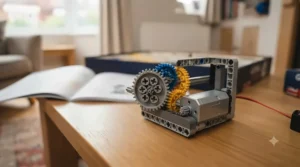
What most buyers overlook about this set is that it isn’t plastic pretending to be engineering — it’s actual metal construction, the same basic system aircraft engineers used to prototype ideas a century ago. The headline numbers are 638 metal parts, three real tools, and a 6V electric motor powering the primary crane model, which rotates and extends its hook exactly like the real machinery it’s modelled on. Here’s what to weigh: the metal construction means nuts and bolts genuinely need tightening with a spanner, which slows younger builders down but teaches mechanical fastening far more authentically than snap-fit plastic ever could. It’s built for children aged 10 and up specifically because the fine motor coordination required — threading small bolts, aligning metal girders — genuinely benefits from a slightly older hand. Reviewers consistently note the sense of achievement once the motorised crane actually works, and aggregated ratings sit comfortably above 4.5 out of 5 across major retailers, though a fair few mention that smaller washers are easy to lose track of during a build.
Pros:
- ✅ Genuine metal parts and real tools, not plastic imitations
- ✅ 25 different buildable models from one parts set
- ✅ Working 6V motor brings the crane to life
Cons:
- ❌ Small metal fasteners are easy to misplace
- ❌ Requires patience for bolt-by-bolt assembly
In the £45-£55 range, this is genuinely excellent value against its Technic rivals — you’re paying less for arguably more authentic engineering, just with a steeper build curve.
3. Meccano 25-in-1 Supercar Set — best budget entry into metal engineering
The standout here is the LED light piping, which sounds gimmicky until you realise it’s teaching basic circuitry alongside mechanics — working headlights and taillights wired into a model your child physically assembled. Specs-wise: 347 parts, a 6V motor with adjustable speed control, two tools, and instructions for three core vehicle builds before the mixing-and-matching begins. On paper this means a genuinely lighter, faster build than its bigger Meccano sibling, which makes it the better choice for a first metal-construction set rather than a second one. What most buyers overlook is that “supercar” undersells it slightly — the same 347 parts and motor can be reconfigured into wildly different vehicle shapes, so the replay value stretches well past the box art. Aggregated review sentiment is strong, with buyers frequently describing it as an ideal stepping stone before the full 638-piece Super Construction set, and the adjustable motor speed gets singled out as a nice touch that keeps repeat play interesting.
Pros:
- ✅ Working LED headlights teach basic circuit thinking
- ✅ Adjustable motor speed adds genuine replay variety
- ✅ Lower price point than the full Meccano range
Cons:
- ❌ Fewer structural possibilities than the 638-piece set
- ❌ Requires 4 AAA batteries, sold separately
Typically found in the £20-£35 range, this is arguably the smartest budget pick on this whole list for a first proper engineering construction toy for a 10 year old.
4. K’NEX Thrill Rides 3-in-1 Classic Amusement Park Building Set — best for structural engineering fans
The standout feature is variety baked into one box: 744 classic K’NEX rods and connectors that build a Ferris wheel standing nearly three feet tall, a boom ride, or a swing ride, one model at a time. The battery-powered motor animates whichever ride is currently built, so the reward for finishing isn’t a static model but something that actually spins and swings the way the real fairground attraction does. Here’s what to weigh: K’NEX’s rod-and-connector system is structurally different from brick-based building, forcing kids to think in trusses and triangulated supports rather than stacked blocks — genuinely useful structural-engineering thinking that transfers directly to bridge and tower design. Reviewers consistently flag this as a strong gifting option, and it’s a recurring pick in STEM gifts for 10 year olds lists precisely because the motorised payoff keeps attention spans engaged through a fairly involved build. A common complaint in user reviews is that the included instructions only cover a handful of the possible ride configurations, leaving more ambitious rebuilds to trial and error.
Pros:
- ✅ 744 pieces build three genuinely different motorised models
- ✅ Teaches trussed structural thinking, not just stacking
- ✅ Nearly 3ft Ferris wheel model is a genuine centrepiece build
Cons:
- ❌ Instructions cover only a fraction of possible builds
- ❌ Requires 2 AA batteries, sold separately
At £40-£50, it’s competitively priced against Meccano and delivers arguably the widest single-set structural variety on this list.
5. GraviTrax Starter Set — best for pure problem-solving
The standout feature is the physics itself: this isn’t a kit with one correct outcome, it’s a marble-run system where gravity, magnetism, and kinetic energy either cooperate or send your ball flying off the track entirely. The set includes 122 pieces — height tiles, curves, junctions, a launcher, a magnetic cannon and six metal marbles — enough to build genuinely complex, multi-level courses straight out of the box. What the spec sheet won’t tell you, but reviewers note, is that the real learning moment isn’t the build, it’s the failure: when a marble stops short or flies off course, the child has to diagnose why and redesign, which is engineering problem-solving in its purest form. This makes it one of the stronger problem-solving toys on this list for a child who enjoys iteration and tinkering over following fixed instructions. Independent reviewers who’ve tested the set describe the build as quick and stable with genuinely addictive redesign potential, and the companion app — which lets kids simulate a track digitally before building it physically — is a frequently praised bonus that most rival systems simply don’t offer.
Pros:
- ✅ Open-ended design rewards iteration and redesign
- ✅ Free companion app for digital track testing
- ✅ Infinitely expandable with separately sold add-on packs
Cons:
- ❌ Small metal marbles are a choking hazard for younger siblings
- ❌ Base set alone can feel small before add-ons
Historically priced around £45-£55, GraviTrax rewards buyers who plan to expand it over successive birthdays rather than treating it as a one-off purchase.

6. Thames & Kosmos Bridges & Skyscrapers Kit — best for future civil engineers
The standout feature is scope: rather than one vehicle or one structure, this kit walks a child through the actual engineering principles behind bridges, towers and skyscrapers using over 280 real components. Specs-wise, it’s built around structural and physics-based learning rather than motors or electronics, meaning the emphasis sits squarely on load distribution, tension, compression and the geometry that keeps real buildings upright. Based on the spec comparison with more motor-driven sets on this list, what most buyers overlook is that the lack of batteries is a feature, not a gap — it forces genuine structural problem-solving rather than letting a motor paper over a wobbly design. It’s pitched as an intermediate-level engineering set, which lines up well with a ten-year-old who’s already comfortable with basic building toys and ready to think about why structures stand rather than just that they stand. This is consistently rated among the top overall picks in independent engineering-toy roundups for the structural-engineering category specifically, praised for genuinely teaching transferable civil-engineering concepts rather than dressing up generic building play in STEM branding.
Pros:
- ✅ Teaches real structural engineering principles, not just stacking
- ✅ No batteries needed — pure mechanical problem-solving
- ✅ Consistently rated a top pick for structural-focused STEM play
Cons:
- ❌ Less immediately flashy than motorised alternatives
- ❌ Best suited to kids already past basic construction play
In the £35-£45 range, it’s a smart pick for parents specifically hunting age-appropriate STEM gifting that leans academic without feeling like homework.
7. LEGO Technic Yellow Motorbike — best budget stocking filler
The standout feature, frankly, is the price — this tiny 151-piece set delivers genuine Technic mechanics for under a tenner, which makes it the rare engineering toy you can justify as an impulse add rather than the main event. Despite the size, it includes moveable steering and a three-piston engine connected to the rear wheel via a visible chain, so the core mechanical lesson — how rotational motion transfers between connected parts — is fully intact at a fraction of the scale and cost of the bigger Technic sets. What most buyers overlook about small Technic sets like this is that they’re an excellent low-stakes way to gauge whether a child actually enjoys Technic-style mechanical building before committing to a £90 flagship set. It’s explicitly designed to develop STEM thinking and demonstrate two-wheeled vehicle mechanics to young builders, according to LEGO’s own set notes, without demanding the multi-hour commitment of larger builds. As a newer 2026 release, aggregated review data is still thin, so the honest position is that early buyer sentiment looks positive but hasn’t yet reached the volume of its longer-established Technic siblings.
Pros:
- ✅ Genuine moving pistons and chain-driven mechanics
- ✅ Under £10 — ideal low-risk introduction to Technic
- ✅ Quick build suits shorter attention spans
Cons:
- ❌ Limited complexity compared to full-size Technic sets
- ❌ Review data still building given its recent 2026 release
At under £10, this is the easiest “yes” on the list — genuinely useful as a birthday gift guides staple you tuck alongside a bigger present.
Practical Usage Guide: Getting the Most From an Engineering Construction Toy
Buying the right set is only half the job — how it’s used in the first month often decides whether it becomes a genuine hobby or a dust-collector. Start by resisting the urge to hover during the first build. Ten-year-olds learn more from misreading step 14 and having to backtrack than from a parent correcting them pre-emptively; the productive struggle is the point, not an obstacle to it. For motorised sets like the Meccano Super Construction 25-in-1 or K’NEX Thrill Rides, check the battery compartment before the first attempt — nothing kills momentum faster than a finished build that won’t move because nobody had AA batteries in the house.
A quick maintenance habit worth establishing early: sort loose parts into a shallow tray or muffin tin before each session, rather than digging through one big bag. Metal-part sets like Meccano genuinely benefit from this, since small washers and bolts are the single most common lost-piece complaint in aggregated reviews. For GraviTrax, keep the marbles in a separate small tin — they roll, and they’re a genuine hazard for any younger sibling still at the mouthing stage.
The most common first-30-days mistake is starting with the hardest available model. Every set on this list includes multiple build options of varying difficulty; starting with the simplest build, even if it looks “babyish,” builds the spatial vocabulary needed to tackle the flagship model without a meltdown two-thirds through. Once confidence is up, encourage deviation from the instructions entirely — the real engineering value in any construction toy for tweens shows up once a child starts modifying a design rather than just following one.

Real-World Gift Scenarios: Matching the Toy to the Child
The Lego-loyal ten-year-old with a shelf of finished sets. This child already has spatial confidence and wants a genuine step up. The LEGO Technic Race Car is the natural next purchase — familiar brick system, meaningfully harder mechanics, and a differential that teaches something their Duplo-era sets never could.
The tinkerer who takes the TV remote apart “to see how it works.” This is a Meccano Super Construction 25-in-1 kid through and through. Real tools, real metal, and 25 different configurations reward exactly the sort of open-ended curiosity that gets them in trouble with household electronics otherwise.
The child who loves theme parks and can’t sit through a full afternoon build. Go with K’NEX Thrill Rides 3-in-1, ideally gifted alongside a promise of a real fairground trip once it’s built — the payoff of a spinning, motorised Ferris wheel matches their attention span and their obsession in one box.
The quiet problem-solver who redoes jigsaws for fun. GraviTrax rewards exactly this temperament. There’s no single correct build, just endless iteration, which suits a child who enjoys the puzzle more than the finish line.
The budget-conscious birthday, plus a bigger gift already planned. The LEGO Technic Yellow Motorbike or Meccano 25-in-1 Supercar Set both work as an affordable, genuinely engaging add-on rather than filler — a real building toy for a 10th birthday without blowing the whole budget on one item.
Buyer’s Decision Framework: A Quick Checklist
If you’re still torn, work through this simple priority order rather than agonising over every spec sheet:
If your child gravitates toward vehicles and speed, choose Meccano 25-in-1 Supercar Set or the LEGO Technic Race Car, because motorised mechanical builds hold their attention longest.
If your child likes puzzles more than instructions, choose GraviTrax, because open-ended physics problem-solving suits an experimental mindset better than a fixed build sequence.
If your child is fascinated by real-world structures — bridges, towers, skylines — choose the Thames & Kosmos Bridges & Skyscrapers Kit, because it teaches the “why” behind structural stability rather than just assembly.
If budget is the deciding factor, choose the LEGO Technic Yellow Motorbike, because it delivers genuine mechanical learning without the premium price tag of larger sets.
If you’re buying for a first-time builder with no engineering-toy history, choose the Meccano 25-in-1 Supercar Set or K’NEX Thrill Rides, because both offer a gentler complexity curve than flagship 900-piece kits.
How to Choose an Engineering Construction Toy for a 10 Year Old
An engineering construction toy for a 10 year old is a hands-on building set that teaches real mechanical, structural, or physics principles through assembly — think working motors, load-bearing structures, or gear systems — rather than purely decorative or open-ended stacking play.
Choosing well comes down to a handful of practical checks:
- Match complexity to build history, not just age. A ten-year-old who’s never handled a 500-piece set will struggle with the jump straight to premium Technic; start one tier down.
- Check the power source before buying. Motorised sets need batteries, usually sold separately — factor that into the actual gift-day cost.
- Consider the engineering discipline, not just “STEM.” Mechanical, structural, and physics-based toys teach genuinely different skills; pick based on your child’s actual interests, not the marketing buzzword.
- Read aggregated review themes, not star ratings alone. A 4.6-star average tells you less than a recurring complaint about lost small parts or unclear instructions.
- Factor in rebuild value. Sets offering multiple models from one parts pool — like the 25-in-1 Meccano range — deliver far more long-term play than single-build kits.
- Verify UK safety marking. Every toy sold legitimately in the UK should carry a CE or UKCA mark; this isn’t optional and it isn’t hard to check.
- Budget for expansion, not just the base set. Systems like GraviTrax are genuinely designed to grow across birthdays — factor that into your first purchase decision.
| Feature | Mechanical Sets (Technic/Meccano) | Physics Sets (GraviTrax) | Structural Sets (Thames & Kosmos) |
|---|---|---|---|
| Core skill taught | Gear & motor mechanics | Kinetics & iteration | Load distribution & geometry |
| Power source | Usually motorised | Gravity/kinetic only | Usually none |
| Best For | Vehicle & machine fans | Puzzle-driven kids | Future architects/engineers |
Reading across this smaller snapshot, the real decision isn’t which set is “best” in the abstract — it’s which engineering discipline actually holds your child’s attention. For a live look at how pricing moves across the Technic range this year, Brick Fanatics’ 2026 Technic pricing coverage is a useful reference point before you commit to a set.

Common Mistakes When Buying STEM Gifts for 10 Year Olds
The single biggest mistake is buying for the age bracket on the box rather than the actual child. A ten-year-old who’s spent years building elaborate Lego cities will find an “ages 10+” 150-piece starter set insultingly simple, while a first-time builder handed a 900-piece flagship kit may abandon it entirely by hour two out of sheer frustration. Match complexity to build history, always.
A second recurring error is ignoring batteries entirely. Several of the strongest picks on this list — Meccano’s motorised sets, K’NEX Thrill Rides — need AA or AAA batteries that aren’t included, and nothing deflates birthday-morning excitement like a working model that can’t actually work.
Parents also frequently underweight instruction quality against piece count, assuming more pieces automatically means a better toy. Aggregated reviews consistently show that build satisfaction correlates far more strongly with clear, well-illustrated instructions than with raw part volume — a well-designed 350-piece set can outperform a poorly documented 700-piece one in actual enjoyment.
Finally, many buyers treat these as one-and-done purchases when several — GraviTrax especially — are explicitly designed as expandable systems. Buying only the entry set and expecting it to satisfy a genuinely engaged builder for months is setting both gift and child up to underdeliver.
Engineering Construction Toys vs Traditional Building Blocks
Traditional building blocks — classic bricks, wooden blocks, stacking sets — are brilliant for open-ended creative play and remain genuinely valuable well into the tween years. But there’s a meaningful difference once you’re specifically shopping for engineering toys for tweens rather than general building play: engineering-focused sets introduce constraint-based problem-solving that pure creative blocks simply don’t.
| Aspect | Traditional Building Blocks | Engineering Construction Toys |
|---|---|---|
| Learning focus | Open-ended creativity | Mechanics, structure, or physics principles |
| Failure feedback | Rarely — most builds “work” | Built-in — a bad design visibly fails |
| Real-world transfer | Spatial reasoning, general | Spatial reasoning plus specific engineering logic |
| Longevity | High, but plateaus without new sets | High, especially with expandable systems |
The key difference the table doesn’t fully capture is failure feedback. When a child stacks blocks poorly, the tower simply looks a bit wonky — there’s no strong signal that something’s structurally wrong. When a Thames & Kosmos Bridges & Skyscrapers build collapses under test weight, or a GraviTrax marble flies off-track, the failure is immediate, specific, and genuinely instructive. That said, this isn’t really an either/or choice — the strongest STEM gifts for 10 year olds tend to sit in households that already have a good creative-block foundation, with engineering sets layered on top once basic spatial confidence is established.
What to Expect: Real-World Performance
Specs on a box rarely translate directly into lived experience, so here’s the honest, real-world version. Most sets in the 300-900 piece range genuinely take multiple sessions to complete — expect one to three hours spread across several sittings for the mid-range picks, and considerably longer for the full Meccano Super Construction 25-in-1 or LEGO Technic Race Car. That’s not a flaw; it’s actually a feature for sustained engagement, since a toy finished in twenty minutes rarely gets revisited.
Motorised sets deliver a genuine dopamine hit the first time the mechanism actually works — the K’NEX Ferris wheel spinning, the Meccano crane’s hook extending — and that payoff moment is consistently what aggregated reviews cite as the highlight of the whole experience. Non-motorised structural and physics sets deliver a quieter but arguably more durable satisfaction: the pride of a bridge that holds weight, or a marble run that finally routes the ball cleanly to the finish, tends to generate more repeat play than a one-off motorised “wow” moment.
Expect some frustration regardless of set choice — that’s genuinely part of the design, not a defect. The sets that age best in a household are the ones where a parent resists smoothing over every sticking point.
Features That Actually Matter (And Those That Don’t)
Marketing copy loves to bury genuinely useful features under buzzwords, so here’s an honest filter. Real tools included with a set — as with Meccano’s spanner and screwdriver — actually matter, because they teach genuine fine-motor mechanical skills that snap-fit plastic never will. A working motor with adjustable speed, like the one in the Meccano 25-in-1 Supercar Set, matters too, since variable output teaches basic cause-and-effect electrical thinking, not just “on/off.”
What matters less than the box suggests: raw piece count in isolation. A 900-piece set with poor instructions is a worse experience than a well-documented 350-piece one, and piece count alone tells you nothing about build quality or engagement. App integration, like GraviTrax’s companion app, is a genuine bonus rather than a gimmick, since it lets a child prototype digitally before committing physical parts — but it’s not a dealbreaker if a set lacks one. Licensed branding (a named car model, a movie tie-in) matters far less than the marketing suggests; the underlying mechanical system is what teaches the skill, not the sticker on the box.
Long-Term Cost & Maintenance
The upfront price tag is only part of the real cost picture. Motorised sets need an ongoing battery budget — figure a few pounds every few months for a heavily used set, which is a genuinely overlooked line item in most birthday budgeting. Expandable systems like GraviTrax carry a different long-term cost logic entirely: the £45-£55 starter set is genuinely a starter, and committed builders will likely want add-on packs across subsequent birthdays, so total cost of ownership over two or three years can meaningfully exceed the initial price.
Against that, metal-part Meccano sets and Technic sets hold resale and swap value unusually well within enthusiast communities, partly offsetting their higher upfront cost — a genuinely finished, well-kept Meccano Super Construction 25-in-1 retains real secondhand demand once a child moves on. Maintenance itself is minimal across the board: an occasional check for missing small parts, dry storage away from damp (particularly for the cardboard components in structural kits), and periodic battery replacement for motorised builds. None of these sets demand ongoing spend beyond that, which makes the true total cost of ownership considerably more favourable than, say, a subscription-based STEM box that bills monthly regardless of engagement.
Safety, Regulations & Age-Appropriate STEM Gifting
Every legitimately sold toy in the UK must comply with the Toys (Safety) Regulations 2011, and it’s worth actually checking for the marks rather than assuming a big-brand box is automatically compliant. The Toys (Safety) Regulations 2011 sets out the requirements toys placed on the UK market must meet, and every set on this list should carry either a CE or UKCA mark on the packaging or an accompanying leaflet — read the full regulations on legislation.gov.uk if you want the detail behind the marking.
In practice, age-appropriate STEM gifting comes down to a few common-sense checks beyond the legal minimum. Small metal fasteners in Meccano sets and small marbles in GraviTrax are genuine choking hazards for any younger sibling in the house, regardless of the labelled age range — supervise shared play spaces accordingly. Motorised sets requiring batteries should always use the correct battery type specified on the box; swapping in the wrong voltage is a recurring, entirely avoidable safety issue flagged in product documentation across this category. And genuinely, “10+” labelling isn’t arbitrary — it reflects both the fine motor coordination and the safe handling judgement the manufacturer’s testing found necessary for that specific set, so resist gifting a nominally “9+” set down to a much younger sibling just because the box looks similar to one they already own.

FAQ
❓ What is the best engineering toy for a 10 year old?
❓ Are Meccano sets better than LEGO Technic for engineering learning?
❓ What age is appropriate for K'NEX Thrill Rides sets?
❓ Do engineering construction toys actually improve STEM skills?
❓ How much should I budget for a good engineering construction toy for a 10 year old?
Conclusion
There’s no single perfect engineering construction toy for a 10 year old, and honestly, anyone promising you one is oversimplifying a genuinely nuanced decision. What matters is matching the engineering discipline — mechanical, structural, or physics-based — to the specific kid staring at the wrapping paper on their birthday morning. The Meccano range rewards real hands-on tinkerers who like tools in their hands. GraviTrax rewards quiet problem-solvers who enjoy the redesign as much as the build. The LEGO Technic picks, from the budget Yellow Motorbike to the detailed Race Car, suit kids already fluent in brick-based building who are ready for a genuine mechanical step up, and the Thames & Kosmos Bridges & Skyscrapers Kit and K’NEX Thrill Rides set both offer structural engineering thinking dressed up as genuinely fun builds.
Whichever you choose from this list of STEM gifts for 10 year olds, you’re giving something with real substance behind it — not just marketing language, but a set of skills that research consistently links to long-term spatial and scientific reasoning. That’s a good return on any birthday budget.
Recommended for You
- Architectural Model Building Set: 7 Brilliant UK Picks (2026)
- Bridge Building STEM Kit for Kids: 7 Best Picks (2026)
- Wind Power Kit For Kids: 7 Brilliant STEM Picks (2026)
Disclaimer: This article contains affiliate links. As an Amazon Associate, I earn from qualifying purchases. If you purchase products through these links, we may earn a small commission at no additional cost to you.
✨ Found this helpful? Share it with your friends! 💬🤗
