
In This Article
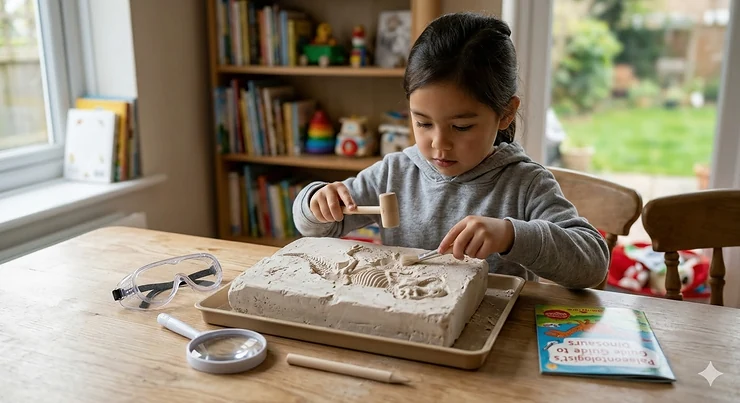
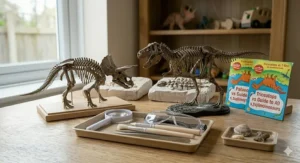
There’s something magical about watching your child’s eyes light up when they chip away plaster to reveal a prehistoric treasure. A dinosaur excavation kit for kids transforms an ordinary afternoon into an archaeological adventure, combining education with hands-on excitement that keeps little ones engaged for hours.
I’ve spent countless weekends with my own children hunched over these kits, brushes in hand, watching them develop patience and scientific curiosity. The beauty of these educational toys lies in their ability to teach children about palaeontology, geology, and extinct creatures whilst they’re having too much fun to realise they’re learning. Whether you’re searching for fossil digging toys UK retailers stock or looking for archaeology toys for kids that actually deliver educational value, this comprehensive guide will help you navigate the vast selection available.
The UK market offers brilliant options ranging from budget-friendly egg excavation sets to premium kits featuring authentic fossil replicas. What started as a simple birthday gift idea has evolved into a proper STEM learning tool that schools across Britain now incorporate into their curriculum. The Natural History Museum in London recognises the value of hands-on palaeontology education, making these kits perfect companions to museum visits.
Quick Comparison Table
| Product | Age Range | Price (£) | Pieces | Special Feature | Rating |
|---|---|---|---|---|---|
| Science4you 4-in-1 Fossil Excavation Kit | 6+ | £12.99-£16.00 | 46 pieces | 4 dinosaur species | ⭐⭐⭐⭐⭐ |
| National Geographic Dino Fossil Dig Kit | 8+ | £12.99-£15.99 | Includes real coprolite | Genuine fossil + replica | ⭐⭐⭐⭐⭐ |
| Jaques of London Dino Dig Set | 5+ | £14.99-£18.99 | Multi-piece | Premium UK brand | ⭐⭐⭐⭐½ |
| Science4you Glow-in-Dark 2-in-1 Kit | 6+ | £9.13-£14.99 | 22 pieces | Luminous fossils | ⭐⭐⭐⭐ |
| EDUMAN 12 Dino Egg Dig Kit | 3-8 | £15.99-£22.99 | 12 eggs | Learning cards | ⭐⭐⭐⭐ |
| GeoSafari Fossil Excavation Kit | 6+ | £18.99-£24.99 | 8 real fossils | Authentic specimens | ⭐⭐⭐⭐⭐ |
| Jaques Triceratops Fossil Dig Kit | 5+ | £16.99-£21.99 | Complete skeleton | Premium packaging | ⭐⭐⭐⭐½ |
💬 Just one click – help others make better buying decisions too!😊
Top 7 Dinosaur Excavation Kit for Kids: Expert Analysis
1. Science4you Dinosaur Fossil Excavation Kit 4-in-1
The Science4you 4-in-1 Fossil Excavation Kit consistently tops my recommendations for families wanting exceptional value. This Portuguese brand has absolutely nailed the balance between educational content and engaging activity.
Key Specifications:
- 46-piece comprehensive archaeology set
- 4 excavation blocks featuring T-Rex, Triceratops, Stegosaurus, and Velociraptor
- Educational book in 9 languages including English
At £12.99-£16.00, this represents outstanding value for money. Each block takes approximately 30-45 minutes to excavate, giving you nearly three hours of focused activity. UK parents consistently praise how it keeps siblings occupied during rainy afternoons whilst actually teaching them proper excavation techniques.
The multilingual educational guide covers palaeontology basics, extinction theories, and fascinating dinosaur facts. What impressed me most was the quality of the fossil chisel and hammer – they’re genuinely child-safe yet effective enough to make progress through the gypsum blocks without frustration.
✅ Pros:
- Exceptional value with 4 complete dinosaurs
- Durable excavation tools included
- Comprehensive educational content
- Available widely across UK retailers
❌ Cons:
- Can get quite dusty – outdoor or newspaper recommended
- Smaller pieces require adult supervision for younger children
UK customers report this makes brilliant birthday party activities, with each child receiving their own excavation block. The Science4you brand ships quickly from UK warehouses, typically arriving within 2-3 working days.
2. National Geographic Dino Fossil Dig Kit
When authenticity matters, the National Geographic Dino Fossil Dig Kit stands in a league of its own. This isn’t just a toy – it’s a genuine introduction to palaeontology endorsed by one of the world’s most respected scientific organisations.
Key Specifications:
- Life-sized T-Rex tooth replica moulded from real fossil
- Genuine 50-million-year-old coprolite (fossilised dinosaur poop)
- Professional-quality excavation tools and magnifying glass
Priced at £12.99-£15.99, this kit delivers extraordinary value considering you’re receiving actual fossils. The T-Rex tooth replica is remarkably detailed, showing serrations and texture identical to authentic specimens housed in museums like the Oxford University Museum of Natural History.
What sets this apart is the educational depth. The full-colour learning guide doesn’t just scratch the surface – it delves into geological time periods, fossilisation processes, and the mighty Tyrannosaurus Rex’s ecological role. My daughter spent weeks researching additional information after completing her excavation, sparked entirely by this kit’s quality content.
✅ Pros:
- Includes genuine prehistoric fossil
- Museum-quality educational materials
- 27% of proceeds support National Geographic Society
- Awarded Gold Medal in Independent Toy Awards
❌ Cons:
- Single excavation block (less value than multi-pack alternatives)
- Recommended for ages 8+ (slightly older demographic)
UK availability is excellent through major retailers. The coprolite particularly fascinates children – there’s something delightfully gross yet scientifically valuable about holding actual dinosaur waste!
3. Jaques of London Dino Dig Set
For those seeking premium British craftsmanship, the Jaques of London Dino Dig Set represents 225 years of toy-making excellence. This family-owned company has supplied quality educational toys since 1795, and their excavation kit maintains those exacting standards.
Key Specifications:
- Premium chalk plaster block
- High-quality wooden excavation tools
- Complete dinosaur skeleton for assembly
- Signature ribbon-tied packaging
At £14.99-£18.99, you’re paying slightly more for the Jaques heritage, but the quality justifies the premium. The chalk block is denser than budget alternatives, providing a more realistic excavation experience that teaches patience and precision. Ships within 2-3 business days from their UK facility with a 60-day warranty.
The wooden tools feel substantial in children’s hands, and the assembled skeleton makes an impressive display piece. Jaques includes detailed assembly instructions with fascinating facts about each bone’s function – my son learned the difference between cervical and caudal vertebrae through this kit!
✅ Pros:
- Premium British quality and heritage
- Substantial chalk block for realistic digging
- Beautiful presentation ideal for gifts
- 60-day warranty coverage
❌ Cons:
- Higher price point than alternatives
- Single dinosaur species per kit
This kit particularly shines as a gift – the presentation rivals luxury toy brands whilst delivering genuine educational value.
4. Science4you Glow-in-the-Dark 2-in-1 Excavation Kit
The Science4you Glow-in-the-Dark 2-in-1 Kit adds an exciting luminous twist to traditional excavation. Featuring T-Rex and Triceratops, this kit transforms from daytime educational activity to nighttime display piece.
Key Specifications:
- 22-piece archaeology set
- 2 excavation blocks with glow-in-dark fossils
- T-Rex and Triceratops species
- Online educational book in 7 languages
Priced at £9.13-£14.99, this represents brilliant value for younger palaeontologists. The glow-in-dark feature genuinely works well – after exposing the assembled skeletons to bright light for a few minutes, they emit a satisfying green glow for approximately 30 minutes.
UK parents appreciate how this extends engagement beyond the excavation phase. Children proudly display their glowing dinosaurs on bedroom shelves, reinforcing their learning through continued interaction. The dual-dinosaur format means siblings can excavate simultaneously without squabbling!
✅ Pros:
- Unique glow-in-dark feature extends play value
- Two complete dinosaurs included
- Budget-friendly pricing
- Suitable for ages 5+
❌ Cons:
- Fewer pieces than the 4-in-1 variant
- Glow duration limited to 30 minutes per charge
This makes an excellent introduction to archaeology toys for kids aged 5-7 who might find larger kits overwhelming.
5. EDUMAN 12 Dino Egg Dig Kit
The EDUMAN 12 Dino Egg Dig Kit takes a different approach, packaging individual dinosaurs inside egg-shaped excavation blocks. This format works brilliantly for parties, classroom activities, or families with multiple children.
Key Specifications:
- 12 individually wrapped dinosaur eggs
- 12 excavation tool sets (chisel and brush each)
- Full-colour learning cards for each dinosaur
- Species include T-Rex, Dilophosaurus, Ankylosaurus
At £15.99-£22.99, this kit provides excellent cost-per-excavation value. Each egg takes approximately 15-20 minutes to complete, making them perfect for shorter attention spans. The learning cards are particularly well-designed, featuring accurate information about each species’ diet, habitat, and distinctive characteristics.
UK teachers love these for STEM lessons – the individual packaging means easy distribution, and the educational cards align well with Key Stage 1 and 2 curriculum requirements. Parents report they’re mess-free enough for indoor use when done over a tray or newspaper.
✅ Pros:
- 12 separate excavations for extended value
- Individual packaging perfect for groups
- Comprehensive species information cards
- Suitable for younger children (ages 3-8)
❌ Cons:
- Smaller dinosaur figures than block-based kits
- Less substantial excavation experience per egg
This represents the best option for party favours or classroom activities where you need multiple units.
6. GeoSafari Fossil Excavation Kit
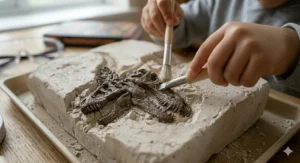
For children ready to progress beyond replica fossils, the GeoSafari Fossil Excavation Kit delivers authentic palaeontology with 8 genuine prehistoric specimens embedded in hardened sand.
Key Specifications:
- 8 real fossils including Mosasaurus tooth
- Genuine trilobite, shark vertebra, and gastropods
- Professional excavation tools: rock hammer, chisel, brush
- Magnifying glass for detailed examination
Priced at £18.99-£24.99, this premium kit offers remarkable value considering you’re receiving actual fossils millions of years old. The Mosasaurus tooth alone would cost similar amounts from specialist fossil dealers. The hardened sand block provides a more challenging excavation than plaster alternatives, teaching children that real palaeontology requires persistence.
Learning Resources, the company behind GeoSafari, has impeccable credentials in educational toys. Their multilingual guide helps children understand geological time periods and fossilisation processes. My nephew spent hours examining his discoveries under the included magnifying glass, noting tiny details invisible to the naked eye.
✅ Pros:
- Genuine prehistoric fossils, not replicas
- More challenging excavation for older children
- Professional-quality tools included
- Excellent educational depth
❌ Cons:
- Higher price point reflects authentic specimens
- Requires more patience than softer plaster blocks
This kit suits children aged 8+ who’ve outgrown beginner sets and want authentic palaeontological specimens for their collections.
7. Jaques of London Triceratops Fossil Dig Kit
Completing our expert selection, the Jaques of London Triceratops Fossil Dig Kit focuses on a single species, delivering depth over breadth with an impressive complete skeleton.
Key Specifications:
- Complete Triceratops skeleton with articulated bones
- Premium chalk plaster excavation block
- Detailed species information about Triceratops
- Signature Jaques ribbon-tied packaging
At £16.99-£21.99, this premium kit provides excellent value for the quality delivered. The Triceratops skeleton is substantial – fully assembled, it measures approximately 25 centimetres long, making an impressive display piece. The chalk plaster is higher quality than budget alternatives, providing satisfying resistance during excavation.
Jaques includes fascinating information about Triceratops’ distinctive three-horned skull, its herbivorous diet, and defensive capabilities against predators like T-Rex. The educational content connects beautifully with dinosaur science experiments children might encounter at museums or in school curricula.
✅ Pros:
- Impressive complete skeleton assembly
- Premium British manufacturing quality
- Species-specific educational depth
- Beautiful gift presentation
❌ Cons:
- Single species limits variety
- Premium pricing reflects quality
This represents the perfect choice for children who’ve developed a particular fascination with Triceratops or prefer quality over quantity.
✨ Don’t Miss These Exclusive Deals!
🔍 Take your child’s palaeontology journey to the next level with these carefully selected products. Click on any highlighted item to check current pricing and availability on Amazon.co.uk. These tools will help you create authentic educational experiences your family will love!
Understanding Dinosaur Excavation Kits: What Makes Them Educational Goldmines
Dinosaur excavation kits represent far more than simple entertainment – they’re sophisticated STEM learning tools disguised as play. When children engage with these kits, they’re unconsciously developing critical skills that extend well beyond knowing the difference between a Stegosaurus and Brachiosaurus.
The Science Behind the Fun
Palaeontology, the scientific study of prehistoric life through fossils, becomes accessible to young minds through hands-on excavation. According to research published by Oxford University Museum of Natural History, tactile learning experiences create stronger neural pathways than passive observation alone. When children physically excavate fossils, they’re engaging multiple senses simultaneously – touch, sight, and even sound as the chisel strikes plaster.
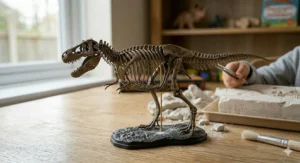
The excavation process mirrors genuine archaeological methodology. Professional palaeontologists use similar techniques when extracting specimens from rock formations, working patiently to avoid damaging delicate bones. Children learn that science requires precision, patience, and systematic approaches – lessons applicable far beyond dinosaur studies.
Cognitive Development Benefits
Modern educational theory emphasises the importance of executive function skills: focus, working memory, and cognitive flexibility. Dinosaur excavation kit for kids activities naturally develop these abilities. When a 7-year-old concentrates on carefully brushing debris from a fragile fossil replica, they’re strengthening attention control. Planning which section to excavate next exercises working memory and strategic thinking.
Problem-solving emerges organically throughout the process. What happens when a bone piece breaks? How do you remove stubborn plaster without damaging the fossil? These challenges teach children to adapt approaches, think creatively, and persist through difficulties.
Fine Motor Skill Enhancement
Occupational therapists increasingly recommend excavation kits as therapeutic tools for developing fine motor control. The precise movements required – gripping small chisels, controlling brush strokes, manipulating tiny fossil pieces – strengthen hand muscles and improve hand-eye coordination. These skills directly transfer to writing, drawing, and other academic tasks.
For children with developmental coordination difficulties, fossil digging toys UK occupational therapists recommend can provide engaging practice without the frustration of traditional exercises. The motivating context (discovering dinosaurs!) makes the challenging physical work feel like adventure rather than therapy.
Age-Appropriate Selection: Matching Kits to Development Stages
Choosing the right dinosaur excavation kit for kids requires understanding developmental capabilities at different ages. A kit that frustrates a 5-year-old might bore a 10-year-old, whilst overly simple sets waste the potential of enthusiastic learners.
Ages 3-5: Introduction to Discovery
At this stage, children need large, easy-to-manipulate pieces with minimal frustration. The EDUMAN Dino Egg Dig Kit exemplifies ideal design for this age group. Each egg excavates quickly (15-20 minutes), maintaining attention without overwhelming patience reserves. The resulting dinosaur figures are sturdy enough to withstand enthusiastic play.
Safety becomes paramount with younger children. Look for non-toxic plaster compositions, rounded tool edges, and pieces large enough to avoid choking hazards. The CE marking on UK-sold products indicates compliance with European safety standards – essential verification for this age range.
Supervision remains necessary, not just for safety but for learning guidance. Parents can introduce basic concepts: “This dinosaur ate plants” or “See how the tail helps balance?” Simple observations plant seeds for deeper scientific understanding later.
Ages 6-8: Building Scientific Curiosity
Primary school children possess extended attention spans and emerging reading skills. Kits like the Science4you 4-in-1 Fossil Excavation Kit leverage these developing abilities with educational booklets they can read independently or with minimal assistance.
This age group benefits from moderate challenges. Excavation blocks that require 30-45 minutes provide satisfying difficulty without excessive frustration. The assembly phase becomes increasingly important – reconstructing skeletons teaches spatial reasoning and following sequential instructions.
Introduce proper terminology at this stage. Instead of “dinosaur bones,” use “fossils” and “skeletons.” Discuss “palaeontologists” rather than “dinosaur scientists.” Building accurate vocabulary strengthens their scientific literacy and prepares them for more advanced learning.
Ages 9-12: Advancing to Authentic Palaeontology
Older children crave authenticity and intellectual depth. The GeoSafari Fossil Excavation Kit with genuine prehistoric specimens satisfies this developmental need. At this stage, children appreciate that they’re handling actual fossils millions of years old – the reality enhances engagement beyond any replica.
Challenge levels can increase substantially. Harder plaster blocks or sand matrices require persistence and refined technique. This age group can independently research their discoveries, connecting excavation activities to broader scientific concepts like geological time periods, evolution, and extinction events.
Encourage documentation habits. Suggest they photograph their excavations step-by-step, maintain discovery journals, or create museum-style display cards for their collections. These practices mirror professional palaeontological methodology whilst developing organisational and communication skills.
Educational Integration: Maximising Learning Potential
A dinosaur excavation kit for kids becomes exponentially more valuable when integrated into broader educational experiences rather than treated as isolated entertainment.
Curriculum Connections
The UK National Curriculum includes numerous touchpoints for excavation kit activities. In Key Stage 1 Science, children study “Animals, including Humans” and can explore how dinosaurs compare to modern animals. Key Stage 2 includes “Living Things and Their Habitats,” perfect for discussing extinction and environmental changes.
Geography lessons benefit from examining where different dinosaur species lived. Create maps showing Triassic, Jurassic, and Cretaceous period continents – children discover Britain’s geography looked vastly different millions of years ago. History lessons can incorporate palaeontology’s development as a science, highlighting British pioneers like Mary Anning, whose discoveries along the Jurassic Coast revolutionised our understanding of prehistoric life.
Cross-Disciplinary Projects
Transform excavation activities into comprehensive learning experiences spanning multiple subjects:
Mathematics Applications: Measure fossil dimensions, calculate ratios between replica and actual dinosaur sizes, create graphs comparing different species’ heights or weights. Older children can explore exponential decay in radiometric dating concepts.
Literacy Development: Write diary entries from a dinosaur’s perspective, create fact files using research skills, or compose adventure stories featuring palaeontologists. These activities develop writing skills whilst reinforcing scientific knowledge.
Art Integration: Sketch excavation finds, sculpt clay dinosaurs, or paint prehistoric landscapes. Artistic representation deepens observational skills and provides alternative expression methods for children who struggle with traditional academic formats.
Museum Visit Enhancement
Excavation kits create perfect pre- or post-visit activities for museum trips. Before visiting the Natural History Museum in London, excavate a dinosaur species featured in their collections. Children arrive with existing knowledge, transforming them from passive observers into informed investigators seeking additional information about “their” dinosaur.
Following museum visits, excavation kits reinforce learning. Children who’ve seen full-size skeletons appreciate the scale and context of their home excavations differently. The combination of grand museum experiences and hands-on home activities creates layered learning that promotes long-term retention.
Safety Considerations and Best Practices
Whilst dinosaur excavation kit for kids products sold in the UK meet strict safety standards, proper usage ensures both safety and optimal learning experiences.
Material Safety
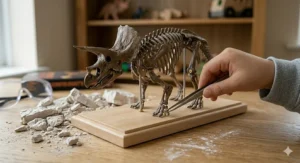
Quality kits use gypsum-based plasters – the same material in medical casts – which is non-toxic and biodegradable. However, the excavation process creates significant dust. Always work in well-ventilated areas, preferably outdoors when weather permits. For indoor excavations, use large trays or newspaper to contain debris, and consider having children wear dust masks if particularly sensitive.
Some kits include small pieces representing teeth, claws, or bone fragments. Check age recommendations carefully and supervise younger children to prevent choking hazards. The UKCA marking (replacing CE post-Brexit) indicates compliance with UK safety regulations.
Tool Usage Education
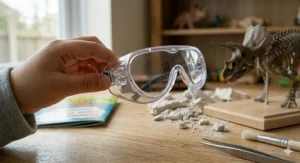
Excavation tools, whilst designed for children, remain functional implements requiring respectful handling. Before beginning, demonstrate proper technique:
- Hold chisels at angles, never pointing toward the face
- Use controlled, gentle strikes rather than aggressive hammering
- Brush away from the body to avoid debris in eyes
- Work slowly and methodically, not rushed
These safety practices mirror professional palaeontological methodology, adding authentic educational value alongside protecting children.
Environmental Considerations
Responsible disposal matters. Leftover plaster shouldn’t go down drains where it can harden and cause blockages. Collect debris in bags for household waste disposal. Some environmentally conscious parents mix plaster remnants with garden soil where it breaks down naturally, providing minerals.
Consider the packaging and materials’ environmental impact when selecting kits. British brands like Jaques of London often use recyclable packaging and sustainable materials. The Science4you range emphasises eco-friendly composition in their gypsum blocks.
Creating Positive Learning Environments
Physical safety addressed, consider emotional safety too. Excavation requires patience – some children find this challenging. Frame potential frustrations positively: “Real palaeontologists work for weeks on single fossils! You’re being just as patient as they are.” This reframing transforms struggle into achievement.
Celebrate discoveries enthusiastically, whether the child completes excavation in one sitting or requires multiple sessions. Learning happens in the process, not just the final assembly. Children who feel pressured to finish quickly miss valuable lessons in persistence and precision.
Top Features to Consider When Buying
Navigating the extensive selection of archaeology toys for kids requires understanding which features deliver genuine value versus marketing fluff.
Quality of Educational Content
The educational materials accompanying excavation kits vary dramatically in quality. Premium options like National Geographic include comprehensive learning guides written by actual palaeontologists, covering geological time periods, fossilisation processes, and species-specific information backed by current scientific understanding.
Evaluate educational content before purchasing:
- Is information age-appropriate and accurate?
- Does it extend beyond basic facts to encourage deeper thinking?
- Are sources credible and current?
- Does it include activities beyond the excavation itself?
Tool Durability and Effectiveness
Nothing frustrates children faster than tools that break mid-excavation. Quality kits include tools that balance effectiveness with safety. The chisel should be sturdy enough to chip plaster without bending, yet not sharp enough to cause injury. Brushes need bristles firm enough to clear debris but soft enough not to scratch fossil surfaces.
British manufacturers like Jaques of London often provide superior tool quality, reflecting their centuries of toy-making expertise. The slightly higher upfront cost pays dividends when tools survive multiple kit uses rather than breaking during the first excavation.
Fossil Quality and Accuracy
Replica accuracy matters for educational value. Well-designed fossils show anatomically correct details: proper joint structures, realistic bone textures, accurate proportions. These details teach children that science values precision – sloppy replicas convey that “close enough” suffices.
Some premium kits include actual fossils alongside replicas. The GeoSafari Fossil Excavation Kit exemplifies this approach, providing genuine prehistoric specimens that transform the activity from simulation into authentic palaeontological collection building.
Assembly Complexity
Post-excavation assembly ranges from simple (6-8 pieces) to challenging (20+ pieces). Match complexity to your child’s abilities and patience levels. Younger children benefit from simpler assemblies providing quick success. Older children appreciate complex reconstructions that require problem-solving and spatial reasoning.
Quality kits include clear assembly instructions with diagrams. Some manufacturers provide online video tutorials – particularly helpful for intricate skeletons where two-dimensional images don’t fully convey three-dimensional assembly.
Value for Money
Price per excavation varies significantly across products. The EDUMAN 12 Dino Egg Dig Kit at £15.99-£22.99 provides twelve separate excavations (approximately £1.33-£1.91 each), whilst single excavation kits might cost £12.99-£15.99. However, value encompasses more than mathematics.
Consider:
- Educational content quality and depth
- Tool durability for reuse with other materials
- Fossil quality and display worthiness
- Brand reputation and customer service
- Delivery speed and costs within UK
Sometimes paying slightly more for superior educational content or authentic fossils delivers better overall value than cheaper alternatives with minimal learning support.
Comparison: Excavation Kits vs Traditional Alternatives
| Feature | Excavation Kits | Dinosaur Books | Museum Visits | Documentaries |
|---|---|---|---|---|
| Hands-on Learning | ✅ Excellent | ❌ None | ⭐ Limited | ❌ None |
| Cost (£) | £9-£25 | £5-£15 | £Free-£20 | £Free-£8 |
| Reusability | ⭐ Limited | ✅ Unlimited | ✅ Unlimited | ✅ Unlimited |
| Skill Development | ✅ Multiple skills | ⭐ Reading only | ⭐ Observation | ⭐ Comprehension |
| Engagement Duration | 2-4 hours | 30-60 mins | 2-5 hours | 45-90 mins |
| Solo Activity | ✅ Yes | ✅ Yes | ⭐ Better with adults | ✅ Yes |
| Educational Depth | ⭐ Moderate | ✅ High | ✅ Very high | ✅ High |
Benefits vs Traditional Alternatives Analysis
Whilst excavation kits shouldn’t replace books, museums, or documentaries, they offer unique advantages that complement other learning methods:
Tactile Learning Superiority: Research consistently demonstrates that kinesthetic learners – estimated at 30-40% of children – retain information better through physical activity. Excavation kits provide this tactile engagement that books and screens cannot match. Children remember the Triceratops they painstakingly excavated far longer than one they merely read about.
Developing Delayed Gratification: In our instant-gratification society, excavation activities teach that worthwhile achievements require sustained effort. Children can’t simply “skip ahead” – they must methodically work through the process. This patience training proves invaluable across all life areas, from academic persistence to social skill development.
Fostering Independent Learning: Unlike museum visits requiring adult transport and supervision, children can engage with excavation kits independently once basic safety demonstrated. This autonomy builds confidence and self-directed learning habits crucial for academic success.
Price Range and Value Analysis
| Budget Category | Price Range (£) | Typical Features | Best For | Example Products |
|---|---|---|---|---|
| Budget | £9-£13 | 1-2 dinosaurs, basic tools, minimal guide | First-time buyers, party favours | Science4you 2-in-1 |
| Mid-Range | £13-£18 | 2-4 dinosaurs, quality tools, educational content | Most families, regular use | Science4you 4-in-1, National Geographic |
| Premium | £18-£25 | Authentic fossils or premium materials, comprehensive education | Serious enthusiasts, older children | GeoSafari, Jaques of London |
Setting Up the Perfect Excavation Environment
Creating an optimal workspace transforms excavation from potentially messy chaos into organised scientific exploration.
Indoor Setup Essentials
When excavating indoors, preparation prevents frustration:
Surface Protection: Large plastic tarp or several layers of newspaper create easy-cleanup workspaces. Avoid valuable furniture or carpets – even careful children occasionally drop tools or knock over plaster debris.
Lighting Matters: Position workspaces near bright natural light or add task lighting. Proper illumination helps children see tiny details and reduces eye strain during concentrated work. LED desk lamps with adjustable arms work brilliantly for this purpose.
Containment Strategy: Large shallow trays (like cat litter trays) contain debris beautifully. The raised edges prevent dust spreading whilst providing stable work surfaces. Some parents use large cardboard boxes cut to shallow depths – recyclable and disposable after messy excavations.
Ventilation: Open windows provide airflow that disperses plaster dust. Whilst gypsum is non-toxic, breathing excessive dust irritates throats and noses. Good ventilation creates comfortable working conditions.
Outdoor Excavation Advantages
Weather permitting, outdoor excavations offer significant benefits:
- Natural ventilation eliminates dust concerns entirely
- Larger working spaces accommodate enthusiastic digging
- Mess worries disappear when working on grass or paving
- Natural lighting provides optimal visibility
Garden tables or picnic blankets create comfortable outdoor workstations. Just ensure you’re not working during high winds that scatter lightweight plaster debris across the garden!
Organisation Systems
Developing organisational habits during excavation builds valuable life skills:
Tool Management: Designate specific locations for each tool. Small containers or compartmentalised trays keep chisels, brushes, and magnifying glasses organised. This system teaches responsibility whilst preventing lost pieces.
Discovery Documentation: Encourage children to photograph their excavations at various stages. Create simple log sheets recording:
- Excavation start time
- Species being uncovered
- Interesting observations during process
- Completion time
- Final assembly notes
These records transform casual play into scientific methodology practice.
Display Planning: Before excavation begins, designate display locations for completed fossils. Dedicated shelf space signals that these achievements deserve prominence, whilst preventing assembled skeletons from becoming clutter subsequently damaged or discarded.
Common Mistakes to Avoid
Learning from others’ experiences prevents common pitfalls that diminish excavation enjoyment and educational value.
Rushing the Process
The most frequent mistake is treating excavation as a race to completion. Parents sometimes project their own impatience onto children, urging them to “hurry up” or “finish quickly.” This pressure contradicts the core learning objective – developing patience and methodical approaches.
Real palaeontologists spend years on single dig sites. Whilst children needn’t take years, framing excavation as a patient process requiring care builds appropriate expectations. Some children complete kits in single sittings; others return across multiple days. Both approaches are perfectly valid provided the child remains engaged.
Inadequate Preparation
Beginning excavation without reading instructions or reviewing educational materials wastes learning opportunities. The ten minutes spent understanding the dinosaur species being excavated, studying bone diagrams, and learning proper technique pays enormous dividends.
Preparation also includes physical workspace setup. Starting excavation then realising you lack adequate lighting, dust protection, or tool organisation creates unnecessary frustration and interruption.
Neglecting the Educational Component
Some parents treat excavation kits as pure entertainment, ignoring included educational materials. Whilst fun alone has value, the true return on investment comes from engaging with learning content.
Before, during, and after excavation, discuss:
- When and where this dinosaur lived
- What it ate and how it obtained food
- How it defended itself or escaped predators
- Why it eventually went extinct
- How we know these facts (fossil evidence)
These conversations transform simple digging into comprehensive palaeontology lessons.
Poor Assembly Practices
After carefully excavating fragile fossil pieces, some children (and parents!) rush assembly, forcing pieces together or losing small components. This final stage deserves the same care as excavation itself.
Work on clean, clutter-free surfaces where small pieces won’t get lost. Follow assembly instructions methodically rather than attempting intuitive construction. If pieces don’t fit easily, check orientation rather than forcing – authentic fossil replicas have specific correct alignments.
Premature Disposal
In tidying enthusiasm, parents sometimes discard educational materials, tools, or even incomplete excavations. Those brushes and chisels can excavate homemade plaster blocks (mix plaster of Paris, hide small toys, let harden). Educational booklets provide reference material for future learning. Even incomplete excavations might be resumed after breaks.
Before discarding anything, consider:
- Can tools be reused for DIY excavation projects?
- Does the educational guide contain information worth keeping?
- Might younger siblings enjoy this kit later?
- Could incomplete excavations be finished another time?
DIY Extension Activities
Maximise your investment by extending learning beyond the single included excavation.
Creating Custom Excavation Blocks
Once children complete commercial kits, create custom excavations using plaster of Paris (available at craft shops for £3-£5 per kilogramme):
Materials Needed:
- Plaster of Paris
- Mixing container and water
- Moulds (plastic containers, ice cube trays)
- Small toys or objects to hide
Process:
- Mix plaster according to package instructions
- Pour thin layer into mould
- Place objects to be excavated
- Cover with remaining plaster
- Allow 24-48 hours to cure completely
- Excavate using original kit tools
Hide small dinosaur figures, plastic gems, or even chocolate coins (excavate quickly!). This extends the hands-on learning indefinitely whilst teaching basic chemistry (plaster curing involves chemical reactions).
Fossil Casting Projects
Real palaeontologists create moulds of important fossils. Children can replicate this process:
- Press plastic dinosaurs or shells into modelling clay to create impressions
- Mix plaster of Paris
- Pour into clay moulds
- Once hardened, remove to reveal fossil “casts”
These casts demonstrate how fossils form when organisms leave impressions in sediment that subsequently hardens. The hands-on demonstration teaches geological concepts more effectively than any textbook explanation.
Archaeological Dig Simulation
Transform your garden or sandbox into archaeological dig sites. Bury plastic dinosaurs or bones at various depths, create grid systems with string, and let children methodically excavate quadrants. This mirrors professional archaeological methodology whilst providing extended outdoor play.
Document finds with photographs, measurements, and location notes. Older children can create site maps showing where different specimens were located – genuine archaeological practice.
Storage and Display Solutions
Completed excavations deserve proper presentation and preservation.
Display Case Options
Protect assembled fossils whilst showcasing achievements:
Shadow Boxes: Craft shops sell shallow shadow box frames (£8-£15) perfect for displaying skeletons. Add labels with species names, time periods, and interesting facts. These create museum-quality presentations worthy of bedroom walls.
Display Stands: Many kits include basic stands, but upgrade options exist. Clear acrylic risers (available in craft stores) elevate specimens for better visibility. Multi-tier stands showcase entire collections attractively.
Dedicated Shelving: Install shallow shelves specifically for fossil collections. Adequate spacing prevents overcrowding whilst creating mini-museum displays. Add small LED strip lighting for dramatic effect.
Cataloguing Collections
Encourage systematic collection management mirroring museum practices:
Inventory Systems: Create simple spreadsheets or notebooks recording:
- Species name and type
- Excavation date
- Kit manufacturer
- Display location
- Interesting facts
This organisation teaches data management skills whilst maintaining collection integrity.
Photography Documentation: Photograph each specimen from multiple angles. These images create digital backup records if physical specimens are damaged and provide sharing opportunities (children love showing grandmother their collection via video calls!).
Educational Extensions: For each displayed fossil, create small museum-style cards including:
- Common and scientific names
- Time period lived
- Size comparison to modern animals
- Notable characteristics
These cards transform displays from pretty objects into educational resources children (and visiting friends) can learn from repeatedly.
✨ Transform Your Home Into an Educational Discovery Centre
🔍 Ready to inspire the next generation of palaeontologists? These archaeology toys for kids combine education and entertainment perfectly. Check current availability on highlighted products to begin your family’s prehistoric adventure today!
Frequently Asked Questions
❓ What is the best age to start with dinosaur excavation kit for kids?
❓ Are these excavation kits messy, and how can I minimise the dust?
❓ Can excavation kits be reused, or are they single-use products?
❓ What's the difference between kits with replica fossils and those with genuine fossils?
❓ Do these kits align with UK school curriculum requirements?
Conclusion: Investing in Educational Excellence
Choosing a dinosaur excavation kit for kids represents far more than buying another toy. You’re investing in genuine educational experiences that build scientific literacy, develop critical thinking skills, and potentially ignite lifelong passions for palaeontology and natural sciences.
The UK market offers exceptional options across all price points. Budget-conscious families can find outstanding value in the Science4you 4-in-1 Fossil Excavation Kit at £12.99-£16.00, delivering four complete dinosaurs with comprehensive educational content. Those seeking authentic specimens should consider the GeoSafari Fossil Excavation Kit or National Geographic options, both featuring genuine prehistoric materials that create profound connections to Earth’s deep history.
For premium British quality and gift-worthy presentation, Jaques of London maintains their 225-year reputation for excellence with beautifully crafted excavation sets that become family heirlooms rather than disposable entertainment.
Whichever kit you choose, remember that the true value lies not in the physical fossils but in the experiences created. The patience learned during careful excavation, the wonder felt when uncovering prehistoric creatures, the pride in completing complex assemblies – these intangible benefits far exceed the modest financial investment.
Begin your family’s palaeontological adventure today. Whether your child dreams of becoming the next Mary Anning or simply enjoys hands-on science exploration, these carefully selected excavation kits provide perfect starting points for prehistoric discovery.
The Jurassic period ended 145 million years ago, but the excitement of discovering its inhabitants continues every time a child picks up a chisel and begins to excavate. What will your family uncover?
Recommended for You
- 7 Best Dinosaur Toys for 4 Year Old UK (2026 Expert Guide)
- 7 Best Magnetic Building Tiles UK 2026
- 7 Best Construction Toys for 3 Year Old Boy UK (2026 Guide)
Disclaimer: This article contains affiliate links. If you purchase products through these links, we may earn a small commission at no additional cost to you. Prices shown are approximate and may vary.
✨ Found this helpful? Share it with your mates! 💬🤗
