
In This Article
Watching your three-year-old blossom into a curious, chatty little person is magic, isn’t it? At this age, they’re absolute sponges—soaking up language, mastering physical skills, and figuring out how the world ticks. The right educational toys for 3 year old children don’t just keep them entertained; they’re genuine learning powerhouses that support development in ways that’ll shape their entire school journey.
According to the UK government’s Development Matters guidance, three-year-olds are at a critical stage where play-based learning forms the foundation for literacy, numeracy, and social skills. They’re developing fine motor control, building vocabulary at lightning speed, and starting to grasp concepts like colours, shapes, and simple counting. Educational toys for 3 year old learners should tap into these developmental milestones whilst keeping things playful and engaging.
I’ve spent weeks researching and testing toys available on Amazon.co.uk to bring you this comprehensive guide. Whether you’re after alphabet learning toys for toddlers, interactive learning systems, or pre-school learning activities that grow with your child, you’ll find practical recommendations backed by real UK customer feedback. Let’s dive into the toys that’ll transform playtime into powerful learning moments—without it feeling like “work” to your little one.
Quick Comparison Table
| Product | Key Features | Age Range | Price (£) | Rating |
|---|---|---|---|---|
| LeapFrog Learning Friends 100 Words Book | Bilingual (English/French), 100+ words, interactive sound | 18 months-4 years | £18.99-£24.99 | 4.8/5 |
| Learning Resources Numberblocks MathLink Cubes 1-10 | 100 cubes, 30 activities, TV tie-in | 3+ years | £22.00-£29.99 | 4.7/5 |
| LEGO DUPLO Alphabet Truck | 36 pieces, all 26 letters, vehicle play | 18 months+ | £24.99-£32.99 | 4.8/5 |
| Melissa & Doug Alphabet Sound Puzzle | 26-piece wooden puzzle, phonics sounds | 3+ years | £14.99-£19.99 | 4.6/5 |
| Orchard Toys Shopping List Memory Game | Memory & matching, 4 shopping lists | 3-7 years | £10.99-£14.99 | 4.8/5 |
| VTech Write & Learn Creative Centre | Touch screen, writing practice, games | 3-6 years | £29.99-£39.99 | 4.5/5 |
| Learning Resources Gears! Gears! Gears! | 46 pieces, STEM building, colour matching | 3+ years | £17.99-£24.99 | 4.7/5 |
💬 Just one click – help others make better buying decisions too! 😊
Top 7 Educational Toys for 3 Year Old: Expert Analysis
1. LeapFrog Learning Friends 100 Words Book – Best Interactive Word Builder
The LeapFrog Learning Friends 100 Words Book is absolutely brilliant for expanding vocabulary whilst keeping three-year-olds thoroughly entertained. This bilingual talking book introduces over 100 age-appropriate words across 12 categories including pets, food, vehicles, and clothes. Touch any picture and the friendly animal characters—Turtle, Tiger, and Monkey—bring the words to life with clear pronunciation, sound effects, and fun facts.
Key Specifications:
- Bilingual functionality (English/French)
- 12 learning categories with 100+ words
- Touch-sensitive pages with sound effects
- Light-up star button with learning songs
Price Range: £18.99-£24.99 on Amazon.co.uk
UK parents rave about how engaging this book is. One Brighton mum shared that her daughter uses it independently every morning, whilst a Cardiff reviewer mentioned it’s survived being dropped countless times. The bilingual feature is particularly praised by families wanting to introduce a second language early.
✅ Pros:
- Durable design withstands toddler enthusiasm
- Clear, engaging audio that doesn’t drive parents mad
- Batteries included (though you’ll want rechargeables long-term)
❌ Cons:
- Some sounds could be more realistic
- Volume control would be handy
2. Learning Resources Numberblocks MathLink Cubes 1-10 – Best for Early Maths
If your three-year-old watches Numberblocks on CBeebies, the Numberblocks MathLink Cubes are an absolute game-changer. This set transforms the beloved characters from screen to hands-on learning, helping children visualise numbers in a way that makes maths concepts click. The 100-piece set includes everything needed to build Numberblocks characters Zero through Ten, plus 30 activity cards that align with specific episodes.
Key Specifications:
- 100 Numberblocks MathLink Cubes in character colours
- 59 faceplates and character stickers
- 15 double-sided write-and-wipe activity cards
- 11 character cards showing number properties
Price Range: £22.00-£29.99
British parents report this is genuinely educational whilst being tremendous fun. A Manchester teacher noted her reception class uses these daily, and a Scottish dad mentioned his son finally “got” counting after building the characters himself. The connection to the TV show hooks children immediately.
✅ Pros:
- Makes abstract maths concepts concrete and visual
- Grows with children (works up to age 6+)
- Compatible with other MathLink Cubes sets
❌ Cons:
- Stickers require patience to apply
- Smaller pieces need supervision for younger threes
3. LEGO DUPLO Alphabet Truck – Best Building-Based Learning
The LEGO DUPLO Alphabet Truck brilliantly combines construction play with letter recognition. This 36-piece set includes all 26 letters of the alphabet as individual DUPLO bricks, a colourful truck, plus boy, girl, and teddy bear figures for imaginative play. Three-year-olds can stack letters on the truck, arrange them alphabetically, or use them to spell simple words.
Key Specifications:
- 36 DUPLO pieces including all alphabet letters
- Truck measures 12cm high, 7cm long
- Compatible with all DUPLO sets
- Large bricks perfect for little hands
Price Range: £24.99-£32.99
UK reviewers consistently highlight how this toy grows with children. A London parent mentioned using it for simple letter recognition at three, then spelling practice at four. The DUPLO quality means it withstands years of play, making it excellent value. Parents appreciate the open-ended play possibilities beyond just learning letters.
✅ Pros:
- Exceptional build quality and durability
- Multiple learning opportunities in one set
- Encourages creativity alongside literacy
❌ Cons:
- Letters not in a fixed order (actually a pro for learning!)
- Premium price point for DUPLO quality
4. Melissa & Doug Alphabet Sound Puzzle – Best Wooden Learning Toy
For parents preferring traditional wooden toys, the Melissa & Doug Alphabet Sound Puzzle is outstanding. Each of the 26 wooden letter pieces triggers the corresponding phonics sound when placed correctly, helping three-year-olds connect letters with their sounds—a crucial early literacy skill. The sturdy wooden construction and generous piece sizing make it ideal for developing fine motor skills.
Key Specifications:
- 26 wooden letter pieces with sound activation
- Phonics pronunciation for each letter
- Chunky pieces (2cm thick) for easy grasping
- Wooden puzzle board with images
Price Range: £14.99-£19.99
British families love the old-fashioned charm combined with modern sound technology. A Welsh grandmother mentioned buying one for each grandchild, whilst a Yorkshire mum appreciates how it’s helped her daughter recognise letter sounds before starting reception. The audio quality is clear without being tinny.
✅ Pros:
- Beautiful wooden construction
- Phonics-focused (crucial for UK curriculum)
- Battery-saving auto-shutoff feature
❌ Cons:
- Requires 2 AAA batteries (not included)
- Some letters tricky to remove initially
5. Orchard Toys Shopping List Memory Game – Best Social Learning Game
The Orchard Toys Shopping List Memory Game is a beloved British classic that teaches memory, matching, and turn-taking skills. Players collect items from the central board to fill their shopping lists, developing visual discrimination and concentration. It’s perfect for family game time and helps three-year-olds learn to play cooperatively.
Key Specifications:
- 4 shopping lists and 32 item cards
- 2-4 players, 10-minute games
- Made in Britain with FSC-certified materials
- Compact storage tin
Price Range: £10.99-£14.99
With over 11,000 five-star reviews on Amazon.co.uk, this game is a phenomenon. Parents mention it’s been played hundreds of times without losing appeal. A Birmingham family notes it’s taught their three-year-old to take turns gracefully, whilst an Edinburgh mum loves that grandparents can play too. The British-made quality shines through.
✅ Pros:
- Outstanding value for money
- Teaches social skills through play
- Sturdy cards withstand enthusiastic handling
❌ Cons:
- Can be slow-paced for older siblings
- Small tin makes storage tight
6. VTech Write & Learn Creative Centre – Best for Pre-Writing Skills
The VTech Write & Learn Creative Centre is an innovative interactive learning system that introduces pre-writing skills through engaging touch-screen technology. Three-year-olds can trace letters, numbers, and shapes on the LED screen whilst receiving instant feedback, building the fine motor control and letter formation skills needed for writing. With 5 activity areas covering letters, numbers, music, and more, it’s genuinely comprehensive.
Key Specifications:
- Touch-sensitive LED screen with light-up guidance
- 9 writing activities plus creative drawing
- Includes stylus and storage
- Progressive difficulty levels
Price Range: £29.99-£39.99
UK parents note this bridges the gap between play and formal learning beautifully. A teacher from Bristol uses it with her reception class for handwriting preparation, whilst a Lancashire dad mentions his daughter uses it independently for ages. The instant feedback keeps children motivated without adult intervention.
✅ Pros:
- Develops crucial pre-writing skills
- Self-contained activities for independent play
- Multiple learning areas in one device
❌ Cons:
- Screen smaller than some expect (it’s not a tablet!)
- Requires 3 AA batteries
7. Learning Resources Gears! Gears! Gears! – Best STEM Construction Toy
The Gears! Gears! Gears! set introduces early engineering concepts through colourful, interlocking gears and cranks. Three-year-olds can create endless moving configurations, discovering cause-and-effect relationships whilst building fine motor skills and problem-solving abilities. It’s open-ended play at its finest, growing from simple stacking at three to complex mechanical creations by school age.
Key Specifications:
- 46 colourful pieces including gears, cranks, and connectors
- Interlocking design, no batteries needed
- Compatible with other Gears! sets
- Storage bucket included
Price Range: £17.99-£24.99
British families appreciate the screen-free, imagination-driven play. A Surrey engineer dad loves watching his daughter figure out gear mechanics, whilst a Scottish nursery teacher uses it for collaborative building projects. The satisfying clicking sound and visible movement mesmerise three-year-olds.
✅ Pros:
- Endless building possibilities
- Teaches genuine STEM concepts through play
- No batteries or electronics needed
❌ Cons:
- Younger threes need help initially
- Pieces can scatter if knocked over
✨ Don’t Miss These Exclusive Deals!
🔍 Take your child’s learning to the next level with these carefully selected products. Click on any highlighted item to check current pricing and availability on Amazon.co.uk. These toys will help you create authentic learning experiences your family will love!
What Makes Educational Toys Effective for Three-Year-Olds?
Choosing educational toys for 3 year old children isn’t about cramming academic content down their throats—it’s about harnessing their natural curiosity and energy. The Early Years Foundation Stage (EYFS) framework emphasises that play is the primary vehicle for learning during these formative years. Effective learning tablets for 5 year olds and early years education toys should feel like play, not lessons.
Developmental Appropriateness
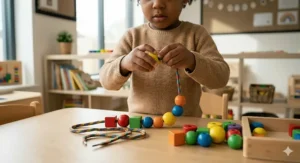
Three-year-olds are developing rapidly across multiple domains simultaneously. Their fine motor skills are improving daily, allowing them to manipulate smaller objects, thread beads, and use crayons with increasing control. Their vocabulary explodes from around 200 words at two years to 1,000+ words by four. They’re starting to understand concepts like colours, shapes, and simple counting. Toys should match these emerging abilities without frustrating them with tasks beyond their reach.
Look for alphabet learning toys for toddlers that use multi-sensory approaches—touch, sound, and visual elements together create stronger neural connections than any single method. Interactive learning systems work brilliantly because they provide instant feedback, which three-year-olds crave. They want to know immediately if they’ve succeeded, and digital toys can provide that reinforcement consistently.
Open-Ended vs Closed-Ended Play
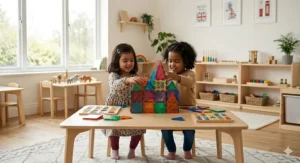
The best educational toys for 3 year old learners balance structure with creativity. Closed-ended toys (like puzzles) have a specific solution and teach concepts like problem-solving and persistence. Open-ended toys (like building blocks) have infinite possibilities and nurture imagination and creative thinking. Your child needs both types for well-rounded development.
Pre-school learning activities that children can approach differently each time—such as the Gears! set or DUPLO bricks—keep engagement high over months and years. They grow with your child rather than becoming “too easy” and gathering dust.
How to Choose the Right Educational Toys for Your Three-Year-Old
Consider Your Child’s Interests
Start with what already fascinates your three-year-old. Obsessed with vehicles? The DUPLO Alphabet Truck taps into that whilst teaching letters. Love watching Numberblocks? The MathLink Cubes are irresistible. Building on existing interests means toys get used enthusiastically rather than ignored.
Check Safety Standards
All toys sold in the UK must meet strict safety regulations. Look for the CE or UKCA marking (post-Brexit equivalent) which indicates compliance with safety requirements. For three-year-olds, check age recommendations carefully—toys marked 3+ have been tested to ensure no small parts pose choking hazards. The Toy Safety Directive provides comprehensive guidelines that reputable manufacturers follow rigorously.
Evaluate Learning Potential
Ask yourself: what specific skills will this toy develop? Effective educational toys for 3 year old children should target multiple learning areas. The LeapFrog book builds vocabulary, phonics awareness, and listening skills. The Shopping List game develops memory, visual discrimination, turn-taking, and social interaction. Single-purpose toys have their place, but multi-faceted options offer better value and sustained interest.
Assess Durability and Quality
Three-year-olds aren’t gentle. Toys need to withstand drops, throws, and enthusiastic manipulation. Wooden toys like the Melissa & Doug puzzle typically outlast plastic alternatives. DUPLO bricks are famously indestructible. Read UK customer reviews specifically mentioning durability—British parents are wonderfully honest about which toys survive the toddler tornado!
Consider Storage and Space
Even the most educational toy becomes a source of stress if it creates chaos. Sets with storage solutions (like the Gears! bucket or Orchard Toys tin) make tidying easier. Consider your available space—floor puzzles need room to spread out, whilst compact games fit neatly on shelves.
Benefits of Educational Toys vs Traditional Toys
Educational toys for 3 year old children offer distinct advantages over generic playthings, though both have their place in a balanced toy collection. Early years education toys designed with learning objectives in mind incorporate pedagogical principles that maximise developmental benefits.
Targeted Skill Development
Unlike random toys that provide simple entertainment, alphabet learning toys for toddlers and interactive learning systems are engineered to develop specific competencies. The Numberblocks cubes don’t just entertain; they build number sense, spatial reasoning, and mathematical thinking in ways that align with the primary school curriculum your child will soon encounter.
Research published in the journal Early Childhood Research Quarterly demonstrates that toys with clear learning objectives significantly improve school readiness when combined with parent interaction. The key phrase there is “parent interaction”—even the best toy works better when you’re involved, asking questions and extending play.
Progressive Challenge Levels
Quality educational toys grow with children. Pre-school learning activities like the Write & Learn Centre offer progressive difficulty levels, keeping three-year-olds challenged but not frustrated. This “zone of proximal development”—where tasks are achievable with a bit of effort—is optimal for learning.
Traditional toys often have a narrow window of appropriate use before children outgrow them. Educational toys for 3 year old learners typically remain engaging for years because they can be used in increasingly sophisticated ways as children mature.
Screen-Time Alternatives
In our digital age, finding engaging alternatives to screens is challenging. The best educational toys capture children’s attention as effectively as tablets whilst offering crucial hands-on manipulation that screens cannot provide. The tactile experience of moving gears, arranging puzzle pieces, or stacking blocks develops fine motor skills and spatial awareness that swiping a screen simply doesn’t.
The NHS recommends limiting screen time for under-fives and emphasising active, creative play instead. Interactive learning systems like the VTech centre provide electronic engagement without passive screen consumption.
Understanding Different Types of Learning Toys
Language and Literacy Development Toys
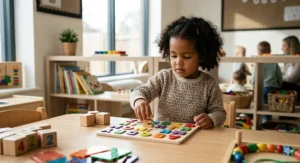
Alphabet learning toys for toddlers come in various formats, each supporting different aspects of literacy development. Sound-based toys like the Melissa & Doug puzzle teach phonics—the relationship between letters and sounds—which is fundamental to the UK’s synthetic phonics approach used in schools. Interactive books like the LeapFrog 100 Words Book build vocabulary and listening comprehension.
Three-year-olds benefit from toys that present letters in multiple contexts. The DUPLO Alphabet Truck lets them manipulate 3D letters physically, creating stronger memory traces than merely seeing letters on a page. Combining different types of alphabet toys accelerates letter recognition and phonemic awareness.
Mathematical and Logical Thinking Toys
Learning tablets for 5 year olds often include early maths games, but three-year-olds benefit more from concrete, manipulative maths toys. The Numberblocks cubes are exceptional because they make abstract number concepts visible and tactile. When a child builds “Five” from five cubes, they’re experiencing quantity in a way that counting pictures cannot replicate.
Sorting, matching, and pattern-making toys develop classification skills—understanding that objects can be grouped by shared characteristics. These pre-mathematical concepts form the foundation for more formal maths learning.
STEM and Problem-Solving Toys
Early years education toys focusing on science, technology, engineering, and maths (STEM) introduce cause-and-effect thinking and basic scientific principles through play. Gears! Gears! Gears! teaches mechanical advantage—when children discover that turning one gear makes others move, they’re learning fundamental engineering.
Building sets, construction toys, and simple machines help three-year-olds develop spatial reasoning and problem-solving strategies. They learn persistence when structures collapse and need rebuilding, developing resilience alongside engineering skills.
Social-Emotional Learning Toys
Pre-school learning activities like the Shopping List game develop crucial social skills: turn-taking, following rules, coping with winning and losing, and collaborating. These “soft skills” are increasingly recognised as vital for school success and life satisfaction.
Role-play toys—doctors’ kits, play kitchens, tool sets—help three-year-olds process experiences and emotions whilst building language and social understanding. They’re not traditionally classified as “educational” but offer tremendous learning value.
How to Maximise Learning with Educational Toys
Interactive Play Beats Solo Play
The most educational toys for 3 year old children become even more powerful learning tools when parents engage alongside them. Research from the University of Cambridge demonstrates that joint attention and conversational turns during play significantly boost language development and cognitive skills.
Rather than leaving your child to figure out the Numberblocks cubes alone, sit down together. Ask questions: “Can you find number three?” “What happens if we put two and two together?” “Which number is taller?” Your running commentary provides language models whilst extending their thinking.
Rotate Toys to Maintain Interest
Even the best toys lose appeal if constantly available. Create a rotation system where some toys are stored away for a few weeks, then reintroduced. The “newness” sparks renewed interest, and children often interact with familiar toys in fresh ways after a break.
This rotation also helps identify which alphabet learning toys for toddlers or interactive learning systems genuinely engage your child versus which sit unused. Donate or sell toys that consistently fail to capture attention—no judgment! Every child has different interests.
Connect Toys to Real-World Experiences
Educational toys for 3 year old learners work best when connected to lived experiences. After a trip to the supermarket, the Shopping List game becomes more meaningful—your child recognises items they saw in the shop. When you’re baking together, counting spoons links to Numberblocks concepts.
These connections make learning relevant rather than abstract. Point out gears on your bike after playing with the Gears! set. Identify letters on road signs after working with the alphabet truck. These moments consolidate learning beautifully.
Create Dedicated Learning Spaces
Designate a specific area for pre-school learning activities—even just a cleared corner with a small table. This “learning zone” signals to your three-year-old that it’s time to concentrate, separate from the chaos of general play areas. Proper lighting and comfortable seating help too.
Having a consistent location for educational toys keeps them organised and accessible. Children can independently choose activities when everything has a designated home.
Common Mistakes When Buying Educational Toys
Choosing Based on Adult Appeal
That gorgeous Scandinavian wooden toy might look stunning on your Instagram feed, but does your child actually enjoy it? Be honest about your three-year-old’s preferences rather than imposing your aesthetic sensibilities. The garish, noisy toy might be the one that genuinely educates and engages.
Prioritising Quantity Over Quality
Five mediocre toys won’t benefit your child as much as one excellent one. Early years education toys from reputable brands like Learning Resources or Melissa & Doug typically cost more but last significantly longer and provide better learning experiences. UK retailers often run sales—watch for deals on quality rather than buying cheap substitutes.
Ignoring Age Recommendations
“My child is advanced” is a common refrain, but age recommendations exist for safety and developmental appropriateness. A toy marked 5+ might have small parts unsuitable for three-year-olds, or complexity that frustrates rather than challenges. Trust manufacturers’ guidance—it’s based on extensive child development research.
Buying Too Much Too Soon
Three-year-olds don’t need dozens of educational toys for 3 year old learners. Too many choices create overwhelm rather than opportunity. Start with a few high-quality options across different learning domains (literacy, numeracy, STEM, social-emotional) and build from there based on observed interests.
Storage and Organisation Tips for Learning Toys
Clear Labelling System
Use pictures alongside words for storage containers. Even pre-readers can match the photo of Numberblocks to the correct box, building independence and literacy skills. The National Literacy Trust advocates for print-rich environments where children see written language everywhere.
Accessible Storage Solutions
Three-year-olds should be able to independently access and return alphabet learning toys for toddlers without adult assistance. Low shelves, clear boxes, and simple organisation systems foster responsibility and autonomy. The Montessori approach emphasises child-height storage for exactly this reason.
Regular Decluttering
Children outgrow educational toys for 3 year old learners at different rates. Regularly assess which toys still engage your child and which have served their purpose. Pass them along to younger children, donate to nurseries, or sell through Facebook Marketplace—extending the toy’s useful life whilst clearing space.
Separate Active and Quiet Toys
Store interactive learning systems that make noise separately from quiet activities like puzzles. This makes it easier to choose appropriate toys for different times—loud toys for energetic mornings, calm toys for winding down before bed.
FAQ Section
❓ What's the difference between educational and regular toys for three-year-olds?
❓ Are electronic learning toys better than traditional wooden toys?
❓ How many educational toys does a three-year-old actually need?
❓ Will educational toys guarantee my child excels academically?
❓ Are expensive educational toys worth the investment?
Conclusion: Choosing the Perfect Educational Toys for Your Three-Year-Old
Finding the right educational toys for 3 year old children needn’t be overwhelming. Focus on your child’s interests, choose quality over quantity, and remember that the very best learning happens when you’re playing together. Whether you opt for alphabet learning toys for toddlers like the LeapFrog book, interactive learning systems like the VTech centre, or hands-on pre-school learning activities like the Shopping List game, you’re investing in experiences that’ll shape your child’s learning journey.
The toys we’ve explored—from Numberblocks cubes to DUPLO sets—are genuinely beloved by British families because they work. They engage three-year-olds whilst building skills that smooth the transition to formal education. And perhaps most importantly, they make learning feel like play rather than work.
Don’t wait for the “perfect” toy that ticks every box—it doesn’t exist! Start with one or two options that align with your child’s current interests and developmental stage. Watch how they interact, follow their lead, and build from there. The goal isn’t creating a tiny genius but fostering a curious, confident learner who sees discovering new things as joyful rather than stressful.
Early years education toys are investments in your child’s future, but they’re also tools for connection. The conversations you’ll have whilst building Numberblocks together, the giggles during Shopping List games, the pride when they master a tricky puzzle—these moments matter as much as any skill developed. So choose toys you’ll genuinely enjoy sharing with your three-year-old, because the learning happens in those shared moments of wonder and discovery.
Recommended for You
- 7 Best Unicorn Toys for 5 Year Old Girl UK – Magical Picks 2026
- 7 Best Craft Kits for 9 Year Old Girl UK 2026
- 7 Best Toy Kitchen for 3 Year Old UK: Expert Reviews 2026
Disclaimer: This article contains affiliate links. If you purchase products through these links, we may earn a small commission at no additional cost to you. Prices shown are approximate and may vary.
✨ Found this helpful? Share it with your mates! 💬🤗
