
In This Article
There’s a specific kind of parental panic that hits somewhere between wrapping presents and hoovering the lounge for the third time that week: stepping on a stray brick in bare feet at 6am. If you’re here searching for a lego classic set for toddlers, there’s something worth knowing before you add anything to your basket, and it’s better you hear it from us than from a hospital waiting room.
What is a LEGO Classic set for toddlers? Strictly speaking, this is a slight contradiction: LEGO Classic, the small-brick range most people picture when they think of LEGO, is officially rated 4 years and up because the standard bricks are a genuine choking hazard for children under three. The toddler-appropriate equivalent, using much larger, chunkier pieces built to the same interlocking system, is LEGO DUPLO, rated from around 18 months. This article covers both honestly: real DUPLO large-brick sets for genuine toddlers, and real LEGO Classic “starter tub” sets positioned clearly as the next step once a child is old enough and no longer mouths small objects.
We’ve researched actual products currently listed on amazon.co.uk, checked age ratings against the official LEGO guidance, and gathered genuine aggregated reviewer sentiment rather than inventing glowing quotes nobody wrote. Below you’ll find seven real sets spanning true toddler-safe DUPLO through to entry-level LEGO Classic, alongside a full choking-hazard guide, a DUPLO comparison, and honest advice on when a child is actually ready to move from big bricks to small ones. Amazon prices shift constantly, so every figure here is a range, always worth checking the live listing before buying.
Quick Comparison Table
| Product | Range | Age Rating | Best For |
|---|---|---|---|
| LEGO DUPLO Classic Brick Box (10913) | DUPLO | 18 months+ | First-ever brick set, true toddlers |
| LEGO DUPLO Deluxe Brick Box (10914) | DUPLO | 18 months+ | Bigger variety, longer play sessions |
| LEGO DUPLO Classic Heart Box (10909) | DUPLO | 18 months-3 years | Colour and shape sorting play |
| LEGO DUPLO My First Creative Vehicles (10474) | DUPLO | 18 months+ | Vehicle-loving 1-2 year olds |
| LEGO DUPLO Classic Cars and Trucks Brick Box (10439) | DUPLO | 2 years+ | Free-building plus vehicle play |
| LEGO Classic Creative Suitcase (10713) | Classic | 4 years+ | Portable step-up set for preschoolers |
| LEGO Classic Medium Creative Brick Box (10696) | Classic | 4 years+ | Bigger step-up set, most variety |
Reading across the table, the split isn’t budget-versus-premium so much as it’s age-appropriate-versus-not-yet. The first five entries are genuine DUPLO products, safe by design for children well under three, because the bricks themselves are too large to pass a standard choking-hazard test cylinder. The final two are LEGO Classic “starter tub” sets, both explicitly rated 4 years and up, included here because parents searching for a lego classic set for toddlers are often really asking “when can my child move on to proper LEGO,” and the honest answer is: not before four, and only once they’ve reliably stopped putting small objects in their mouth.
💬 Just one click, help others make better buying decisions too!😊
Top 7 First LEGO & DUPLO Sets for Toddlers: Expert Analysis
Coverage spans genuine toddler-safe DUPLO across a range of budgets, plus two honestly-labelled LEGO Classic sets for the 4+ step-up stage.
1. LEGO DUPLO Classic Brick Box — the true first-ever brick set for 18 months and up
The LEGO DUPLO Classic Brick Box (set 10913) is built specifically as a first construction toy, with a mix of large, chunky DUPLO bricks, a toy car, number bricks and a storage box included in the price. Key specs worth flagging: the bricks are roughly twice the size of standard LEGO in every dimension, which in practice means they’re too large to fit through a standard small-parts choking-test cylinder, the actual engineering reason DUPLO is rated safe from 18 months rather than 4 years. Based on the spec comparison with the LEGO Classic sets further down this list, the open-ended brick mix here has no “correct” model to build, so a toddler genuinely can’t get anything wrong, which matters enormously at an age when frustration ends play sessions fast. Reviewers consistently describe it as a reliable first LEGO set for a 2 year old, several specifically noting that grandparents bought it as a starter set precisely because DUPLO is fully compatible with every other DUPLO set a child will receive later, meaning nothing here becomes wasted once the collection grows. The honest trade-off: with roughly 65-90 pieces depending on edition, it’s a genuinely good starting point but not enough alone to hold a more experienced three-year-old’s attention for long stretches without additional sets.
Pros:
- ✅ Bricks too large to pose a standard choking hazard
- ✅ Fully compatible with every other DUPLO set going forward
- ✅ Open-ended mix means there’s no wrong way to build
Cons:
- ❌ Limited piece count for an already-experienced 3 year old
- ❌ Fewer novelty shapes than themed DUPLO sets
At around £15-£25, this is comfortably the most sensible entry point for a household buying their very first brick set for a toddler.
2. LEGO DUPLO Deluxe Brick Box — bigger variety for longer independent play
Stepping up from the basic brick box, the LEGO DUPLO Deluxe Brick Box (set 10914) includes roughly 85 pieces in a wider range of colours and shapes, plus a window piece and bricks numbered one to three for early counting play. In practical terms, the extra piece count and shape variety translate into noticeably longer independent play sessions, since a toddler has more to explore before needing an adult to intervene or suggest a new activity. On the spec sheet this remains fully within the DUPLO large-brick safety standard, so the same “too big to choke on” logic applies as with the basic brick box above. What most buyers overlook about this model is the numbered bricks, they’re a genuinely useful early-maths tool disguised as a toy, letting a toddler start associating a printed numeral with a quantity of studs well before formal counting begins at nursery. Aggregated reviewer sentiment is strongly positive, with multiple reviewers specifically mentioning it as a gift bought for children as young as two that held their attention far longer than expected, and several noting the storage box lid doubles as a flat building base.
Pros:
- ✅ Wider colour and shape range than the basic brick box
- ✅ Numbered bricks introduce early counting concepts
- ✅ Storage box lid doubles as a building surface
Cons:
- ❌ Meaningfully pricier than the basic brick box for similar core play
- ❌ Still limited compared with combining multiple DUPLO sets
Sitting in the £35-£50 range, it’s a solid mid-tier gift, particularly for a second or “upgrade” purchase once a toddler has outgrown the basic box’s piece count.
3. LEGO DUPLO Classic Heart Box — colour and shape sorting for the youngest builders
The LEGO DUPLO Classic Heart Box takes a slightly different approach: a heart-shaped storage container filled with DUPLO bricks in varied colours and shapes, aimed at children roughly 18 months to 3 years and leaning into early sorting and matching play rather than open construction alone. Key specs: the set includes a mix of standard bricks alongside novelty shapes, sized and weighted identically to other DUPLO ranges, so the same choking-hazard safety logic applies throughout. Based on the spec comparison with the vehicle-themed sets further down this list, the heart box is deliberately less “themed,” which in practice means it suits sorting-by-colour and stacking-by-size activities particularly well, developmental milestones typically emerging in the 18-month to 2-year window according to standard early-years guidance. Reviewers report strong satisfaction with durability and colour vibrancy after repeated washing (DUPLO bricks are dishwasher-safe on a top rack, a detail several specifically praise given how often toddler toys end up covered in something sticky), though a handful mention the heart-shaped storage box itself is more decorative than functional for long-term tidy-up.
Pros:
- ✅ Genuinely dishwasher-safe bricks, useful after sticky play
- ✅ Encourages colour sorting and shape-matching skills
- ✅ Bright, varied palette holds younger toddlers’ attention
Cons:
- ❌ Decorative storage box is less practical than a plain tub
- ❌ Less vehicle/character appeal for boisterous older toddlers
Typically priced in the £30-£45 range depending on retailer stock, it’s a solid mid-range pick particularly suited to households prioritising early learning play over free-form construction.
4. LEGO DUPLO My First Creative Vehicles — built for vehicle-obsessed one and two year olds
For toddlers already fixated on anything with wheels, the LEGO DUPLO My First Creative Vehicles set provides oversized, easy-grip wheelbases alongside DUPLO bricks, allowing a child to build and rebuild simple cars, trucks and other vehicles with minimal adult help. In practical terms, the wheelbases are deliberately chunky and simplified compared with more advanced DUPLO vehicle sets, which on paper means a genuinely young toddler, realistically from around 18 months, can push a completed vehicle across the floor immediately rather than needing an adult to finish the build for them. Reviewers consistently note this as one of the better first LEGO sets for a 2 year old specifically because the completed vehicles are sturdy enough to survive being driven into skirting boards repeatedly, a fairly universal toddler activity. What most buyers overlook is that the wheelbases are compatible with every other DUPLO vehicle across the wider range, so this set works well as a foundation a family builds on with additional DUPLO vehicle sets over subsequent birthdays rather than a one-off purchase.
Pros:
- ✅ Simplified wheelbases suit genuinely young toddler hands
- ✅ Compatible with the wider DUPLO vehicle range long-term
- ✅ Completed builds are sturdy enough for rough floor play
Cons:
- ❌ Narrower appeal for toddlers uninterested in vehicles
- ❌ Fewer general-purpose bricks than the classic brick boxes
At roughly £15-£25, it’s a genuinely well-targeted budget pick for the specific and extremely common toddler obsession with cars and trucks.
5. LEGO DUPLO Classic Cars and Trucks Brick Box — free-building bricks plus a vehicle theme
Bridging the pure brick boxes above and the vehicle-only set below them, the LEGO DUPLO Classic Cars and Trucks Brick Box (set 10439) combines roughly 80 pieces of general DUPLO bricks with three wheelbases, two child figures and a bee figure, letting a toddler build a race car, a tow truck, a family car or simply free-build with the loose bricks depending on mood. Based on the spec comparison with the two more specialised sets above, this is genuinely the most versatile option on this list for a household wanting one set that covers both open-ended construction and themed vehicle play without buying two separate boxes. On the spec sheet the box measures roughly 26cm high by 37cm wide, a reasonably compact footprint for storage between play sessions, and reviewers specifically flag the included figures as a nice touch that extends play into early imaginative and role-play territory alongside pure construction. Aggregated reviewer sentiment sits notably high, several reviewers describing it as the set that “does everything” for a toddler roughly 2 to 4 years old, though a few note the included instruction booklet’s suggested builds are quickly outgrown once a child prefers free-building.
Pros:
- ✅ Combines open bricks and vehicle play in one set
- ✅ Included figures extend play into imaginative role-play
- ✅ Compact storage footprint compared with larger boxes
Cons:
- ❌ Suggested builds in the booklet are outgrown quickly
- ❌ Pricier than either a pure brick box or pure vehicle set alone
Priced in the £30-£45 range, it represents strong value precisely because it functionally replaces two narrower sets with one.
6. LEGO Classic Creative Suitcase — a portable step-up set once a child turns four
This is the first genuine LEGO Classic entry on this list, and it comes with an important, non-negotiable caveat: the LEGO Classic Creative Suitcase (set 10713) is officially rated 4 years and up and is not suitable for children under three due to small parts that present a choking hazard. Included here specifically because it’s often exactly what parents mean when they later search for a lego classic set for toddlers, the true target audience is a child who has just turned four, or an older three-year-old who reliably no longer mouths small objects, under close adult supervision regardless. Key specs: 213 standard-sized LEGO pieces in a portable, carry-handled case, sized to be genuinely travel-friendly for car journeys or visits to grandparents, unlike the bulkier DUPLO boxes above. Based on the spec comparison with the standard-sized brick boxes further down this list, the smaller piece count and portable format make this a sensible first small-brick set rather than an overwhelming one, easing the transition from DUPLO’s larger pieces to LEGO’s smaller, more intricate ones. Reviewers consistently praise the carry case as genuinely useful rather than a gimmick, with several specifically buying it as the “graduation” gift once a child ages out of DUPLO.
Pros:
- ✅ Portable carry case genuinely useful for travel
- ✅ Smaller piece count eases the DUPLO-to-Classic transition
- ✅ Clear, honest 4+ age rating on the packaging
Cons:
- ❌ Standard small bricks are a genuine choking hazard under 4
- ❌ Fewer pieces than the medium and large Classic boxes
At around £15-£20, it’s an accessible entry point specifically for the step-up moment, not a toddler purchase in the genuine sense of the word.
7. LEGO Classic Medium Creative Brick Box — the fuller step-up set for confident preschoolers
Rounding out the list, the LEGO Classic Medium Creative Brick Box (set 10696) is a larger LEGO Classic offering, roughly 484 pieces including a train, a car and a tiger among the suggested builds, again officially rated 4 years and up. In practical terms, the significantly larger piece count and wider variety of specialist pieces (wheels, windows, eyes) suit a child who has already had some experience with a smaller LEGO Classic set like the suitcase above and is ready for more ambitious, longer-duration builds. On the spec sheet this set includes both an idea booklet with suggested models and a large proportion of general bricks for free-building, directly addressing the free-building sets question many parents have when comparing themed model kits against open construction toys, this set does genuinely both. What most buyers overlook is that, being part of the same LEGO Classic and wider LEGO System range, every piece here remains compatible with LEGO sets a child receives for years afterward, arguably the single biggest long-term value argument for choosing LEGO Classic over a themed, single-purpose alternative once a child is old enough. Reviewers, including several buying for grandchildren, consistently highlight the combination of guided models and free bricks as ideal for a child roughly 4 to 8, with the caveat, echoed throughout reviews, that loose pieces absolutely must be kept away from any younger siblings in the household.
Pros:
- ✅ Large piece count suits longer, more ambitious builds
- ✅ Mixes guided models with genuine free-building bricks
- ✅ Fully compatible with the wider LEGO System for years
Cons:
- ❌ Definitively not suitable if a younger toddler shares the space
- ❌ Higher price point than the smaller Classic starter tub
Sitting at the premium end for this list, roughly £25-£35, it’s best understood as the set a family grows into once every child in the household is safely past the choking-hazard age.
Practical Usage Guide: Setting Up Safe First Brick Play
Buying an age-appropriate set is only half the job. Genuinely safe, engaged play over the following months comes down to a handful of habits worth setting up from day one.
First session: open a DUPLO box on a large rug or play mat rather than a hard floor, both for comfort during long stretches of sitting and to muffle the inevitable dropped-brick noise. Tip the whole box out at once for a first-time toddler rather than doling out a handful, seeing the full colourful pile is part of the appeal and helps a child self-direct rather than waiting on adult instruction.
Ongoing care: DUPLO bricks are dishwasher-safe on a top rack (cool setting, no heated dry cycle, which can warp plastic), a genuinely useful fact for parents dealing with toddlers who mouth toys during play despite the bricks being too large to choke on. LEGO Classic pieces should be hand-washed only, since a dishwasher’s heat and water pressure can damage the precise stud tolerances that make smaller LEGO pieces click together reliably.
Common early mistakes: the biggest one is buying a LEGO Classic set because it looks “better value” per piece than DUPLO, then discovering it’s unsuitable once a child is younger than assumed or shares a room with a younger sibling who can reach it. The second is assuming a toddler will follow the instruction booklet included with vehicle-themed DUPLO sets; most genuinely don’t, and that’s entirely fine, free exploration is the actual developmental value at this age, not model-following accuracy. The third is storing DUPLO and LEGO Classic pieces in the same container once both are present in a household, since it becomes near-impossible to reliably separate choking-hazard-sized small bricks back out once mixed with a toddler still in the room; use clearly separate, lidded storage from the outset.
Real-World Scenarios: Which Set Suits Which Child
The 18-month-old just starting to stack. A toddler at this age is best served by the LEGO DUPLO Classic Brick Box, genuinely the simplest, most open-ended option here, with no themed pressure to build anything specific. Budget for this household sits around £15-£25, and the small piece count is actually an advantage at this stage rather than a limitation, fewer choices reduce overwhelm for a child still developing basic stacking coordination.
The car-obsessed 2 year old. A toddler who’s already deep into a “vroom vroom” phase is the exact target market for the LEGO DUPLO My First Creative Vehicles set or the more versatile LEGO DUPLO Classic Cars and Trucks Brick Box. Both sit in a similar £15-£45 range depending on which is chosen, and both deliver noticeably higher engagement for this specific child profile than a general brick box would, since the vehicle theme aligns directly with existing interest.
The nearly-four-year-old ready to graduate from DUPLO. Here, and only here, does a genuine LEGO Classic set make sense: the LEGO Classic Creative Suitcase, priced around £15-£20, offers a manageable first step into small-brick building precisely because its lower piece count and portable format ease the transition, provided any younger siblings in the household are kept away from the smaller pieces at all times.
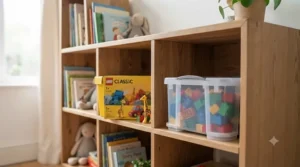
Choking-Hazard Guidance: What Every Parent Must Check Before Buying
This is, genuinely, the single most important section of this article, so it’s worth reading in full before any purchase, whichever product you’re leaning towards.
Toys sold in the UK are covered by the Toys (Safety) Regulations 2011, which require manufacturers to label age restrictions clearly based on identified risks, choking chief among them for small-part construction toys, and to carry a CE or UKCA mark as a declaration of compliance. In practice, this is exactly why every LEGO Classic set on this list carries a clear “4+” rating on its packaging: the standard LEGO brick, while iconic, is genuinely small enough to be swallowed or lodged in a young child’s airway, and the age rating is a safety instruction, not a marketing suggestion to be treated loosely.
The government’s own consumer guidance is unambiguous on this point: as set out in official guidance on buying toys safely, shoppers should always read warnings and instructions, avoid toys with small parts for children under the relevant age, and always follow the manufacturer’s age recommendations rather than a parent’s own judgement of what a specific child “seems ready for.” This matters because readiness for building small models and physical inability to choke on a piece are two entirely different things, a bright three-year-old might be developmentally capable of following instructions for a LEGO Classic build while still being just as physiologically at risk from a swallowed piece as any other three-year-old.
Practical, ongoing checks worth building into a household with children of mixed ages: store LEGO Classic and any other small-brick sets on a shelf genuinely out of a toddler’s reach, not simply “the toddler doesn’t usually go over there.” Check under sofas and inside toy boxes periodically if an older sibling has LEGO Classic sets, since stray pieces migrate. If a younger sibling is likely to visit a grandparent’s house where an older cousin’s LEGO Classic collection is kept, treat that visit with the same vigilance as the family home, choking incidents very commonly happen in a second location where usual safety habits lapse. Finally, if you’re ever concerned a child may have swallowed or inhaled a small object, treat it as a medical emergency rather than waiting to see if symptoms develop; a choking or airway obstruction can escalate extremely quickly.
LEGO Classic vs LEGO DUPLO: A Full Comparison
Beyond the age-rating headline, there are several genuine, practical differences worth understanding before choosing between the two ranges.
Brick size is the foundational difference: DUPLO pieces are built roughly at twice the linear dimension of a standard LEGO brick, which is both the safety mechanism (too large to pose a choking hazard) and the reason DUPLO suits smaller, less dextrous toddler hands better than fiddly standard bricks. LEGO Classic bricks, by contrast, allow far more intricate, detailed builds, but require the finer pincer-grip motor control that, per standard early-years developmental guidance, typically emerges more reliably from around age three onward and continues refining through the preschool years, one reason the official 4+ age rating aligns with typical fine motor development rather than being an arbitrary cut-off.
Compatibility is a genuine consideration for growing collections: DUPLO sets are compatible with each other but not directly stud-compatible with standard LEGO Classic pieces (DUPLO bricks are sized differently at the stud level), meaning a family effectively builds two separate collections over time rather than one continuously growing one. Some crossover pieces and specific sets do bridge the two systems, but as a general rule, don’t expect a DUPLO collection to click seamlessly into a LEGO Classic one.
Price-per-piece tends to favour LEGO Classic once children are old enough to use it, since standard bricks are manufactured at a lower unit cost than the larger DUPLO moulds, but this is a genuinely unhelpful comparison for a toddler-focused household, since the correct choice is dictated entirely by age and safety rather than value-per-brick. Play style also differs: DUPLO leans naturally toward broad, gross-motor stacking, sorting and simple vehicle play, while LEGO Classic supports far more intricate free-building and instruction-led model construction, better suited to the longer attention spans and finer control of preschool and early-school-age children.
Large Brick LEGO Sets for Toddlers: Why Size Matters
The phrase “large brick LEGO sets for toddlers” is, in practice, simply another way of describing the DUPLO range, and it’s worth understanding the engineering reason size is the whole story here.
UK and EU toy safety testing uses a standardised small-parts cylinder, roughly modelled on a child’s throat, to determine whether a toy or component presents a choking risk for children under three; any piece small enough to fully fit inside that cylinder fails the test for that age group. Standard LEGO Classic bricks fail this test for under-threes, which is precisely why the range carries its 4+ rating. DUPLO bricks are deliberately oversized well beyond that threshold, which is the entire safety rationale behind the range rather than simply a design choice for smaller hands, though that’s a genuine secondary benefit too.
Beyond pure safety, larger bricks offer real developmental advantages for toddlers specifically. A one or two-year-old’s hand strength and pincer grip are still developing, so larger, easier-to-grip DUPLO pieces allow successful stacking and connecting far earlier than fiddly standard bricks would permit, which matters enormously for a toddler’s sense of achievement and continued interest in building play. The LEGO DUPLO Classic Brick Box and LEGO DUPLO Deluxe Brick Box reviewed above both exemplify this: reviewers across both consistently note toddlers as young as 18 months successfully stacking and connecting bricks independently within the first play session, an outcome standard-sized LEGO Classic bricks simply wouldn’t permit at that age, quite apart from the safety question entirely.
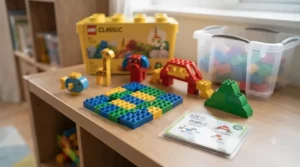
The First LEGO Set for a 2 Year Old: What to Actually Buy
If there’s one age this article can give the clearest possible guidance for, it’s this one: a 2 year old should be given DUPLO, not LEGO Classic, without exception, regardless of how advanced a particular child seems.
Among the sets reviewed above, the LEGO DUPLO Classic Brick Box remains the single best starting point for most 2 year olds, precisely because its open-ended, non-themed brick mix places no expectation on the child beyond exploring stacking, colour and simple construction at their own pace. For a 2 year old with an established preference, the vehicle-focused LEGO DUPLO My First Creative Vehicles or the broader LEGO DUPLO Classic Cars and Trucks Brick Box both work well as a themed alternative or a genuinely useful second set once the basic brick box has been in rotation a while.
A practical note for parents specifically searching for a first LEGO set for a 2 year old: resist marketing or packaging that uses “LEGO” language loosely, some products style themselves with LEGO-adjacent branding language while genuinely being standard small-brick Classic sets unsuitable for this age. Always check the age rating printed on the box itself rather than relying on a product title or search result description alone, and treat any set without a clearly stated age rating with real caution rather than assuming it’s fine.
LEGO Classic Starter Tubs: When Is a Child Ready?
LEGO Classic starter tubs, portable, lower-piece-count sets like the LEGO Classic Creative Suitcase reviewed above, are specifically designed as an entry point into standard LEGO, but “starter” refers to complexity, not to toddler suitability. The honest readiness question isn’t about age alone, it’s about two things: the official 4+ rating being met, and a child reliably no longer mouthing small objects during play, since some children continue this behaviour past their fourth birthday while others stop well before it.
Practical signs a child may be ready to move from DUPLO to a LEGO Classic starter tub include: consistently not putting toys, food, or other objects in their mouth during regular play over a sustained period, showing frustration with DUPLO’s more limited detail and wanting to build more intricate models, and demonstrating the fine motor control to press two smaller bricks together without adult assistance, something worth simply observing during everyday play rather than actively testing. If in doubt, there’s no meaningful downside to waiting an extra six months to a year before introducing a LEGO Classic starter tub; DUPLO sets remain genuinely engaging well past age four for many children, particularly once a family has multiple sets to combine into more ambitious builds.
Once a family does move to a LEGO Classic starter tub, the smaller LEGO Classic Creative Suitcase makes a more sensible first purchase than the larger LEGO Classic Medium Creative Brick Box, purely because a smaller total piece count is genuinely easier to keep fully accounted for after each play session, an important ongoing safety habit in any household still containing younger children.
Free-Building Sets vs Themed Sets: Which Builds More Creativity
A genuine, evidence-informed question worth addressing directly: do open-ended free-building sets actually develop more creativity than themed, model-specific sets, or is that simply marketing language?
The honest answer is nuanced rather than one-sided. Free-building sets, like the general brick mix in the LEGO DUPLO Classic Brick Box or the bulk of pieces in the LEGO Classic Medium Creative Brick Box, place no constraints on outcome, which research and clinical occupational therapy guidance on early construction play consistently associates with stronger open-ended problem-solving and imaginative play, since a child must generate their own goal rather than follow one. Themed sets, like the vehicle-focused DUPLO options reviewed above, offer a different but genuinely valuable benefit: a clear, achievable goal that builds a young child’s confidence and sense of completion, particularly useful for toddlers who can find fully unstructured play overwhelming rather than liberating.
In practice, most of the strongest sets on this list, the LEGO DUPLO Classic Cars and Trucks Brick Box in particular, deliberately blend both: enough loose, general bricks for genuine free-building alongside enough themed pieces (wheelbases, figures) to support goal-directed play when a toddler wants that instead. For a household choosing between a purely free-building set and a purely themed one, the practical advice is straightforward: buy free-building bricks as the foundation of any collection, since they remain useful indefinitely and combine with every future set, and treat themed sets as a valuable but optional supplement rather than a replacement.
How to Choose a First LEGO or DUPLO Set
A practical, step-by-step framework for narrowing down the field, whatever a child’s exact age.
- Check the age rating on the box first, before anything else. This single number should override enthusiasm about a themed design or a “looks advanced for their age” instinct.
- Rule out LEGO Classic entirely under age 4. There is no version of a genuine LEGO Classic set that’s safe for a toddler under three, regardless of supervision claims on packaging.
- Decide free-building versus themed based on your specific child. A child who enjoys unstructured play suits a plain brick box; a child who prefers clear goals suits a vehicle or shape-themed set.
- Consider household composition, not just the recipient’s age. If a younger sibling shares the home, factor their age into every purchase, not just the child receiving the gift.
- Look for CE or UKCA marking on the packaging. It’s a legal requirement and a genuine signal the product has been assessed against UK toy safety regulations.
- Read the actual review text, not just the star rating. Recurring mentions of loose parts, sharp edges, or size discrepancies matter more than a headline number.
- Set a price range rather than a fixed target. Amazon pricing shifts constantly on toy sets, so “under £30” is a more useful mental filter than chasing today’s exact figure.
Common Mistakes When Buying Building Bricks for Toddlers
Even well-intentioned parents and grandparents repeat a handful of avoidable errors, worth flagging plainly.
Buying LEGO Classic “because it’s real LEGO.” Several of the products researched for this article show reviewers specifically regretting a LEGO Classic purchase for a child under four, later exchanging it for DUPLO once realising the age rating wasn’t a suggestion. DUPLO is not a lesser, “baby” version of LEGO, it’s the correctly engineered product for this age group.
Assuming an older sibling’s hand-me-down LEGO Classic set is fine once “checked over.” Loose LEGO Classic pieces are extremely difficult to fully account for once mixed into general toy storage, and a single missed piece is all it takes; treat any hand-me-down LEGO Classic collection with the same age-rating rules as a new purchase.
Ignoring dishwasher and wash-care instructions. As covered in the usage guide above, DUPLO is dishwasher-safe while LEGO Classic isn’t; getting this backwards either damages LEGO Classic pieces over time or misses an easy, genuinely useful cleaning shortcut for DUPLO.
Buying based on piece count alone. A 484-piece LEGO Classic set isn’t automatically “better value” than an 85-piece DUPLO set if the child in question is two years old; piece count is irrelevant if the product is developmentally and physically inappropriate for the intended user.
Leaving purchases until the last minute. Popular DUPLO and LEGO Classic sets can sell out of specific editions in the run-up to Christmas and birthdays, ordering with a few weeks’ margin leaves room to exchange for a different age-appropriate set if needed.
Long-Term Value: Growing From DUPLO Into LEGO Classic
Thinking beyond a single birthday or Christmas, the genuinely useful long-term view is that DUPLO and LEGO Classic aren’t competing purchases, they’re sequential ones within the same family’s building-brick journey.
A toddler beginning with the LEGO DUPLO Classic Brick Box around 18 months, potentially supplemented with the LEGO DUPLO Deluxe Brick Box or a themed vehicle set as interest grows, typically gets two to three years of genuine, age-appropriate use from the DUPLO range before naturally becoming ready for the LEGO Classic Creative Suitcase around age four, and later the larger LEGO Classic Medium Creative Brick Box as skills and patience develop further. Viewed across that full multi-year arc, the combined spend, roughly £15-£25 for a first DUPLO box through to £25-£35 for a fuller LEGO Classic set, compares very favourably against buying multiple single-use, themed toys that get discarded as a child ages out of them individually.
The genuine long-term value driver is compatibility within each system: every LEGO Classic set purchased from age four onward remains usable and combinable with every subsequent LEGO Classic or wider LEGO System purchase for years, arguably decades, afterward, a durability few other toy categories can match. DUPLO offers the same internal compatibility during the toddler years. The practical advice for a family thinking long-term: buy DUPLO now for genuine safety and developmental fit, resist the urge to buy LEGO Classic early “so it’s ready when they’re older,” and treat the eventual transition around age four as a distinct, deliberate purchase decision rather than something to pre-empt.
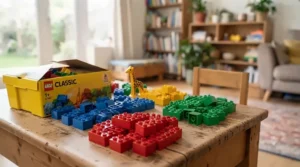
FAQ
❓ Can a 2 year old play with LEGO Classic if supervised closely?
❓ What's the actual size difference between DUPLO and LEGO Classic bricks?
❓ Is DUPLO a 'babyish' version of real LEGO?
❓ At what age can a child safely move from DUPLO to LEGO Classic?
❓ Do DUPLO and LEGO Classic bricks click together?
Conclusion
The honest answer to “what’s the best lego classic set for toddlers” is that a genuine LEGO Classic set isn’t the right purchase for a true toddler at all, LEGO DUPLO is, and the LEGO DUPLO Classic Brick Box remains the single best starting point for most families beginning that journey around 18 months to 2 years old. For vehicle-obsessed toddlers, the LEGO DUPLO Classic Cars and Trucks Brick Box offers the best blend of free-building and themed play, while the LEGO DUPLO Deluxe Brick Box suits families wanting more variety from the outset. Once a child is genuinely four and reliably past mouthing small objects, the LEGO Classic Creative Suitcase makes a sensible, portable first step into standard bricks, with the larger LEGO Classic Medium Creative Brick Box a natural next purchase as skills develop. Whichever stage your household is at, prioritise the age rating and choking-hazard guidance above every other consideration, the right set at the right age is one your child will genuinely enjoy for years, safely.
✨ Don’t Miss These Exclusive Deals!
🔍 Take your search for the right first LEGO or DUPLO set to the next level with the carefully compared picks above. Click through on any highlighted product to check current pricing and availability before popular editions sell out. The right set at the right age is a gift your toddler will build on for years to come. 🧱
Recommended for You
- LEGO-Compatible Building Blocks vs Genuine LEGO: 7 Picks for 2026
- LEGO Architecture Set for Adults: 7 Brilliant 2026 Picks
- LEGO Star Wars Set for Collectors: 7 Ultimate Picks for 2026
Disclaimer: This article contains affiliate links. As an Amazon Associate, I earn from qualifying purchases. If you purchase products through these links, we may earn a small commission at no additional cost to you.
✨ Found this helpful? Share it with your friends! 💬🤗
