
In This Article
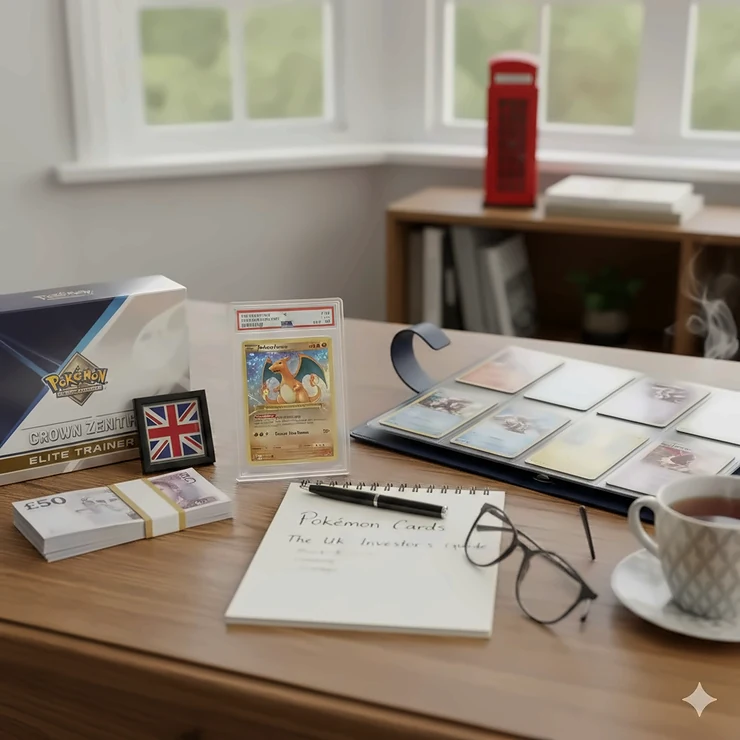
Remember when Pokemon cards were just playground trading fodder? Well, times have dramatically changed, mate. The trading card game market has evolved into a sophisticated £2.2 billion industry, with the pokemon cards investment guide becoming essential reading for savvy UK collectors. As Pokemon celebrates its 30th anniversary in 2026, we’re witnessing unprecedented growth—with graded cards consistently delivering 15-25% annual returns that would make traditional stocks jealous.
Here’s the thing: investing in Pokemon cards isn’t about luck anymore. It’s about understanding market dynamics, authentication processes, and strategic acquisition. Whether you’re eyeing that pristine Charizard from your childhood or considering modern Special Art Rares from the Mega Evolution series, this pokemon cards investment guide will equip you with the knowledge to make informed decisions in the UK market.
From authentication services like PSA grading to storage solutions and market timing, I’ll walk you through everything you need to transform your Pokemon passion into a profitable portfolio. Let’s dive into the strategies that separate casual collectors from serious investors!
Quick Comparison Table: Investment Strategies at a Glance
| Strategy | Investment Level | Potential ROI | Time Horizon | Risk Level | Best For |
|---|---|---|---|---|---|
| Vintage Graded Cards | £500-£5,000+ | 20-40% annually | 3-5 years | Medium | Long-term investors |
| Modern Special Art Rares | £100-£800 | 30-50% (1-2 years) | 1-2 years | Medium-High | Active traders |
| Sealed Product Investment | £40-£200 | 150-250% | 2-3 years | Low-Medium | Patient collectors |
| Japanese Exclusives | £50-£300 | 25-35% | 2-4 years | Medium | Niche collectors |
| Raw Card Grading | £75-£500 | 200-500% | 4-12 months | High | Experienced graders |
| Complete Set Building | £300-£2,000 | 15-25% | 3-5 years | Low | Registry collectors |
| Tournament Promos | £150-£1,000 | 40-60% | 1-3 years | Medium | Event attendees |
💬 Just one click – help others make better buying decisions too!😊
Top 7 Pokemon Card Investment Products: Expert Analysis
1. Pokemon TCG: Mega Evolution – Ascended Heroes Elite Trainer Box
The Pokemon TCG: Mega Evolution – Ascended Heroes Elite Trainer Box represents one of the most compelling investment opportunities in 2026. Released in January, this set brought back the beloved Mega Pokemon EX cards with stunning Special Illustration Rares that are already commanding premium prices.
Key Specifications:
- Contains 9 booster packs from Ascended Heroes expansion
- Full-art promo card featuring Mega Pokemon
- 65 premium card sleeves and complete accessory set
UK Pricing: £49.99-£64.99 (depending on retailer)
UK collectors have responded enthusiastically, with early adopters reporting pull rates of approximately 1 SIR per box. The standout chase cards—Mega Dragonite ex SIR (currently trading at £394 raw) and Mega Gengar ex SIR (£493 raw)—are showing 200-500% upside potential over 12-18 months according to market analysts at Card Chill. Many UK buyers praise the wave release strategy, which creates natural scarcity and drives sealed product appreciation.
✅ Pros:
- Wave releases create scarcity and price appreciation
- Nostalgic Mega Evolution mechanic appeals to Gen 6 fans
- Strong chase cards with proven market demand
❌ Cons:
- Higher entry price than standard ETBs
- Market correction possible if wave 2 oversupplies
2. PSA Grading Submission Service (via UK Middleman)
While not a physical product, PSA grading services have become essential infrastructure for serious pokemon cards investment guide followers. Using UK middlemen like The Sub Center, British collectors can access the world’s most respected grading company without the headache of international shipping.
Key Specifications:
- PSA 10 cards command 5-10x premium over raw near-mint
- Authentication protects against sophisticated counterfeits
- Tamper-evident cases preserve condition indefinitely
UK Pricing: £24-£30 per card (through UK middleman)
The beauty of PSA grading lies in the transformation it creates. That £50 raw Charizard VMAX? Grade it PSA 10, and you’re looking at £250-500. UK collectors consistently report that grading cards worth £75+ raw value makes financial sense, especially for vintage WOTC cards and modern SIRs. The turnaround time of 14-20 weeks (including middleman processing) requires patience, but the value add justifies the wait. According to research from Pokemon Price Tracker, PSA 10 rate typically sits at 10-30% even for seemingly perfect cards, so realistic expectations matter.
✅ Pros:
- Highest premiums in the market for PSA-graded vintage
- Tamper-proof authentication crucial for high-value cards
- Strong liquidity—PSA 10s sell within 7-14 days
❌ Cons:
- Significant upfront cost (£24-30 per card)
- Long turnaround times (14-20 weeks total)
3. Ultra Pro 9-Pocket PRO-Binder
The Ultra Pro 9-Pocket PRO-Binder might seem mundane, but it’s foundational to any pokemon cards investment guide. Proper storage directly impacts card condition—and condition determines value. These binders use archival-safe, acid-free materials that won’t yellow or damage cards over decades.
Key Specifications:
- Holds 360 cards (double-sided pages)
- Side-loading design prevents cards falling out
- Elastic strap closure for transport security
UK Pricing: £18.99-£24.99
UK Amazon reviews consistently praise these binders for build quality, with collectors noting the padded cover protects against impacts during transport. The side-loading pockets address the biggest concern—cards slipping out—making them ideal for valuable collections. Many serious investors use multiple PRO-Binders to organise by set, rarity, or investment tier. The archival materials mean your £500 PSA 10 Umbreon Gold Star won’t deteriorate from environmental factors.
✅ Pros:
- Archival-safe materials protect long-term value
- Side-loading design prevents card slippage
- Professional presentation for showcasing collection
❌ Cons:
- Premium pricing compared to basic binders
- Fixed page count limits very large collections
4. Pokemon TCG: Scarlet & Violet – Prismatic Evolutions Booster Box
The Pokemon TCG: Scarlet & Violet – Prismatic Evolutions Booster Box has emerged as a sealed product investment favourite among UK collectors. Released in late 2025, this set features spectacular Eeveelution alternate arts that consistently drive collector demand.
Key Specifications:
- 36 booster packs per box
- Multiple Eeveelution chase cards with alternate art
- Competitive pull rates for secret rares
UK Pricing: £129.99-£149.99
UK market data shows sealed Prismatic Evolutions boxes appreciating 50-100% within 12 months of release, following the pattern established by Pokemon 151. The Eeveelution theme creates sustained demand—these Pokemon have consistently been among the most beloved species across generations. Collectors report average pull rates of 2-3 ultra rares per box, making them attractive for both opening and holding sealed. According to industry analysis from Athlon Sports, sealed products with wave releases and popular Pokemon themes consistently outperform individual card investments for risk-averse collectors.
✅ Pros:
- Eeveelutions maintain consistent collector demand
- Sealed product typically appreciates steadily
- Lower risk than individual card speculation
❌ Cons:
- High upfront investment (£130-150)
- Returns slower than hot individual cards
5. Ultra Pro Standard Deck Protector Sleeves (100 count)
Before you even think about grading, you need Ultra Pro Standard Deck Protector Sleeves. These penny sleeves form the first line of defence against scratches, fingerprints, and edge wear—the primary factors that destroy card grades and value.
Key Specifications:
- Standard size (66mm x 91mm) fits all Pokemon cards
- Acid-free, non-PVC materials
- 100 sleeves per pack
UK Pricing: £3.99-£6.99
The value proposition here is remarkable: for under £5, you can protect 100 cards that might collectively be worth thousands. UK collectors universally recommend immediately sleeving any holo or rare card—even fresh pulls from packs. The thin profile means double-sleeving (penny sleeve inside a deck protector) becomes viable for ultra-valuable cards heading to grading. Every UK grading guide emphasises proper sleeving as step one, and at £0.04-0.07 per sleeve, there’s simply no excuse for leaving valuable cards unprotected.
✅ Pros:
- Extremely cost-effective protection (£0.04-0.07 per sleeve)
- Essential for maintaining PSA 9-10 potential
- Universally compatible with all Pokemon cards
❌ Cons:
- Basic protection only—not suitable for display
- Requires additional storage solution (binders/boxes)
6. Vault X Premium Card Binder 4-Pocket (UK Brand)
The Vault X Premium Card Binder has become a UK collector favourite, offering European-designed quality with fast domestic shipping. Unlike US brands, Vault X understands UK collector needs and sizing preferences.
Key Specifications:
- 160-card capacity (4-pocket pages)
- Zip closure with reinforced corners
- Premium embossed artwork options
UK Pricing: £22.99-£29.99
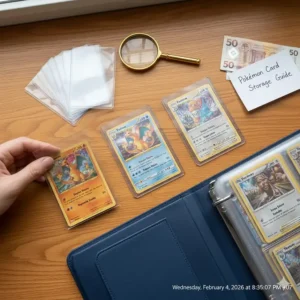
Southampton-based collectors and Amazon UK reviewers consistently rate Vault X as the premium alternative to Ultra Pro, citing superior build quality and customer service. The 4-pocket layout suits UK collectors who prefer showcasing fewer cards per page—ideal for displaying your best graded slabs or chase pulls. The zip closure provides better protection during transport than elastic straps, and the reinforced corners mean these binders survive years of use. According to Vault X UK’s own customer data, their products have helped protect millions of trading cards, with particular popularity among Pokemon collectors.
✅ Pros:
- UK-based brand with fast shipping and support
- Superior build quality to many competitors
- Zip closure offers maximum transport protection
❌ Cons:
- Premium pricing (£23-30)
- 4-pocket layout means more pages needed for large collections
7. Pokemon TCG: Journey Together Elite Trainer Box
The Pokemon TCG: Journey Together Elite Trainer Box deserves attention as a modern investment play. This February 2026 release brings back Trainer’s Pokemon mechanics with beloved characters like Lillie, N, and Iono, creating nostalgia-driven demand.
Key Specifications:
- 9 booster packs from Journey Together expansion
- Exclusive full-art promo card
- Complete accessory package for players and collectors
UK Pricing: £44.99-£54.99
Early UK market indicators suggest the Lillie’s Clefairy ex SIR is commanding £900+ in PSA 10, making this ETB an attractive speculation target. The Trainer’s Pokemon mechanic resonates with long-time players who remember these characters from the beloved games, creating cross-generational appeal. UK collectors appreciate that Elite Trainer Boxes offer balanced investment potential—if you open them, you get shots at chase cards; if you hold sealed, the nostalgia factor drives appreciation. Market analysis from PokemonPriceTracker indicates Trainer-focused sets historically appreciate 25-40% annually due to emotional connection.
✅ Pros:
- Trainer’s Pokemon mechanic creates nostalgia premium
- Strong chase cards with £900+ PSA 10 values
- Balanced sealed/open investment potential
❌ Cons:
- Recent release means limited historical data
- High competition for chase cards
✨ Don’t Miss These Exclusive Deals!
🔍 Take your pokemon cards investment guide journey to the next level with these carefully selected products. Click on any highlighted item to check current pricing and availability on Amazon.co.uk. These tools will help you protect and grow your collection value!
Understanding the Pokemon Card Investment Market in 2026
The Pokemon TCG market has matured significantly, transforming from a children’s game into a sophisticated alternative asset class. In 2026, we’re witnessing the convergence of several powerful trends: Pokemon’s 30th anniversary generating renewed interest, the established legitimacy of grading services, and a new generation of collectors with disposable income.
Market Size and Growth Trajectory
According to industry reports analysed by Accio Business Intelligence, the Pokemon TCG market hit £2.2 billion in 2024, with 25% year-over-year growth. This momentum continues into 2026, driven by several factors that make Pokemon cards particularly attractive to UK investors.
The 30th anniversary effect can’t be overstated. Historical data from the 25th anniversary in 2021 showed special releases experiencing 40-60% value surges. Smart UK investors are positioning now, before the anniversary hype peaks in late 2026. The nostalgia factor is powerful—adults who collected as children in 1996 now have careers and purchasing power, creating sustained demand for vintage Base Set cards.
Why UK Collectors Face Unique Opportunities
Brexit has created interesting dynamics for UK Pokemon investors. Whilst we face some shipping complexities, we also benefit from lower competition for certain European exclusives. The UK market has historically lagged US pricing by 10-15%, creating arbitrage opportunities for savvy collectors who monitor both markets.
Moreover, UK-based grading alternatives like ACE Grading and PGC (The Professional Grading Company) offer 2-4 week turnarounds compared to PSA’s 14-20 weeks, allowing faster portfolio rotation. Whilst these services don’t yet command PSA premiums, they’re gaining acceptance for modern cards where speed matters more than absolute maximum value.
The Authentication Revolution
Authentication has become the cornerstone of serious investing. In an era of increasingly sophisticated counterfeits, professional grading services provide essential verification. According to research from PKMhobby, Pokemon accounted for 97 of the top 100 cards graded by PSA in the first half of 2025, demonstrating unprecedented market dominance.
The grading ecosystem centres around three major services—PSA, CGC, and Beckett—each offering distinct advantages. For UK investors, PSA remains the gold standard for vintage cards, commanding 15-30% premiums over CGC for WOTC-era cards. However, CGC has become acceptable for modern cards, with faster turnarounds and comparable pricing on cards from Sword & Shield onwards.
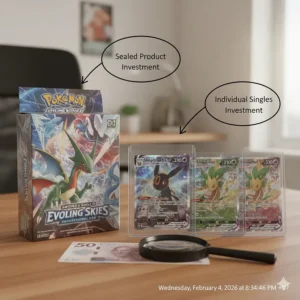
Grading Services: Your Gateway to Premium Returns
Understanding grading services represents the difference between amateur collecting and professional investing. Let me break down what UK collectors need to know about authentication and grading in 2026.
PSA: The Industry Standard
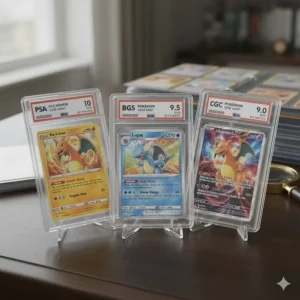
PSA (Professional Sports Authenticator) remains the most respected name in card grading globally. For UK collectors targeting vintage Pokemon cards—anything from Base Set through the e-Series era—PSA grading is virtually non-negotiable if you want maximum returns.
The PSA 10-point scale ranges from Poor (1) to Gem Mint (10), with most submissions landing in the PSA 7-9 range. According to grading data from ORB Sports Cards, only 10-30% of submissions achieve PSA 10, even for cards that appear flawless to the naked eye. This scarcity drives the premium—a PSA 10 1st Edition Shadowless Charizard commands £300,000+, whilst a PSA 9 of the same card might fetch £50,000.
For UK collectors, accessing PSA requires using middleman services. The Sub Center offers comprehensive PSA submission services, handling the logistics of international shipping and customs. Current UK pricing through middlemen sits at £24-30 per card for standard service (Trading Card Game Bulk tier), with 14-20 week total turnaround including processing and return shipping.
Alternative Grading Options for UK Collectors
Whilst PSA dominates vintage markets, alternatives have carved out niches worth considering. CGC (Certified Guaranty Company) has gained significant traction for modern Pokemon cards, offering competitive pricing and faster turnarounds. According to comparative analysis from Selected Collectables, CGC Standard costs £20-25 per card through UK middlemen, making it attractive for bulk modern submissions.
UK-based services offer compelling advantages for collectors prioritising speed over maximum premiums. ACE Grading features custom labels that extend card artwork onto the label itself—a unique selling point that appeals to display-focused collectors. Submission costs range from £9.99 to £26.99 with no minimum requirements and 2-4 week turnarounds. PGC (The Professional Grading Company) similarly offers 72-hour express service, making them ideal for flipping modern chase cards whilst hype is high.
The strategic consideration: use PSA for vintage cards where premiums justify longer waits and higher costs; use CGC for modern cards you plan to sell quickly; use UK services for personal collection pieces or when testing card values before committing to PSA.
Investment Strategies: From Beginner to Advanced
Let’s explore specific strategies that align with different investment goals, budgets, and risk tolerances. Each approach has proven track records amongst successful UK Pokemon investors.
Strategy 1: The Sealed Product Long Hold
Sealed product investing remains the most accessible entry point for new collectors. The concept is simple: purchase sealed booster boxes, Elite Trainer Boxes, or special collections and hold them unopened for 2-5 years. Historical data shows properly selected sealed products appreciating 150-250% over this timeframe.
The key lies in product selection. Sets with popular Pokemon (Charizard, Eeveelutions, legendary Pokemon), unique mechanics (Mega Evolution, Shining Pokemon), or anniversary significance consistently outperform. According to market analysis from Athlon Sports, the Pokemon 151 Elite Trainer Box appreciated from £50 to £200 within 18 months—a 300% return.
For UK collectors, focus on:
- Wave release products (artificial scarcity drives prices)
- Pokemon Centre exclusives (limited distribution)
- Anniversary sets (nostalgia premium)
- Eeveelution or Charizard-focused sets (consistent demand)
Budget allocation: £500-2,000 initial investment, spread across 5-10 different sealed products to diversify risk.
Strategy 2: The Raw-to-Graded Value Play
This strategy targets raw near-mint cards with strong PSA 10 potential, submits them for grading, and sells the graded cards at significant premiums. It requires expertise in assessing card condition but offers explosive returns—often 200-500% on successful PSA 10 grades.
The process:
- Identify undervalued raw cards with centering under 60/40, sharp corners, clean surfaces
- Purchase raw cards at £50-200 each
- Submit to PSA (£24-30 per card)
- Sell PSA 10s at 5-10x raw value, PSA 9s at 2-3x raw value
According to grading experts at Eneba, the Trading Card Game Bulk and Value Bulk tiers (requiring 20-card minimums) offer the best per-card pricing at £18.99-£21.99, making bulk submissions financially viable.
Target cards for this strategy:
- Modern SIRs and alternate arts from recent sets
- Vintage holos in near-mint condition from established sellers
- Japanese promos with lower populations
- Error cards with documented authenticity
Risk factors: Most collectors overgrade by 1-2 points. That card you think is PSA 10 material will likely grade PSA 8-9. Budget for this reality—aim for PSA 9 expectations with PSA 10 as bonus upside.
Strategy 3: The Vintage Premium Portfolio
For collectors with £2,000-10,000 to invest, assembling a portfolio of graded vintage cards offers the strongest combination of appreciation and stability. Vintage cards from Base Set through Neo Genesis have proven 20-40% annual appreciation over the past decade, with minimal volatility compared to modern speculation.
Focus on PSA graded cards in the 7-9 range for optimal value. According to investment insights from PokéCollects UK, mid-grade slabs offer excellent display appeal, nostalgia, and long-term collectability at accessible price points. A strong PSA 7 often outperforms a weak PSA 9 both visually and financially.
Priority targets:
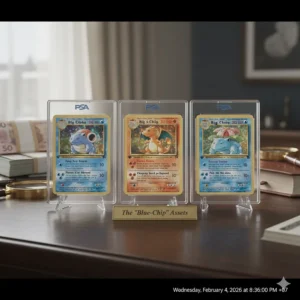
- 1st Edition WOTC holos (Charizard, Blastoise, Venusaur)
- Neo series crystals and shinies (Crystal Charizard, Shining Charizard)
- Gold Star Pokemon (Umbreon, Rayquaza, Charizard)
- E-Series holos (undervalued relative to Base Set)
Allocation strategy: 50% in established blue-chip cards (1st Edition Charizard, Gold Stars), 30% in emerging vintage (e-Series, Neo), 20% in Japanese vintage promos.
Strategy 4: The Modern Chase Card Flip
For active investors comfortable with higher risk, modern chase cards offer potential 100-300% returns in 6-12 months—but require quick decisions and market timing. This strategy involves identifying pre-release hype, securing cards at launch, and selling during peak demand before market correction.
The Mega Evolution series exemplifies this approach. Mega Dragonite ex SIR currently trades at £394 raw, but investors who secured these at £100-150 during wave 1 releases are sitting on 150-250% gains within 8 weeks. According to TCG market data from Card Chill, key factors driving modern chase card values include: low pull rates, premium artwork, fan-favourite Pokemon, and first appearances of new mechanics.
Success factors:
- Pre-order secured sealed product (guaranteed allocation)
- Early grading submission (capture hype premium)
- Established exit strategy (sell PSA 9s immediately, hold PSA 10s longer)
- Portfolio diversity (spread across multiple chase cards)
Timing is critical: modern chase cards typically peak 2-4 months post-release, then correct 20-40% as supply increases. The sweet spot for selling lies in that 8-12 week window when initial supply is low but hype remains high.
Card Protection and Storage: Preserving Your Investment
Proper protection directly impacts your returns. A PSA 10-potential card improperly stored can deteriorate to PSA 8 in months, costing you 50-70% of potential value. Let’s examine the protection hierarchy every serious investor needs.
The Three-Layer Protection System
Professional collectors employ a three-layer approach for high-value cards:
Layer 1: Penny Sleeves – Immediately sleeve any holo or valuable card in Ultra Pro standard sleeves (£0.04-0.07 each). This prevents fingerprints, scratches, and edge wear—the primary factors that destroy grades. According to protection guidelines from Card-Binder.com, even brief handling of unsleeved holos can create micro-scratches visible under grading inspection.
Layer 2: Toploaders or Card Savers – For cards worth £50+, add rigid protection. Toploaders (£0.20-0.40 each) provide hard plastic protection against bending. Card Savers (PSA-preferred for submissions) offer similar protection with slightly different dimensions. This layer is mandatory for shipping and essential for long-term storage.
Layer 3: Binders or Storage Boxes – The final layer organises and protects your collection from environmental factors. Ultra Pro PRO-Binders (£18.99-24.99) use archival-safe materials that won’t yellow or damage cards. For ultra-high-value cards, consider climate-controlled storage maintaining 40-50% humidity and 15-21°C temperature.
Storage Strategy by Card Value
Segment your collection by value and apply appropriate protection:
£1-10 cards: Penny sleeves + 9-pocket binder pages
£10-50 cards: Penny sleeves + toploaders + deck box storage
£50-200 cards: Double-sleeved + toploaders + premium binder
£200-1,000 cards: Double-sleeved + card savers + individual storage boxes
£1,000+ cards: Triple protection + climate-controlled safe storage
The investment in protection pays dividends. That £30 spent on premium binders and sleeves protects £5,000 worth of cards—a 0.6% insurance cost that prevents catastrophic value loss from improper storage.
Market Timing and Portfolio Management
Successful Pokemon investing requires understanding market cycles and strategic portfolio allocation. Let’s examine timing considerations and portfolio construction that maximise risk-adjusted returns.
Understanding Pokemon Market Cycles
The Pokemon card market operates on predictable cycles tied to set releases, grading company backlogs, and broader economic conditions. According to retrospective analysis from Card Chill, 2025 delivered consistent returns across patient investors who understood these cycles.
Set Release Cycle: New sets generate immediate hype, with chase cards peaking 8-12 weeks post-release. Prices typically correct 20-40% as supply stabilises, then gradually appreciate over 1-3 years as sealed product dries up. Smart investors buy during the correction phase (weeks 16-24) rather than at launch hype.
Grading Backlog Cycle: PSA turnaround times directly impact card liquidity. When backlogs extend to 12+ months, raw card prices increase as graded supply stagnates. When turnarounds improve to 8-12 weeks, graded card supply floods the market, temporarily depressing prices. Monitor PSA’s published turnaround estimates to time submissions and sales.
Anniversary Cycles: Pokemon anniversaries create predictable value surges 6-12 months before and after the anniversary date. The 30th anniversary in 2026 is driving current appreciation across vintage cards, with expected peak in Q3-Q4 2026.
Building a Balanced Pokemon Portfolio
Professional investors recommend portfolio allocation similar to traditional finance: balance growth and stability across multiple card categories.
Suggested UK Collector Portfolio (£5,000 budget):
- 40% Vintage Graded Cards (£2,000): Core portfolio stability, consistent appreciation
- 25% Modern Sealed Product (£1,250): Medium-term growth, low maintenance
- 20% Modern Chase Cards (£1,000): High-growth speculation
- 10% Japanese Exclusives (£500): Niche appreciation, lower competition
- 5% Grading Inventory (£250): Cards awaiting submission, future appreciation
This allocation balances stability (vintage graded cards rarely decline), growth (modern chase cards offer explosive returns), and liquidity (sealed product easily liquidated). Adjust percentages based on risk tolerance—conservative investors might increase vintage allocation to 60%, whilst aggressive investors might push modern chase cards to 40%.
When to Buy and Sell
Timing entry and exit points maximises returns. UK investors should consider:
Optimal Buying Opportunities:
- Week 16-24 post-set release (after hype correction)
- November-January (tax season selling creates supply)
- During PSA backlog extensions (graded supply constrained)
- When US market crashes create UK arbitrage opportunities
Optimal Selling Opportunities:
- Weeks 8-12 post-set release (peak hype, limited supply)
- April-June (tax refunds create demand surge)
- Immediately following anniversary announcements
- When your card grades PSA 10 and hype is high
According to investment guidance from PKMhobby, successful investors maintain 18-24 month minimum hold periods for most investments, avoiding short-term volatility and capturing sustained appreciation trends.
Japanese vs English Cards: An Undervalued Opportunity
Japanese Pokemon cards represent one of the most undervalued categories in the 2026 market. Let me explain why savvy UK investors are increasingly allocating portfolio percentage to Japanese exclusives.
Why Japanese Cards Merit Attention
Japanese cards offer several structural advantages according to collector insights from PokéCollects UK: better print quality, earlier releases (often 2-4 months before English versions), and significantly lower population counts in PSA registries.
The print quality difference is immediately apparent. Japanese cards historically exhibit superior centring, fewer print lines, and sharper holographic effects—factors that directly improve PSA 10 rates. Whilst English cards might achieve 10-30% PSA 10 rates, Japanese equivalents often hit 20-40%, making raw Japanese cards attractive grading candidates.
Population counts tell the story. The 2020 Pokemon Futsal promo set—exclusive to UK’s GAME retailer—has become a legendary investment according to analysis by RM Trade Co. The five-card set features fan-favourite Pokemon (Pikachu, Eevee, Meowth, Sobble, Morpeko) in football kits, celebrating England’s love of football. With floor prices originally £15-20, PSA 10 copies now command £200-400 each—a 10-20x return in under 6 years.
Strategic Acquisition of Japanese Cards
For UK collectors, acquiring Japanese cards requires navigating import considerations and authenticity verification. Reputable UK retailers like Total Cards and Titan Cards stock verified Japanese products, eliminating customs headaches and counterfeit risks.
Target categories for Japanese investment:
- Promo cards from Japanese-exclusive events
- First-edition Japanese releases of popular cards
- CoroCoro magazine promos
- Pokemon Centre exclusive merchandise
The arbitrage opportunity exists because Western collectors historically focused exclusively on English cards. As education spreads about Japanese advantages, prices are appreciating 25-35% annually for premium Japanese cards—outpacing English equivalents by 5-10 percentage points.
Legal and Tax Considerations for UK Collectors
UK Pokemon investors must understand tax obligations and legal frameworks governing collectibles investments. Whilst Pokemon cards aren’t securities, they constitute personal property with specific tax treatment.
Capital Gains Tax (CGT) on Pokemon Cards
According to HMRC guidance, profits from selling personal possessions worth more than £6,000 may trigger Capital Gains Tax. For Pokemon investors, this means:
Individual Cards: Selling a single card for £6,000+ requires reporting any gains. Given that PSA 10 vintage Charizards regularly exceed this threshold, serious collectors must maintain purchase and sale records.
Set/Lot Sales: If you sell multiple cards as a lot exceeding £6,000 total value, only gains above your annual CGT allowance (£3,000 for 2025/26 tax year) are taxable at 10% (basic rate taxpayers) or 20% (higher rate taxpayers).
Trading vs Collecting: If HMRC determines you’re trading (regular buying/selling for profit), your activity may constitute a business requiring Income Tax payment at marginal rates (20-45%) rather than preferential CGT rates. Maintain records demonstrating collecting intent rather than trading business operations.
Practical recommendation: Consult with an accountant experienced in collectibles if your annual Pokemon transactions exceed £10,000 or you’re frequently buying and selling for profit. Proper tax planning prevents nasty surprises during HMRC investigations.
Insurance and Loss Protection
High-value Pokemon collections merit specific insurance coverage. Standard home contents insurance typically caps individual item coverage at £1,500-2,000, wholly inadequate for PSA 10 vintage cards or extensive collections.
Specialist collectibles insurance from providers like Collectibles Insurance Services offers agreed-value coverage protecting against theft, damage, and loss. Annual premiums typically run 0.5-1.5% of declared value—£50-150 annually to insure a £10,000 collection. Requirements include:
- Detailed inventory with photographs and values
- Secure storage (safes for £5,000+ collections)
- Professional grading documentation for high-value items
The peace of mind justifies the modest cost. That £100 annual premium prevents total loss on your £10,000 investment if disaster strikes.
Frequently Asked Questions
❓ Is it too late to start investing in Pokemon cards in 2026?
❓ Should I grade all my Pokemon cards to maximise value?
❓ Are Japanese Pokemon cards better investments than English versions?
❓ How liquid is the Pokemon card investment market in the UK?
❓ What's the minimum investment needed to start a Pokemon card portfolio?
Conclusion: Your Pokemon Investment Journey Starts Now
The pokemon cards investment guide landscape in 2026 offers unprecedented opportunities for UK collectors who approach it strategically. Whether you’re drawn to the stability of vintage graded cards, the explosive potential of modern chase cards, or the steady appreciation of sealed products, success requires education, patience, and proper execution.
Remember these fundamental principles: authentication through grading services like PSA creates value and protection; proper storage preserves that value over time; diversification across card categories balances risk and return; and market timing—buying during corrections, selling during peaks—maximises profit potential.
Start small, learn continuously, and scale your investment as expertise develops. That £500-1,000 initial portfolio can grow substantially over 3-5 years through strategic acquisitions, patient holding, and disciplined selling. The Pokemon TCG market has demonstrated remarkable resilience and growth over 30 years—there’s every reason to expect this trend continuing through 2030 and beyond.
The 30th anniversary in 2026 creates a perfect entry point. Historical data from previous anniversaries shows sustained appreciation lasting 12-24 months post-anniversary. Position your portfolio now to capture this wave, focusing on graded vintage cards, nostalgic modern sets, and sealed products from limited releases.
Your journey from casual collector to serious investor begins with that first strategic purchase. Whether it’s a PSA-graded vintage holo, a sealed Elite Trainer Box, or a modern SIR with PSA 10 potential—make that purchase, apply the strategies from this pokemon cards investment guide, and watch your collection transform into a valuable asset.
The market awaits. Happy collecting—and profitable investing!
Recommended for You
- 7 Best 2000 Piece Jigsaw Puzzles UK 2026
- Best Funko Pop Investment: 7 Rare Figures Worth Money 2026
- 7 Best LEGO Sets for Adults UK 2026
Disclaimer: This article contains affiliate links. If you purchase products through these links, we may earn a small commission at no additional cost to you. Prices shown are approximate and may vary. This content is for informational purposes only and does not constitute financial advice. Always conduct your own research before making investment decisions.
✨ Found this helpful? Share it with your mates! 💬🤗
