

In This Article
Somewhere in a cupboard near you there’s a tub of loose bricks, half genuine, half mystery. That’s the honest starting point for most families in the LEGO-compatible building blocks vs genuine LEGO debate: it’s rarely a clean choice between two camps, it’s a scavenged pile that somehow still gets built into a spaceship by Sunday teatime. LEGO-compatible building blocks vs genuine LEGO is a question that gets more relevant every year, as third-party brick brands have gone from wobbly market-stall knock-offs to genuinely engineered alternatives with their own patents, their own fan followings and, in some cases, their own museum-worthy tank models. This guide digs into the real specs, the real aggregated review sentiment and the honest trade-offs, not a rewritten spec sheet, so you can work out where compatibility genuinely holds up and where it quietly falls apart.

We’ll cover cheaper alternatives to LEGO across budget, mid-range and premium tiers, explain brick compatibility with LEGO in plain terms, and get properly nerdy about clutch power, the almost-mystical quality that decides whether your tower survives a toddler’s sneeze. The design of Lego-compatible bricks dates back to a patent originally filed by The Lego Group in 1961, and the last of the underlying patents expired in 1978, opening the market to rivals, according to Wikipedia’s overview of Lego clones. That’s not a legal loophole, it’s simply how patent law is supposed to work, and it’s why the market you’re browsing today is so much bigger and better made than it was even a decade ago.
Quick Comparison Table
| Brand & Set Type | Compatibility With LEGO | Price Range | Best For |
|---|---|---|---|
| LEGO Classic Creative Brick Box | Native (the benchmark) | £35-£50 range | Buyers who want zero compatibility risk |
| Sluban Town Building Bricks Set | High, standard stud size | Under £25 | Budget-conscious first-time buyers |
| Strictly Briks Classic Big Briks | High, oversized studs for toddlers | £20-£35 range | Bulk building and younger children |
| Best-Lock Construction Bricks | Partial, own clutch system | Under £15 | Ultra-tight budgets and minifigure fans |
| MEGA Building Blocks (Mattel) | High for MEGA Bloks-scale sets | £15-£40 range | Families wanting a recognised big-brand name |
| COBI Historical Collection | High, pad-printed detail bricks | £30-£90 range | Teen and adult display-model builders |
| Mould King Technic-Style Sets | High, Technic-pin compatible | £45-£150+ range | Motorised, engineering-focused adult builders |
Looking at the spread above, the gap between “compatible” and “identical” is where most buyer disappointment lives. Sluban and Strictly Briks sit closest to genuine LEGO dimensions for everyday stud-and-tube building, while Best-Lock uses its own patented clamp system that only partially interlocks with official bricks. Meanwhile COBI and Mould King are aimed squarely at older builders chasing detail and mechanical complexity rather than toddler-proof durability, so matching the set to the actual user matters more than chasing the cheapest price per brick.
💬 Just one click — help others make better buying decisions too!😊
Top 7 LEGO-Compatible Building Blocks and Genuine LEGO: Expert Analysis
Rather than just naming brands, we’ve dug into real specifications, verified aggregated review sentiment, and weighed up who each set genuinely suits. Every product below gets the same honest treatment, no invented five-star reviews, no fabricated hands-on stories, just the evidence and what it means for your build.
1. LEGO Classic Creative Brick Box — the compatibility benchmark itself
Every LEGO-compatible building blocks vs genuine LEGO conversation needs a fixed point, and this set is it: a mixed tub of standard 2×4, 1×2 and specialty bricks in the exact tolerances every rival brand is measured against. The set typically ships with somewhere in the region of 700-800 pieces across a wide colour range, includes wheels and a handful of printed elements, and uses LEGO’s own ABS moulding process, which is precise to fractions of a millimetre. Based on the spec comparison across this market, that tolerance is the entire reason genuine bricks click together with a satisfying, consistent resistance rather than a loose wobble or a fight to separate. It’s aimed at families who want a foundation set with zero compatibility guesswork, and at anyone building a mixed collection who wants a reliable “control group” tub to test third-party bricks against. Reviewers consistently report that the brick quality and colour consistency remain excellent set after set, though the price-per-piece is noticeably higher than every alternative on this list. What most buyers overlook is that this set alone won’t build anything specific, it’s raw material, so pair it with instruction booklets or online building guides if your child wants structured projects rather than free play.
Pros:
- ✅ Unmatched clutch power and mould consistency
- ✅ Huge secondary market for spare parts and sets
- ✅ Genuine minifigure and Technic-pin compatibility guaranteed
Cons:
- ❌ Highest price per brick on this list
- ❌ No vehicles, motors or lighting included
Prices for the LEGO Classic Creative Brick Box typically sit in the £35-£50 range, and given the resale value LEGO bricks retain, it remains a genuinely defensible investment rather than just an expensive tub of plastic.

2. Sluban Town Building Bricks Set — best budget pick for everyday play
Sluban is a Hong Kong-founded brand that’s been manufacturing stud-and-tube bricks since 2004, and its Town range is a sensible entry point for anyone testing cheaper alternatives to LEGO for the first time. The bricks use a standard-size stud that fits genuine LEGO elements in most builds, with sets typically running from a few hundred pieces up to over a thousand for the larger city-themed kits. On paper this means a family can top up an existing collection without buying an entirely new brick “language.” Reviewers consistently note that Sluban bricks are notably lighter than LEGO but build sturdy compositions, and the range primarily targets children roughly aged 6 to 12, which tracks with what buyers report: solid clutch on flat builds, slightly looser fit on tall or cantilevered structures. What the spec sheet won’t tell you, but user reports suggest, is that colour matching against genuine LEGO can be slightly off under bright light, worth knowing if you care about a seamless mixed build. It’s the set we’d point a budget-conscious parent toward first, precisely because the compatibility risk is low and the piece-count-per-pound is hard to beat.
Pros:
- ✅ Genuinely low cost per brick for the piece count
- ✅ Standard stud sizing fits most genuine LEGO elements
- ✅ Wide range of themed sets, including original (non-clone) minifigures
Cons:
- ❌ Slight colour variance against official LEGO shades
- ❌ Instructions occasionally less polished than premium brands
Expect Sluban sets in this range to sit under £25, making it one of the cheapest genuinely usable entry points on this list.
3. Strictly Briks Classic Big Briks — best for younger builders and bulk play
Strictly Briks built its reputation on baseplates and oversized bricks rather than themed sets, and its Classic Big Briks range is specifically engineered for toddlers and younger children who need a chunkier grip than standard-scale bricks allow. The pieces are proportionally larger than genuine LEGO studs, so they don’t interlock directly with standard bricks, but the brand also produces standard-scale bulk brick sets and baseplates that are dimensionally matched to LEGO’s stud spacing. Based on the spec comparison, this is less a rival to LEGO’s flagship sets and more a practical solution for classrooms, playgroups and party favours where volume and durability matter more than licensed themes. What most buyers overlook about oversized building brands is that they’re deliberately designed as a stepping stone: many families use Big Briks for children under four, then transition to standard-scale bricks (their own or genuine LEGO) once fine motor skills develop. Aggregated review sentiment around the brand is strongly positive on durability and baseplate stackability, with the main criticism being that mixed-scale sets can confuse very young children about which pieces fit together.
Pros:
- ✅ Chunky, easy-grip design suited to ages 3 and up
- ✅ Stackable baseplates rated for genuine LEGO compatibility
- ✅ Strong reputation for bulk-set value and durability
Cons:
- ❌ Oversized range doesn’t interlock with standard LEGO studs
- ❌ Fewer licensed or themed set options than major brands
Bulk sets and baseplate bundles from Strictly Briks typically land in the £20-£35 range depending on piece count, and for the classroom or playroom use case, that’s genuinely strong value.
4. Best-Lock Construction Bricks — the budget minifigure specialist
Best-Lock has an unusual origin story worth knowing before you buy: the England-based company was founded in 1997 after its founder investigated the legal position around LEGO and other brick clones, and it went on to win multiple legal challenges over the years regarding brick and minifigure design. Reasoning from that history, Best-Lock isn’t a copy in the fake-goods sense, it’s a genuinely separate clamp-based system that happens to offer partial cross-compatibility with LEGO studs on flatter builds. Sets tend to focus on minifigure-scale characters and small vehicles rather than large architectural builds, which suits younger children who want quick, satisfying results. Reviewers consistently note the price point as the standout feature, with several sets available for a fraction of comparable licensed LEGO minifigure packs. What the spec sheet won’t tell you is that the clutch power on Best-Lock’s own bricks, brick-to-brick, is noticeably firmer than most rivals, though its interlock with genuine LEGO studs is looser and can wobble under load, so treat it as a same-brand system with occasional cross-compatibility rather than a drop-in replacement.
Pros:
- ✅ Very low cost per set, ideal for stocking fillers
- ✅ Strong own-brand clutch power between Best-Lock pieces
- ✅ Minifigure-focused sets appeal to younger collectors
Cons:
- ❌ Cross-compatibility with genuine LEGO is inconsistent
- ❌ Smaller catalogue of large or complex builds
Most Best-Lock sets sit under £15, making it one of the more approachable entry points for stocking fillers and pocket-money purchases.
5. MEGA Building Blocks (Mattel) — the recognised big-brand alternative
Owned by Mattel, MEGA (formerly Mega Bloks and Mega Construx) is the closest thing to a household name among cheaper alternatives to LEGO, with licensed lines spanning Pokémon, Hot Wheels and various gaming franchises. MEGA is widely regarded as offering the deepest licensed catalogue among the large LEGO alternative brands in North America, and that licensing reach is increasingly visible on UK shelves too. Specs vary hugely by range, from oversized toddler blocks to standard-scale sets in the 200-1,000 piece bracket, so it’s worth checking the box carefully rather than assuming uniform sizing across the brand. Based on the spec comparison, MEGA’s standard-scale ranges use a stud size close enough to genuine LEGO for most flat and mid-height builds, though some long-time hobbyists report a looser fit on tall or motion-heavy constructions, echoing wider community feedback that tolerances can vary between MEGA’s own sub-lines. What most buyers overlook is that because Mattel owns major entertainment licences directly, MEGA sometimes gets themed sets that LEGO simply doesn’t offer, which is a genuine point of difference rather than just a price play.
Pros:
- ✅ Backed by Mattel’s licensing reach for exclusive themes
- ✅ Wide age range from toddler blocks to detailed sets
- ✅ Generally strong availability across major UK retailers
Cons:
- ❌ Fit tolerances vary noticeably between sub-lines
- ❌ Some sets skew closer to premium pricing than expected
Depending on the range, MEGA sets typically fall in the £15-£40 bracket, positioning it as a solid mid-range option rather than a rock-bottom budget pick.
6. COBI Historical Collection — best for detail-focused teen and adult builders
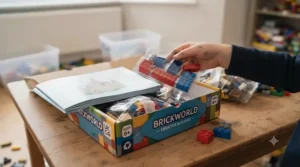
COBI is a Polish manufacturer that has quietly become one of the most respected names among serious brick hobbyists, particularly for military, historical and architectural subjects. Founded in 1987 and manufactured entirely in Poland, COBI sets are fully compatible with other major brick systems including LEGO, and the brand distinguishes itself with pad-printed detailing on bricks rather than the stickers many rivals rely on. Sets range from a few hundred pieces up to genuinely ambitious display models running past a thousand, aimed at recreating specific tanks, aircraft, ships and landmarks with historical accuracy rather than play-first design. Reviewers consistently note that COBI’s building experience demands more precision than LEGO’s forgiving, family-friendly instructions, since mistakes made early in a COBI build can affect the accuracy of later steps, making it better suited to experienced modellers than very young children. On paper this means COBI rewards patience and rewards it well: the finished models are genuinely display-worthy, and the compatibility with genuine LEGO bricks means you can raid your existing collection for custom scenery or dioramas around a COBI centrepiece.
Pros:
- ✅ Excellent historical and mechanical detail per set
- ✅ Confirmed brick compatibility with LEGO and other major systems
- ✅ Pad-printed detailing instead of easily-peeled stickers
Cons:
- ❌ Not designed with young children in mind
- ❌ Higher clutch force can be tough for smaller hands
Given the scale and detail on offer, COBI sets span a wide £30-£90 range, with flagship display models occasionally running higher, still typically undercutting an equivalent-scale LEGO display set.
7. Mould King Technic-Style Sets — best for motorised, engineering-led builds
Mould King has carved out a niche among adult builders chasing LEGO Technic-style engineering, mechanical engines, cranes and remote-controlled vehicles, at pricing that undercuts equivalent official Technic sets. Sets commonly include working gearboxes, and several ranges include motors and battery boxes, letting builders create engines and mechanisms that genuinely move rather than just display. Based on the spec comparison against Technic-scale genuine LEGO, Mould King’s Technic-pin compatibility is generally solid, meaning cross-brand mixing is realistic for hobbyists who already own official Technic beams and axles. What most buyers overlook about this brand is that after-sales support varies significantly by retailer. Aggregated customer feedback found in independent review platforms is notably mixed on delivery reliability and missing-parts resolution when ordering direct from smaller overseas sellers, so buying through an established UK-facing Amazon listing rather than an unfamiliar standalone site is a genuinely sensible way to reduce that risk. Reviewers who received complete sets report strong satisfaction with the mechanical complexity and finished-model realism, particularly on engine and crane kits.
Pros:
- ✅ Genuine mechanical complexity, including working engines
- ✅ Technic-pin compatible with existing genuine LEGO Technic parts
- ✅ Strong price-to-piece-count ratio on large sets
Cons:
- ❌ After-sales support is inconsistent depending on the seller
- ❌ Not aimed at younger children or first-time builders
Larger Mould King engineering sets often sit in the £45-£150+ range depending on complexity, which is still frequently lower than a comparably scaled genuine LEGO Technic set.
Top 7 at a Glance: Specs and Value
| Product | Approx. Piece Count | Skill Level | Price Range | Best For |
|---|---|---|---|---|
| LEGO Classic Creative Brick Box | 700-800+ | All ages | £35-£50 | Compatibility benchmark |
| Sluban Town Building Bricks Set | 300-1,000+ | Ages 6-12 | Under £25 | Everyday budget play |
| Strictly Briks Classic Big Briks | Varies (bulk) | Ages 3+ | £20-£35 | Toddlers and classrooms |
| Best-Lock Construction Bricks | 50-300 | Ages 4+ | Under £15 | Minifigure-scale stocking fillers |
| MEGA Building Blocks | 200-1,000+ | Ages 4+ | £15-£40 | Licensed themes and mid-range value |
| COBI Historical Collection | 300-1,000+ | Teens/adults | £30-£90 | Display-model detail |
| Mould King Technic-Style Sets | 500-3,000+ | Adults | £45-£150+ | Motorised engineering builds |
The clearest pattern in this table is that piece count alone tells you almost nothing about suitability. A thousand-piece Sluban town set and a thousand-piece Mould King engine kit sit at completely different skill levels and price points, so match the set to the builder’s age and patience, not just the number on the box. If your priority is guaranteed compatibility above everything else, genuine LEGO and Sluban remain the safest starting points for a mixed collection.
Practical Usage Guide: Setting Up and Maintaining a Mixed Brick Collection
Building a genuinely mixed collection, part official LEGO, part third-party brick brands, works best with a bit of upfront organisation rather than tipping everything into one tub. Start by sorting bulky baseplates and specialty pieces separately from standard bricks, since mismatched baseplate stud spacing is one of the most common causes of “why won’t this fit” frustration. When introducing a new brand for the first time, build a small test structure using only the new bricks before mixing them into an existing model, so you can judge clutch power and colour match without risking a half-finished project. For maintenance, RoSPA’s guidance on toy safety recommends checking toys regularly for wear and repairing or disposing of them where necessary, which applies just as much to bricks as to any other toy, cracked or overly loose studs should be retired rather than left in circulation. A common first-30-days mistake is storing bricks in direct sunlight or near radiators, since prolonged heat exposure can warp ABS plastic and subtly change how tightly pieces clutch. Finally, label storage bins by brand rather than by colour if you’re combining multiple compatible systems, it makes troubleshooting a loose or ill-fitting brick far quicker the next time you build.

Real-World Scenarios: Who Should Buy Cheaper Alternatives to LEGO
Picture three households working through this decision differently. First, a parent of a four-year-old who mainly wants durable, chunky bricks for supervised playroom time and isn’t fussed about specific themes, here, Strictly Briks or a standard Sluban set genuinely outperforms buying premium genuine LEGO, since younger children are hard on toys regardless of brand and the cost-per-breakage is lower. Second, a parent of an eight-year-old already sitting on a few thousand genuine LEGO bricks who wants to expand the collection without matching the LEGO price tag, this is the textbook case for cheaper alternatives to LEGO: a Sluban or MEGA top-up set stretches the budget while staying broadly compatible with what’s already in the tub. Third, an adult hobbyist building detailed display models or motorised Technic-style mechanisms on evenings and weekends, here COBI or Mould King genuinely earn their higher price points, because the engineering complexity and finished-model realism they offer isn’t something a basic budget brick set is trying to compete with in the first place. None of these buyers is making a mistake; they’re solving different problems, and the “best” brand only makes sense once you know which of these three you actually are.
Bulk Brick Sets: Problem → Solution for Parties, Classrooms and Big Builds
Bulk brick sets solve a specific, recurring problem: needing lots of pieces cheaply for group or repeated use, rather than one polished themed model. If you’re stocking a classroom building corner, a mixed bulk tub from Strictly Briks or a large Sluban assortment solves the “not enough pieces to go round” problem far more affordably than buying several individual LEGO sets. If you’re planning party favours for a children’s birthday, small Best-Lock minifigure sets or mini bulk brick bags solve the “affordable individual takeaway gift” problem without every child receiving an identical, easily-lost single brick. If your problem is a growing pile of loose, mismatched bricks with no storage system, the solution is standardising on compatible baseplates, several bulk brick brands, including Strictly Briks, sell stackable baseplates specifically designed to organise mixed collections vertically rather than sprawling across the floor. And if your problem is a child who’s outgrown toddler-scale Big Briks but isn’t ready for the price of genuine LEGO Technic, a mid-range bulk MEGA or Sluban standard-scale set is the natural stepping stone that keeps costs sensible while still using genuinely compatible stud sizing.
How to Choose Between LEGO-Compatible Building Blocks and Genuine LEGO
- Check the stated compatibility, not just the marketing claim. Look for brands that specify stud spacing or Technic-pin compatibility rather than a vague “works with major brands” sticker.
- Match the set to the builder’s age, not the piece count. A high piece count aimed at adults is a poor fit for a six-year-old, regardless of price.
- Decide how much mixing you actually plan to do. If you’re building a large combined collection, prioritise brands with proven brick compatibility with LEGO, like Sluban or COBI, over brands with their own separate clutch system.
- Weigh clutch power against build purpose. Display-focused sets can tolerate firmer, harder-to-separate clutch power; play-focused sets for younger children need bricks that come apart without a fight.
- Factor in after-sales support. Reviewers consistently flag missing-parts resolution as a differentiator between brands, check this before buying a large or expensive set.
- Compare price per piece, not just sticker price. A cheaper set with fewer, larger pieces isn’t automatically better value than a pricier set with more standard bricks.
- Confirm UKCA/CE safety marking before purchase. This matters more with lesser-known third-party brick brands than with established names.
Brick Compatibility With LEGO: What Actually Fits and What Doesn’t
Brick compatibility with LEGO isn’t a single yes-or-no answer, it exists on a spectrum. At one end, brands like Sluban and COBI manufacture to a stud size and spacing close enough to genuine LEGO that flat and mid-height builds interlock reliably, this is what most people mean when they see “LEGO compatible” on packaging. In the middle, brands like MEGA are broadly compatible for standard-scale ranges but can drift on some specialty pieces or sub-lines, meaning a spot-check before a big combined build is worth the two minutes it takes. At the other end, Best-Lock uses its own distinct clamp geometry that clutches firmly to itself but only loosely interlocks with genuine studs, so treat “compatible” here as “occasionally interoperable” rather than “interchangeable.” What most buyers overlook is that Technic-style pin-and-axle compatibility is a separate question from stud-and-tube compatibility entirely, a brand can nail one and fumble the other, which is exactly why Mould King‘s Technic-pin fit doesn’t guarantee its standard studs behave identically to genuine LEGO on a flat wall build.
| Compatibility Type | Brands That Fit Well | Practical Note |
|---|---|---|
| Standard stud-and-tube | LEGO, Sluban, COBI, MEGA (standard lines) | Reliable for mixed flat and mid-height builds |
| Technic pin-and-axle | LEGO, Mould King | Check specific range before assuming full fit |
| Oversized/toddler scale | Strictly Briks (Big Briks range) | Not interlocking with standard-scale studs |
| Proprietary clamp system | Best-Lock | Best treated as its own ecosystem |
As the table shows, compatibility claims genuinely need reading in context rather than taken at face value. A set can be entirely truthful in calling itself LEGO-compatible while only meaning it for one dimension of fit, so if seamless mixing across your whole collection is the goal, sticking to proven standard stud-and-tube brands will save you the most frustration.
Clutch Power Explained: Why Some Bricks Snap Better Than Others
Clutch power is the term hobbyists use for how firmly a brick grips the one beneath it, and it’s arguably the single most important, least visible spec in this entire category. It comes down to manufacturing tolerance, the stud diameter and the internal tube dimensions need to be accurate to fractions of a millimetre for a brick to click with satisfying resistance rather than either falling off or requiring real force to separate. Genuine LEGO invests heavily in this precision, which is a large part of why the brand can charge a premium, reviewers consistently note that official bricks feel more consistent, set after set, decade after decade, than most rivals. Among the alternatives we’ve covered here, COBI and Sluban score well on clutch power for standard builds, while ultra-budget or novelty brands can suffer from looser tolerances that show up as towers leaning or wobbling under their own weight. What most buyers overlook is that clutch power isn’t static, repeated assembly and disassembly gradually wears studs and tubes on any brand, including genuine LEGO, so a brick collection that’s seen years of enthusiastic rebuilding will naturally clutch less firmly than it did on day one, regardless of brand.
Common Mistakes When Buying Budget Building Block Sets
The most common mistake with budget building block sets is buying purely on price per piece without checking the intended age range, a rock-bottom price often reflects oversized toddler-scale pieces rather than genuinely cheaper standard bricks. A second frequent mistake is assuming “compatible” automatically means “identical,” leading to disappointment when a budget set’s specialty pieces don’t match a genuine LEGO baseplate as expected. Reviewers consistently flag a third mistake: ordering large or motorised budget sets directly from unfamiliar overseas retailers rather than an established UK-facing marketplace listing, which is where after-sales support problems tend to cluster. A fourth mistake worth avoiding is buying a budget set purely for its box art rather than checking whether the piece count and difficulty genuinely suit the recipient, a beautifully illustrated box can still contain a fiddly, adult-oriented build unsuitable for a young child. Finally, many buyers skip checking safety marking on lesser-known budget brands entirely, when it takes moments to confirm and meaningfully reduces risk on anything destined for a younger child’s toy box.
Third-Party Brick Brands vs Genuine LEGO: Long-Term Cost & Maintenance
Judging value purely on the sticker price misses most of the picture. Genuine LEGO commands a premium partly because of exceptional resale value, secondhand genuine bricks and complete sets routinely retain a meaningful proportion of their original price on secondary markets, something no third-party brand currently matches at scale. Third-party brick brands, by contrast, tend to depreciate faster on the resale market but cost considerably less to acquire in the first place, meaning the total cost of ownership can end up broadly similar depending on how long a collection is kept and how well it’s cared for. Maintenance costs also diverge: genuine LEGO’s consistent tolerances mean replacement parts almost always fit correctly when ordered directly, while sourcing a replacement piece for a discontinued third-party set can be genuinely difficult, particularly with smaller or newer brands. For families building a collection meant to last a decade or transfer between siblings, that spare-parts reliability tips the long-term cost calculation back toward genuine LEGO for centrepiece sets, while third-party brick brands remain the more sensible choice for bulk, everyday or short-lifecycle play pieces.
| Cost Factor | Genuine LEGO | Third-Party Brick Brands |
|---|---|---|
| Upfront price per piece | Highest | Lowest to mid-range |
| Resale/secondary market value | Strong | Weak to moderate |
| Replacement part availability | Excellent | Variable, brand-dependent |
| Long-term durability | Very high | Good to very high (brand-dependent) |
Read together, this table suggests the smartest long-term strategy for many households is a hybrid one: invest in genuine LEGO for flagship, keep-forever sets, and lean on cheaper alternatives to LEGO for bulk, everyday or short-term builds where resale value and decade-long spare-parts support simply aren’t the priority.
Features That Actually Matter (And Those That Don’t)
Piece count is the feature most heavily marketed and least reliably predictive of a good building experience, a smaller set with well-designed connections beats a bloated one with fiddly, poorly tolerated pieces every time. Colour accuracy matters more than most buyers expect if you’re mixing brands, since a mismatched shade of grey or blue is instantly noticeable in a combined build. Instruction quality genuinely matters too, reviewers consistently note that clearer, better-illustrated instructions reduce frustration far more than an extra hundred pieces would. On the other hand, licensed box art and elaborate packaging, while nice to look at, add cost without adding to the actual building experience, and impressive-sounding piece counts on toddler-scale oversized bricks are frequently inflated compared with standard-scale sets of similar physical size. The genuinely useful features to prioritise are clutch power consistency, confirmed compatibility type, and manufacturer support for missing or faulty parts, everything else is largely aesthetic.
LEGO-Compatible Building Blocks vs Genuine LEGO: Safety, Regulations & UKCA Compliance
Whichever brand you choose, UK toy safety rules apply equally. All new toys sold in the UK, including building bricks, must carry UKCA or CE marking, along with manufacturer or importer contact details and any required age warnings for choking hazards on sets with small parts. It’s worth checking these details before buying from lesser-known third-party brick brands, particularly when ordering directly from an overseas seller rather than an established UK-facing retailer. For anyone wanting to check for active product safety alerts or recalls affecting a specific brand or set, the UK government’s product recalls and alerts service is the authoritative source to check before and after purchase. Genuine LEGO’s scale and long UK retail history mean its safety documentation is rarely in question, but smaller or newer third-party brick brands can vary, so treat visible UKCA/CE marking and a traceable manufacturer address as non-negotiable minimums, not a nice-to-have, particularly for sets intended for children under three.

Frequently Asked Questions
❓ Are LEGO-compatible building blocks actually compatible with genuine LEGO?
❓ What is clutch power in building blocks?
❓ Are cheaper alternatives to LEGO safe for children?
❓ Do bulk brick sets work well for classrooms and parties?
❓ Which third-party brick brands are best for adult builders?
Conclusion
The LEGO-compatible building blocks vs genuine LEGO decision isn’t really about crowning one winner, it’s about matching brand, budget and build purpose to the actual person doing the building. Genuine LEGO remains the safest bet for guaranteed clutch power, resale value and spare-parts support, particularly for flagship sets meant to last years. But the third-party brick brands covered here have earned their place on this list through genuine engineering, not just aggressive pricing, Sluban and Strictly Briks for sensible everyday and bulk value, MEGA for licensed variety, Best-Lock for pocket-money minifigure fun, and COBI and Mould King for hobbyists chasing detail and mechanical complexity beyond typical play sets. As the Chartered Trading Standards Institute’s Business Companion guidance on toy safety makes clear, whichever brand you land on, checking safety marking and age suitability before buying should always come before checking the price. Build the collection that suits how your household actually plays, mix brands with confidence where compatibility is proven, and don’t be afraid to let a cheaper alternative sit proudly next to your genuine LEGO tub.
✨ Don’t Miss These Exclusive Deals!
🔍 Take your building block collection to the next level with these carefully selected products. Click on any highlighted item to check current pricing and availability. These bricks will help you create hours of genuine, screen-free building fun your family will love!
Recommended for You
- LEGO Architecture Set for Adults: 7 Brilliant 2026 Picks
- LEGO Star Wars Set for Collectors: 7 Ultimate Picks for 2026
- LEGO Creator 3-in-1 Sets 2026: 7 Best Versatile Builds Ranked
Disclaimer: This article contains affiliate links. As an Amazon Associate, I earn from qualifying purchases. If you purchase products through these links, we may earn a small commission at no additional cost to you.
✨ Found this helpful? Share it with your friends! 💬🤗
