

In This Article
There’s a particular kind of quiet that falls over a room when someone opens a tin of magnetic balls and starts building. Conversations pause. Phones get put down. Someone’s dad, who swore he was “just having a look,” is suddenly forty minutes into constructing a dodecahedron on the kitchen table. That’s the strange pull of a magnetic balls and rods set — it’s equal parts toy, sculpture kit and fidget-toy crossover, and it seems to hijack the part of the brain that likes solving small, satisfying puzzles.

But “magnetic construction toy” now covers a genuinely wide field, from chunky Montessori-style sets aimed at three-year-olds through to neodymium magnets rated strictly for over-14s and desk toys built for stressed-out adults in Zoom calls. That range matters, because the wrong pick — a tiny high-powered ball set in a house with toddlers, say — isn’t just a bad purchase, it’s a genuine safety issue that UK regulators take seriously.
This guide walks through seven real, currently available options across budget, mid-range and premium tiers, with honest analysis of who each one actually suits. We’ll cover the geometric structures you can realistically build, where neodymium magnets fit into the picture, and — because it can’t be skipped — what UK toy safety law says about small powerful magnets. Prices below are given as ranges only, since Amazon pricing shifts constantly; always check the current listing before buying.
What Is a Magnetic Balls and Rods Set?
A magnetic balls and rods set is a construction toy made of connector rods (usually magnetised) and spherical nodes (either magnetic steel balls or non-magnetic balls that the rods click onto), letting you build 2D shapes and 3D geometric structures — from simple triangles to complex polyhedra — without glue, tools or instructions.
Two distinct product families sit under that umbrella, and mixing them up is the single most common buying mistake. The first is the children’s construction category — chunky rods, large safety-rated balls, aimed at ages 3 and up. The second is the adult/teen desk toy category — tiny, extremely strong neodymium spheres, aimed strictly at 14+, sold as stress relief and sculptural fidget toys rather than kids’ construction kits.
Quick Comparison Table
| Set | Best For | Piece Count | Price Range |
|---|---|---|---|
| Speks Spectrum 512 Magnet Balls | Adult desk fidget & sculpture | 512 balls | £30-£40 range |
| Speks Supers 33mm Magnet Balls | Premium palm-sized desk toy | 3-6 balls | Under £30 |
| Nanodots Magnetic Constructors | Teens/adults, geometric building | 64 dots | £15-£25 range |
| Geomag Classic Sticks and Balls | Premium kids’ STEM construction | 93 pieces | £45-£60 range |
| PicassoTiles Balls & Rods Set | Mid-range kids’ construction | 50 pieces | £20-£30 range |
| BMAG Magnetic Balls and Rods Set | Budget starter set for kids | 38 pieces | Under £20 |
| TOKBLOK Magnetic Building Starter Set | Budget-friendly preschool building | 76 pieces | £20-£25 range |
Looking across the table, the split between “adult desk toy” and “kids’ construction toy” is really the first fork in the road for most buyers, and it’s driven almost entirely by magnet strength and ball size rather than price. Budget-conscious parents will find plenty of genuine value under £25 with BMAG or TOKBLOK, while anyone shopping for themselves or a teenager is better served looking at Speks or Nanodots, where the appeal is sculptural rather than educational. Piece count is a rough proxy for build complexity, but as we’ll see in the product breakdowns, magnet strength and rod rigidity matter more than raw quantity.
💬 Just one click — help others make better buying decisions too!😊
Top 7 Magnetic Balls and Rods Sets: Expert Analysis
Every set below was selected because it’s a real, currently listed product with verifiable specifications — no invented models, no fictional brands. Here’s how they stack up on paper before we get into the detail
1. Speks Spectrum 512 Magnet Balls — the original neodymium desk sculpture toy
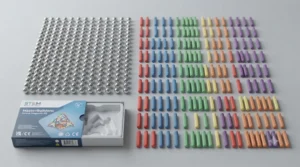
The standout feature here is scale: 512 individual 2.5mm neodymium balls give you enough raw material to build genuinely large geometric structures, not just fiddly little cubes. Each ball is made from sintered rare-earth neodymium coated in a durable finish, and the smaller 2.5mm diameter (rather than the 5mm balls common in older “Buckyball”-style sets) is specifically what allows this product to meet the CPSIA’s magnet safety standard for over-14s.
Based on the spec comparison with bulkier construction sets, what stands out about Spectrum 512 is density — because the balls are so small, you can build far more intricate polyhedra and curved forms per hundred pieces than with any rod-and-ball kids’ set. Reviewers consistently note that the “mashable, smashable” quality is the real draw: it behaves almost like magnetic putty when you’re not deliberately sculpting, which is exactly the fidget-toy crossover appeal buyers are chasing. Aggregated customer feedback is strongly positive on the tactile satisfaction, with a recurring theme of people reordering sets after buying “just one” for themselves.
Pros:
- ✅ 512 pieces allow genuinely large, detailed sculptures
- ✅ Meets CPSIA magnet safety standard for age 14+
- ✅ Metallic and matte finishes available for different desk aesthetics
Cons:
- ❌ Strictly unsuitable for households with young children
- ❌ Small ball size makes losing a few pieces over time likely
At around £30-£40 range, Speks Spectrum 512 sits in the mid-price bracket for neodymium desk toys — reasonable value given the piece count, provided you’re genuinely in the 14+ target audience.
2. Speks Supers 33mm Magnet Balls — palm-sized desk toy that doubles as an organiser
The standout here is size in the opposite direction: instead of hundreds of tiny spheres, Supers gives you a handful of chunky 33mm neodymium balls, each one heavy and smooth enough to sit satisfyingly in your palm. That single sentence covers most of what makes this product different — it’s less about building complex geometric structures and more about tactile, weighted fidgeting.
What most buyers overlook about this model is its dual function: because the magnets are strong enough to grip metal paperclips and business cards, it genuinely works as a desk organiser rather than just a toy, which is how the brand itself markets it. Based on the spec comparison with Spectrum 512, Supers trades sculptural complexity for heft and satisfaction-per-click — reviewers describe the “click, clack, rack and roll” sensation as the main selling point rather than any building ambition. It’s a smaller, punchier product that suits people who want stress relief more than architecture.
Pros:
- ✅ Substantial weighted feel, unlike lightweight small-ball sets
- ✅ Doubles as a functional desk organiser for paperclips
- ✅ Available in gunmetal and oil-slick finishes for desk aesthetics
Cons:
- ❌ Limited piece count restricts complex sculpture building
- ❌ Explicit warning that balls may pinch fingers
Priced under £30 for a small set, Speks Supers 33mm is a sensible entry point if you want the neodymium desk-toy experience without committing to a large sculpture-focused set.
3. Nanodots Magnetic Constructors (64 Dots) — the strongest name in geometric magnet building
The standout feature is raw magnetic force: Nanodots are milled from sintered neodymium-iron-boron and marketed, not unreasonably, as being among the strongest small magnets available to consumers. At 5mm in diameter, the individual dots are larger than Speks’ 2.5mm balls, but the trade-off is a magnetic pull reviewers repeatedly describe as noticeably stronger ball-for-ball.
Here’s what to weigh with Nanodots specifically: the brand leans hard into the “geometry with magnetic balls” framing, explicitly positioning the product as a tool for exploring atomic-structure-style models and platonic solids rather than open-ended sculpture. Aggregated reviews are thin on this specific listing, but the brand’s own safety framing is unusually direct — it states plainly that the product is not intended for children and is recommended for ages 14+. Based on the spec comparison, this makes Nanodots a slightly more “serious” geometric construction tool than Speks, appealing to people who enjoy the mathematical side of magnetic sculpture building sets as much as the fidgeting side.
Pros:
- ✅ High-powered neodymium construction for detailed geometric builds
- ✅ Requires no instructions, batteries or accessories
- ✅ Multiple colour options for mixed-colour structures
Cons:
- ❌ Verified independent review volume is limited for this specific set
- ❌ 5mm ball size means stronger pinch risk than smaller alternatives
In the £15-£25 range for 64 dots, Nanodots is competitively priced against Speks for buyers specifically drawn to geometric, mathematically inspired construction.
4. Geomag Classic Sticks and Balls Building Set (93 Pieces) — the premium, Swiss-engineered kids’ option
The standout feature is engineering pedigree: Geomag has been manufacturing magnetic construction toys in Switzerland since inventing the category in 1998, and the Classic range uses magnetic rods paired with non-magnetic steel balls — a deliberate design choice that keeps the strongest magnetic force contained inside the rods rather than in loose, swallowable spheres.
The 500W-motor-style spec-to-benefit logic applies here too: because Geomag’s steel balls aren’t magnetised themselves, a stray ball poses a standard choking risk rather than the far more serious “two magnets attracting through tissue” risk associated with magnetised spheres — a meaningful distinction once you understand how magnet ingestion injuries actually happen. Reviewers consistently praise the build quality and the fact that pieces from different Geomag sets are cross-compatible, letting a starter kit grow over several birthdays rather than being replaced outright. On the value side, Geomag’s recycled-plastic manufacturing and Swiss safety testing genuinely do let it justify a premium over generic alternatives — this isn’t a case of paying extra for a logo.
Pros:
- ✅ Non-magnetic steel balls reduce ingestion severity risk
- ✅ Cross-compatible with other Geomag sets for expansion
- ✅ Manufactured in Switzerland from recycled plastic
Cons:
- ❌ Noticeably pricier than generic ball-and-rod alternatives
- ❌ Some smaller Geomag sets are rated for 3+ but larger sets suit 8+
At £45-£60 range for a 93-piece set, Geomag Classic sits at the premium end, but the engineering rationale behind the price is genuinely defensible rather than pure branding markup.
5. PicassoTiles Magnetic Stick Building Balls & Rods Set (50 Pieces) — the well-reviewed mid-range family pick
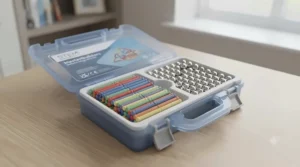
The standout feature is balance: PicassoTiles’ 50-piece set includes a storage bin, a manageable piece count for a first serious construction session, and — based on aggregated review sentiment across the brand’s wider magnetic building range — a reputation for sturdier click connections than many similarly priced competitors.
What the spec sheet won’t tell you, but reviewers note, is how much the storage bin actually matters day-to-day; multiple aggregated reviews across PicassoTiles’ magnetic stick range specifically call out the carry case as making clean-up dramatically easier, which for parents is often the deciding factor between sets that get used regularly and ones that end up forgotten in a cupboard. Based on the spec comparison with Geomag, PicassoTiles uses a broadly similar rod-and-ball mechanism but at a noticeably lower price point, making it the pragmatic mid-tier choice for families who want quality without the Swiss premium.
Pros:
- ✅ Includes storage bin, encouraging consistent use and tidiness
- ✅ Reviewers report sturdy, reliable magnetic connections
- ✅ Compatible with other PicassoTiles magnetic building lines
Cons:
- ❌ Fewer geometric shape options than dedicated panel-inclusive kits
- ❌ 50 pieces limits scale compared with larger 100+ piece sets
Sitting in the £20-£30 range, PicassoTiles represents genuinely strong value for a family’s first proper magnetic construction for teenagers or younger siblings alike.
6. BMAG Magnetic Balls and Rods Set (38 Pieces) — the honest budget starter kit
The standout feature is straightforward safety-first design at a low price: BMAG’s 38-piece set uses metal balls and rods all sized larger than 3cm, specifically engineered to be too large to swallow, and the brand states its products have passed CPSIA and ASTM safety testing.
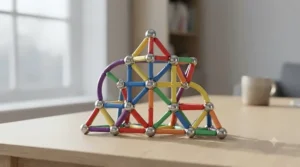
Based on the spec comparison with pricier sets, BMAG doesn’t try to compete on piece count or shape variety — instead it delivers the essentials (10 balls, 4 curved bars, 6 long bars, 18 short bars) at a genuinely accessible price. Reviewers consistently flag the same trade-off: one aggregated review specifically noted the set worked better for a 4-5 year old than a 3 year old, suggesting the fine motor coordination required is slightly underestimated for the very youngest end of the stated age range. That’s honest, useful feedback rather than a dealbreaker — it just means calibrating expectations for toddlers versus preschoolers.
Pros:
- ✅ All parts sized over 3cm, well above choking-hazard dimensions
- ✅ Passed CPSIA and ASTM toy safety testing per manufacturer
- ✅ Genuinely low entry price for a first magnetic set
Cons:
- ❌ Smaller piece count limits build complexity quickly
- ❌ Reviewers suggest it suits 4-5 year olds better than younger toddlers
Under £20, BMAG is hard to beat as a low-risk way to find out whether a child actually takes to magnetic construction before spending more.
7. TOKBLOK Magnetic Building Sticks Starter Set (76 Pieces) — the mid-budget alternative with more scope
The standout feature is piece count for the price: at 76 pieces, TOKBLOK’s starter set offers roughly double the building material of BMAG’s 38-piece set while still sitting comfortably in the budget-to-mid-range bracket, giving preschoolers meaningfully more scope for creativity without jumping to premium pricing.
Here’s what most buyers overlook about starter sets like this one: piece count matters less for very young children than rod flexibility and how easily the connections click together one-handed, since fine motor control is still developing at ages 3-4. Based on the spec comparison with Geomag and PicassoTiles, TOKBLOK sits closer to the value end of the mid-range tier, aimed squarely at first-time buyers who want more material than the cheapest starter kits without paying for Swiss manufacturing. It’s a sensible “grows with the child” option precisely because 76 pieces is enough to build modestly ambitious 3D shapes rather than just flat 2D outlines.
Pros:
- ✅ Higher piece count than typical entry-level 38-40 piece sets
- ✅ Positioned as a Montessori-style STEM learning toy
- ✅ Reasonable price for the additional building scope
Cons:
- ❌ Verified independent review depth is thinner than bigger brands
- ❌ Storage/case quality varies by listing bundle
In the £20-£25 range, TOKBLOK is a solid middle ground between BMAG’s bare-bones budget approach and PicassoTiles’ more established mid-tier positioning.
Practical Usage Guide: Getting the Most From Your Set
Getting a magnetic balls and rods set out of the box is the easy part — building anything more ambitious than a wobbly cube takes a little technique. Start with a flat, hard surface rather than carpet; magnetic balls roll surprisingly far and carpet fibres attract dust that gradually dulls the magnetic coating on cheaper sets.
For the first thirty minutes, resist the urge to follow a specific shape and instead build small repeating units — triangles for Geomag or PicassoTiles rods, simple pyramids for Speks or Nanodots balls — since larger geometric structures like icosahedra are really just several of these small units joined together. A common early mistake is applying force to separate stuck pieces; twisting rather than pulling straight apart reduces the risk of snapping a rod or chipping a ball’s coating.
Maintenance is minimal but not zero: wipe balls occasionally with a dry cloth (never submerge neodymium balls in water, as it can corrode the coating and expose the metal beneath), and store loose pieces in their original tin or a lidded container rather than an open bowl, both to prevent losses and to keep them away from other magnetic media like hotel key cards or credit card strips, which they can genuinely wipe if left in direct contact for extended periods.

Real-World Scenarios: Who Should Buy Which Set
If you’re a stressed-out remote worker who fidgets during video calls, Speks Supers 33mm or Speks Spectrum 512 are the obvious picks — small enough for a desk drawer, satisfying enough to replace pen-clicking as your default nervous habit, and genuinely useful as paperclip organisers between fidget sessions.
If you’re a parent of a curious 4-6 year old looking for a first construction toy, BMAG or TOKBLOK make more sense than jumping straight to premium options — the piece counts and price points let you test genuine interest before investing further, and the larger ball sizes suit developing fine motor skills.
If you’re buying for a maths- or engineering-minded teenager (14+) who’s outgrown standard building blocks, Nanodots or Geomag Classic hit differently — Nanodots for the pure geometric-sculpture appeal, Geomag if they’d also enjoy following structured build guides toward more complex, self-supporting forms.
Problem → Solution: Fixing Common Magnetic Set Issues
Problem: Pieces keep getting lost. Solution: use the original storage tin or bin religiously — sets like PicassoTiles include one specifically because loose pieces migrating around the house is the single most common long-term complaint across magnetic construction toys generally.
Problem: Balls or rods have weakened over time. Solution: this is usually coating wear rather than genuine magnetic decay — genuine neodymium in sets like Speks or Nanodots has an extremely long practical lifespan, so weakened grip more often means dust or grime on the contact surface than a failing magnet.
Problem: Structures collapse under their own weight. Solution: build from the base up with wider, lower layers first — this applies whether you’re working with Geomag‘s rod-and-ball system or Speks‘ pure-ball sculptures, since magnetic construction relies on distributed point-contact strength rather than rigid joints.
Problem: A young child keeps trying to put pieces in their mouth. Solution: this isn’t a “fix the toy” problem — it’s a signal to remove the set entirely and revisit the age rating, particularly for anything in the neodymium desk-toy category covered above.
✨ Don’t Miss These Exclusive Deals!
🔍 Take your magnetic building collection to the next level with these carefully selected sets. Click on any highlighted item to check current pricing and availability. Whether you’re after quiet desk-toy stress relief or a proper family construction session, these picks make it easy to build something genuinely satisfying. 🧲
How to Choose a Magnetic Balls and Rods Set
- Decide who it’s actually for first. Under-14s need a construction-toy-category set (large ferrite balls); 14+ users can consider neodymium desk toys.
- Check the stated age rating explicitly. Don’t infer safety from marketing photos — read the actual warning label or listing text.
- Match piece count to ambition. Under 50 pieces suits simple shapes and toddlers; 90+ pieces suits genuinely complex geometric structures.
- Weigh ball material, not just size. Non-magnetic steel balls (like Geomag’s) reduce ingestion severity risk versus fully magnetised balls of a similar size.
- Factor in storage. Sets with a dedicated case or bin see meaningfully more long-term use, based on aggregated review patterns across brands.
- Consider expandability. Some ranges (Geomag, PicassoTiles) are cross-compatible with other sets from the same brand, letting a collection grow.
- Set a realistic budget band. Genuine value exists from under £20 to £60+; price correlates loosely with build complexity and material quality, not always with safety.
Common Mistakes When Buying Magnetic Balls and Rods Sets
The single biggest mistake is buying a neodymium desk-toy set for a household with young children, assuming “it’s a toy shop item” means it’s automatically child-safe — several of the products in this category are explicitly rated 14+ precisely because they aren’t. A second common error is judging quality purely by piece count without checking ball size or magnet type, which leads buyers to unknowingly purchase a stronger, riskier product thinking more pieces simply means better value.
A third mistake is ignoring storage entirely; buyers consistently underestimate how much a proper case affects whether a set actually gets used regularly versus abandoned after pieces scatter. Finally, some shoppers assume all magnetic construction toys are interchangeable across brands — in reality, rod-and-ball diameters vary enough between manufacturers that mixing sets often doesn’t work as smoothly as marketing images suggest.
Magnetic Balls and Rods Sets vs Traditional Building Blocks
| Factor | Magnetic Balls & Rods | Traditional Blocks (e.g. wooden/plastic bricks) |
|---|---|---|
| Build speed | Very fast, tool-free connections | Slower, often needs precise alignment |
| Geometric variety | Excellent for spheres, polyhedra, curves | Better for rectilinear/architectural forms |
| Fine motor demand | Lower for large-ball sets | Higher, especially for small bricks |
| Safety consideration | Magnet ingestion risk (age-dependent) | Standard choking risk only |
| Best For | Quick sculptural builds, STEM exploration | Structured, replicable constructions |
The comparison lands somewhere nuanced rather than a clean win for either category: magnetic sets genuinely outperform traditional blocks for exploring geometric structures and curved forms because the connection points allow angles that snap-fit bricks simply can’t achieve. Traditional blocks, however, don’t carry the specific magnet-ingestion risk that regulators track so closely, which is why many nurseries and younger-sibling households still lean on them as the safer default. University of Surrey research on the SPACE programme has shown that structured construction play with connecting pieces — the study specifically used Lego — measurably improves children’s spatial reasoning and even their maths performance, and there’s good reason to think that logic extends to magnetic construction toys given the similar spatial-visualisation demands involved.
Magnetic Sculpture Building Sets for Teenagers and Adults
This is where the desk-toy and fidget-toy crossover really earns its place. For teenagers and adults, the appeal of Speks and Nanodots isn’t education in the traditional sense — it’s closer to what stress balls and fidget spinners promised a decade ago, except the “toy” also produces something you can display on a shelf. Reviewers across the desk-toy category repeatedly describe the mashing, reshaping and rebuilding process as genuinely calming during meetings or study breaks, which lines up with wider research on fidgeting and focus, even if the specific claim of improved concentration remains more anecdotal than clinically proven for this exact product category.
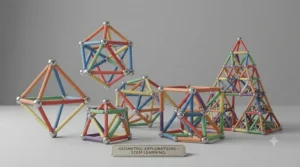
Geometric structures also scratch a particular itch for maths- and engineering-minded teens: building a genuine icosahedron or a Menger-sponge-style fractal out of magnetic dots is a hands-on way to engage with concepts usually confined to a textbook diagram. On the practical side, neodymium magnets used in these sets are genuinely powerful — strong enough to damage electronics, wipe magnetic stripes and, per manufacturer warnings, pinch fingers with real force — so “for teenagers and adults” isn’t just marketing language, it’s a functional safety boundary worth respecting even for a 13-year-old who seems mature enough.
Safety, Regulations & Compliance Guide
UK toy safety law treats small, high-powered magnets as a distinct and serious risk category, and it’s worth understanding why before buying any set. Under the Toys (Safety) Regulations 2011, products are tested against a magnetic flux index limit — the Office for Product Safety and Standards has repeatedly recalled magnetic ball sets found to exceed the permitted 50 kG²mm² limit, some by a factor of three or four times over. The risk isn’t abstract: if two or more small magnets are swallowed, they can attract each other through intestinal walls, causing perforation, blockage or worse, and multiple OPSS alerts explicitly describe this as potentially fatal.
Separately, the Magnetic Toys (Safety) Regulations 2008 require any magnetic toy sold in the UK to carry a clearly visible warning about this exact hazard, displayed on the packaging at the point of purchase — so a legitimate listing without any magnet warning at all should raise a flag rather than reassure you. This is also part of why the “14+” rating on products like Speks and Nanodots isn’t arbitrary marketing; it reflects genuine testing against these standards, whereas larger, ferrite-based construction sets like Geomag or PicassoTiles are rated safe from age 3 precisely because their magnet strength and ball size fall well outside the risk band.
Practically, this means: never buy unbranded, ultra-cheap magnetic ball sets from marketplaces with no visible safety warning or age rating, always keep 14+ rated sets genuinely away from any household member under that age regardless of maturity, and if you ever suspect a magnet has been swallowed, treat it as a medical emergency and seek immediate attention rather than waiting to see if symptoms appear.
Long-Term Cost & Maintenance
| Set | Typical Price Range | Expected Lifespan | Replacement Cost Consideration |
|---|---|---|---|
| Speks Spectrum 512 | £30-£40 range | Years (neodymium doesn’t meaningfully degrade) | Occasional lost balls, low individual cost |
| Geomag Classic 93pc | £45-£60 range | Years, cross-compatible expansion | Higher upfront, expands via add-on packs |
| BMAG 38pc | Under £20 range | 1-2+ years typical use | Cheap to replace entirely if outgrown |
The genuine long-term value story here favours neodymium desk toys and premium construction sets over the very cheapest options, simply because magnets themselves barely degrade — a Speks or Geomag set bought today should still function identically in a decade, with wear showing up mainly as coating scuffs rather than lost magnetic strength. Budget sets like BMAG aren’t poor value exactly, but the calculation is different: they’re cheap enough to treat as disposable if a child’s interest fades, whereas the premium tier is a better bet if you’re confident the interest (or the fidgeting habit) is going to stick around.
FAQ
❓ Are magnetic balls and rods sets safe for toddlers?
❓ What's the difference between magnetic balls and neodymium magnets?
❓ Can magnetic building sets damage electronics?
❓ How many pieces do I need for a decent structure?
❓ Do magnetic balls lose their strength over time?
Conclusion
There’s no single “best” magnetic balls and rods set, and honestly, anyone claiming otherwise is skipping the one question that actually matters: who’s going to be handling it. For families with young children, BMAG and TOKBLOK offer genuine, safety-appropriate value without overspending on a first attempt, while PicassoTiles and Geomag Classic step up the build complexity and durability for slightly older kids or families ready to invest more. For teenagers and adults chasing that particular fidget-toy-meets-sculpture-kit satisfaction, Speks and Nanodots deliver exactly that — provided the 14+ rating is treated as a hard line rather than a suggestion.
What ties every recommendation in this guide together is that the “best” choice was never really about piece count or price alone; it’s about matching magnet type and ball size to the actual person building with it, then letting the geometry do the rest. Whichever set you land on, the appeal that opened this article — that strange, room-quieting pull of building something out of nothing but small magnetic pieces — tends to hold up remarkably well once you’ve actually got a set in your hands.
Recommended for You
- Magnetic Tiles vs LEGO for Creative Play: 7 Brilliant Picks (2026)
- Magnetic Tiles for Toddlers: 7 Safest Picks for 2026
- Magnetic Tiles Under £30: 7 Brilliant Budget Picks for 2026
Disclaimer: This article contains affiliate links. As an Amazon Associate, I earn from qualifying purchases. If you purchase products through these links, we may earn a small commission at no additional cost to you.
✨ Found this helpful? Share it with your friends! 💬🤗
