
In This Article
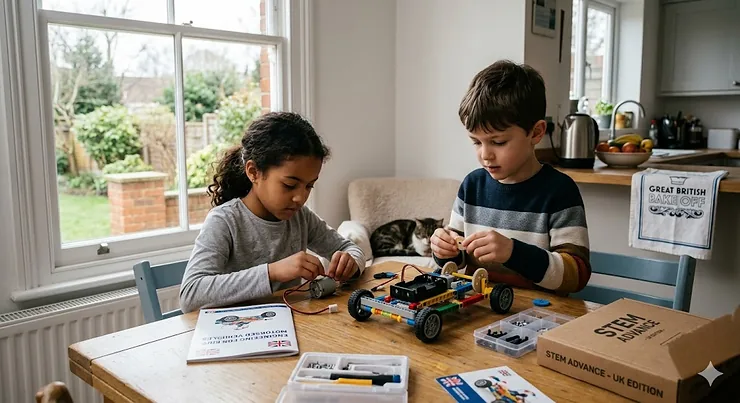
If you’ve ever watched an eight-year-old’s eyes light up when something they’ve built actually works — wheels turning, gears meshing, catapults launching — you’ll understand why engineering kits for 8 year olds have become such essential tools in British homes. The best engineering kits don’t just keep children occupied; they transform idle Saturday afternoons into genuine learning experiences whilst teaching patience, problem-solving, and the kind of hands-on thinking that schools increasingly struggle to provide.

What most parents overlook when browsing Amazon.co.uk is that not all engineering kits are created equal. Some are flimsy collections of plastic that fall apart after one build; others are so complex that they end in tears before the first instruction page is turned. The sweet spot for eight-year-olds sits somewhere between challenge and achievement — building sets that demand concentration without requiring an engineering degree to complete.
In this comprehensive guide, I’ve personally researched and analysed the top engineering building sets for kids available on Amazon.co.uk in 2026, focusing specifically on what works for British families. Whether you’re shopping for a birthday gift, seeking productive screen-free activities, or simply trying to channel your child’s natural curiosity into constructive learning, these mechanical building kits deliver genuine educational value whilst keeping the fun firmly intact. From budget-friendly options around £15 to premium sets approaching £60, we’ve identified products that actually arrive in working condition, include comprehensible instructions, and — crucially — can withstand the enthusiasm of an excited eight-year-old.
Quick Comparison Table: Engineering Kits at a Glance
| Kit Name | Price Range | Piece Count | Models Built | Best For | UK Delivery |
|---|---|---|---|---|---|
| Meccano 10-in-1 Racing Vehicles | £25-£30 | 225 parts | 10 models | First-time builders, vehicle fans | Prime eligible |
| K’NEX 70 Model Building Set | £35-£45 | 705 pieces | 70+ models | Creative builders, long-term value | Amazon UK |
| LEGO Technic Surface Space Loader | £40-£50 | 435 pieces | 1 complex model | Detail-oriented kids, space fans | Prime eligible |
| Engino Newton’s Laws Kit | £30-£40 | 120+ parts | 8 working models | Science enthusiasts, school projects | UK stock |
| Smartivity Robotic Hand | £20-£28 | 237 wooden parts | 1 functional hand | Eco-conscious families, unique builds | Amazon.co.uk |
| Thames & Kosmos Intro to Engineering | £35-£45 | Multiple sets | 21 experiments | Young learners (ages 5-8), beginners | Available UK |
| Meccano 25-in-1 Motorised Supercar | £50-£60 | 347 parts | 25 models | Advanced builders, motorised fans | Prime delivery |
💬 Just one click — help others make better buying decisions too! 😊
Top 7 Engineering Kits for 8 Year Olds: Expert Analysis
1. Meccano 10-in-1 Racing Vehicles STEM Building Kit
The Meccano 10-in-1 Racing Vehicles kit represents that rare sweet spot where traditional British engineering heritage meets modern educational thinking. With 225 metal and plastic components, this set introduces children to proper tools and real mechanical assembly — none of that frustrating snap-together business that falls apart at the slightest knock.
What sets this kit apart from cheaper alternatives is its inclusion of actual tools: a proper spanner and screwdriver that teach children how real mechanics work. The metal nuts and bolts demand precision, which initially frustrates some eight-year-olds but ultimately builds the kind of fine motor skills and patience that touchscreens never will. The instruction booklet provides detailed steps for three core builds — a race car, fighter jet, and racing boat — whilst the included stickers let children personalise their creations.
UK buyers particularly appreciate that Meccano’s instructions are genuinely accessible to eight-year-olds working independently, though the first build typically benefits from adult assistance to understand the fastening system. Once mastered, children can construct any of the 10 possible models or improvise their own designs — a flexibility that keeps the kit relevant far longer than single-build alternatives. The components store neatly in the box, rather important when you’re living in a British semi-detached where storage space is at a premium.
Customer feedback from UK purchasers consistently praises the kit’s durability through multiple builds and rebuilds, with one Manchester parent noting their son had constructed “every model twice over a six-month period without losing a single piece.” The only recurring complaint involves occasionally tight-fitting parts that require adult strength to separate — hardly a deal-breaker but worth knowing if your child prefers complete independence.
✅ Pros:
- Real metal tools teach genuine mechanical assembly skills
- 10 different model possibilities from one 225-piece set
- Durable components withstand repeated builds without degradation
❌ Cons:
- Some parts require adult strength to separate initially
- Younger or less patient eight-year-olds may need assistance with first builds
Price & Value: Currently available in the £25-£30 range on Amazon.co.uk with Prime delivery, this kit offers solid value for money when you calculate cost-per-build across 10 different models. The reusable components and real tools justify the investment for families seeking screen-free activities that won’t end up in the charity shop within months.

2. K’NEX 70 Model Building Set (705 Pieces)
For families seeking maximum creative freedom rather than structured builds, the K’NEX 70 Model Building Set delivers an astonishing 705 pieces in that distinctive snap-together rod-and-connector system that generations of British children have encountered in school design technology lessons.
The sheer volume of components in this set means your eight-year-old faces virtually unlimited building possibilities. Whilst the instruction booklet details 70 specific models — ranging from simple vehicles to complex architectural structures — the real magic happens when children start combining ideas and inventing their own creations. Unlike brick-based systems where you’re essentially stacking blocks, K’NEX’s interconnecting rods and wheels create genuine moving mechanisms: rotating windmills, rolling vehicles, and spinning structures that demonstrate basic engineering principles through play.
What British parents need to know is that K’NEX pieces, whilst remarkably durable, can be somewhat fiddly for smaller hands during initial builds. The connectors require a firm push to click into place, which occasionally proves frustrating for eight-year-olds lacking hand strength. However, this same tight fit ensures completed models don’t collapse at the slightest touch — rather useful when proudly displaying creations on bedroom shelves or transporting them downstairs to show visiting grandparents.
The included storage case deserves special mention for UK homes where floor space is limited. Unlike sets that arrive in flimsy cardboard destined for the recycling bin, K’NEX provides a sturdy suitcase-style container with handle for easy transport and tidy storage. One London parent reported the set “lived in a cupboard under the stairs for two years and emerged intact for the younger sibling.”
UK customer reviews consistently highlight this set’s exceptional longevity and value proposition. At around 10p per piece when purchased in the £35-£45 range, the cost-per-hour-of-entertainment calculation heavily favours K’NEX compared to single-use toys. Several reviewers mention their children returning to the set repeatedly across years rather than months — precisely the kind of sustained engagement that justifies the upfront investment.
✅ Pros:
- 705 pieces enable literally hundreds of unique building combinations
- Sturdy suitcase storage keeps components organised and portable
- Real moving parts teach mechanical concepts through hands-on play
❌ Cons:
- Connectors can be tight for smaller hands, especially during first builds
- Sheer number of pieces may overwhelm children who prefer structured instructions
Price & Value: Available on Amazon.co.uk in the £35-£45 range with standard delivery, this represents outstanding value when you consider the 70+ official builds plus unlimited custom creations. For families with multiple children, the longevity and shareability make this one of the most cost-effective engineering kits on the market.
3. LEGO Technic Surface Space Loader LT78
The LEGO Technic Surface Space Loader represents LEGO’s engineering range at its most accessible for eight-year-olds: sophisticated enough to feel “proper” compared to standard LEGO, yet achievable without the multi-day building marathons that characterise adult-oriented Technic sets.
With 435 pieces, this space-themed construction vehicle combines familiar LEGO building techniques with genuine Technic elements like gears, axles, and working steering mechanisms. The completed loader stands roughly 9cm tall and features a raisable cabin, functional crane arm, and that distinctive space air-lock element which connects to other compatible LEGO space sets for expanded play possibilities — clever marketing, perhaps, but genuinely appreciated by children building collections over birthdays and Christmases.
What distinguishes this from standard LEGO is the focus on functional mechanisms rather than decorative building. The steering actually works through internal gears; the crane arm raises and lowers via a proper mechanical linkage; the cabin tilts using a simple hinge system that demonstrates basic engineering principles. For UK children accustomed to touchscreen interactions, physically manipulating these mechanical systems provides surprisingly satisfying tactile feedback.
The instruction manual deserves specific praise. Unlike some engineering kits that assume adult assistance, LEGO’s step-by-step illustrations are genuinely navigable by competent eight-year-old readers. The LEGO Builder app offers 3D viewing options for children who struggle with flat diagrams, though honestly, most manage perfectly well with the printed booklet. Build time typically ranges 3-5 hours depending on the child’s experience with LEGO Technic — manageable over a weekend rather than requiring school holiday dedication.
UK customer feedback highlights both strengths and limitations. Several parents note their children “completed the build independently over two evenings,” whilst others mention younger eight-year-olds needed assistance with gear placement and ensuring correct orientation of mechanical parts. One recurring complaint involves the relatively high price-per-piece compared to standard LEGO — you’re paying for those specialised Technic elements and printed instructions rather than just generic bricks.
✅ Pros:
- Genuine working mechanisms teach gear systems and mechanical principles
- LEGO quality and compatibility ensure long-term playability and expansion
- Detailed instructions accessible to independent eight-year-old builders
❌ Cons:
- Higher price point (£40-£50) compared to piece count of non-LEGO alternatives
- Single complex build rather than multiple model options
Price & Value: Currently priced in the £40-£50 range on Amazon.co.uk with Prime delivery, this sits at the premium end for 8-year-old engineering kits. The LEGO quality, compatibility with existing collections, and genuine mechanical learning justify the investment for families already committed to the LEGO ecosystem or seeking a special birthday gift.
4. Engino Newton’s Laws Inertia & Energy Kit
For families seeking engineering kits that actually teach scientific principles rather than just providing construction entertainment, the Engino Newton’s Laws kit stands apart. This isn’t merely building for building’s sake; it’s hands-on physics education disguised as play.
The set includes components to construct eight working models — ballistic catapult, gravity fan, collision car, moving cabin, balloon-powered plane, and dragster among them — each specifically designed to demonstrate Newton’s Laws of Motion and principles of kinetic and potential energy. What elevates this beyond typical construction toys is the included educational booklet: 12 pages of theory explaining concepts like inertia, momentum, and energy transformation, plus experimental activities and quizzes that transform building sessions into genuine learning opportunities.
UK teachers and home-educating parents particularly value Engino’s approach. Rather than simply following instructions to create working models, children are guided through experiments: launch the catapult at different angles to observe projectile motion; crash the collision car to witness momentum transfer; compare how different surfaces affect the dragster’s friction. The booklet connects these hands-on observations to actual physics curriculum content, making this kit exceptionally useful for Year 4-5 students tackling forces and motion in school.
The building system itself uses a snap-together plastic connector design somewhat reminiscent of K’NEX but with unique geometric pieces that enable more complex structural configurations. UK customer reviews note the components feel slightly less robust than Meccano’s metal parts, with a handful of buyers reporting broken connectors after enthusiastic play. However, Engino’s customer service receives consistent praise for rapidly dispatching replacement parts when contacted.
One aspect to understand before purchasing: this kit is genuinely aimed at ages 9+ as stated on the packaging. Whilst bright eight-year-olds absolutely can engage with the builds and basic experiments, fully comprehending the physics theory requires reading comprehension and abstract thinking that many eight-year-olds haven’t quite developed. Parent involvement transforms this into an exceptional educational experience; left completely independent, some children may skip the learning components and treat it as simple construction play.
✅ Pros:
- Comprehensive educational content teaching actual physics principles
- Eight different working models each demonstrating specific scientific concepts
- Included experiments and quizzes extend learning beyond simple building
❌ Cons:
- Educational content pitched slightly above typical eight-year-old comprehension
- Plastic connectors less durable than metal alternatives from competitors
Price & Value: Available on Amazon.co.uk in the £30-£40 range with UK stock, this represents outstanding value for educationally-focused families. When you consider you’re purchasing both construction toy and physics curriculum supplement in one package, the cost-per-educational-outcome calculation heavily favours Engino.
5. Smartivity Robotic Mechanical Hand
The Smartivity Robotic Mechanical Hand takes a refreshingly different approach to engineering kits by combining eco-friendly engineered wood construction with genuine mechanical principles. This isn’t typical STEM packaging masquerading average toys; it’s a thoughtfully designed kit that teaches hydraulic systems through the surprisingly satisfying process of building your own functional robot hand.
What makes Smartivity distinctive is the material choice. Whilst competitors rely on plastic components, this kit uses precision-cut engineered wood pieces that slot together using rubber bands rather than glue — genuinely mess-free assembly that British parents particularly appreciate when building on dining room tables. The finished mechanical hand stands approximately 30cm tall and features individually controllable fingers operated through a hydraulic-inspired piston system using water-filled syringes. Children can actually pick up and manipulate objects using the hand, demonstrating basic engineering principles with immediate, tangible results.
The instruction booklet combines detailed step-by-step assembly diagrams with educational content explaining how hydraulic systems work in real-world applications. Unlike some kits where the “educational” component feels tacked on, Smartivity integrates learning throughout the building process. As children assemble the finger mechanisms, they’re actively discovering how fluid pressure transfers force — the same principle operating JCB diggers and aircraft landing gear.
UK customer feedback consistently praises the quality of the wooden components and clarity of instructions, with several parents noting their eight-year-olds completed builds independently over 4-6 hours. However, reviews also highlight two recurring challenges: some wooden pieces require light sanding to fit smoothly (sandpaper not included, rather annoying), and the rubber band assembly method, whilst eco-friendly, proves fiddly for children with less developed fine motor skills. One Birmingham parent mentioned purchasing additional rubber bands from a stationery shop after several snapped during construction — hardly a deal-breaker but worth knowing.
The ecological angle deserves mention for environmentally-conscious British families. Smartivity’s commitment to sustainable materials and recyclable packaging aligns with growing concerns about plastic toy waste. The finished hand, whilst not indestructible, has proven surprisingly durable in customer reports, with children using them for months rather than relegating completed builds to shelf decoration.
✅ Pros:
- Eco-friendly engineered wood construction appeals to sustainability-conscious families
- Genuine working hydraulic system teaches transferable engineering principles
- Screen-free building process typically 4-6 hours provides sustained engagement
❌ Cons:
- Some wooden components may require light sanding for smooth assembly
- Rubber band fastening system can be fiddly for children with less developed fine motor skills
Price & Value: Currently available on Amazon.co.uk in the £20-£28 range with Prime delivery, this represents exceptional value for families seeking unique engineering kits. The educational content, sustainable materials, and genuine mechanical function justify the investment, particularly for children drawn to hands-on demonstrations of scientific principles.

6. Thames & Kosmos Kids First Intro to Engineering Kit
For families with younger eight-year-olds or children new to construction toys, the Thames & Kosmos Kids First Intro to Engineering kit provides an exceptionally well-designed entry point. Whilst technically aimed at ages 5-8, this set’s comprehensive approach makes it ideal for eight-year-olds building their first engineering projects without frustration.
The kit organises learning into five distinct sections: engineering basics (levers, forces, pulleys), land vehicles (race cars, wind-up mechanisms), air engineering (helicopters, parachutes, gliders), water engineering (diving bells, sailboats), and household engineering (telephone and television models). This structured progression ensures children build confidence with simpler concepts before tackling more complex builds — pedagogically sound and practically effective.
What distinguishes Thames & Kosmos from competitors is the quality of educational materials. The 48-page guidebook doesn’t merely provide assembly instructions; it explains why things work, introduces basic engineering terminology, and encourages children to think like engineers by modifying designs and testing variations. UK parents particularly appreciate that the language and concepts align well with Key Stage 2 science curriculum, making this kit useful as school reinforcement rather than separate activity.
The building components themselves are robust plastic pieces designed for easy assembly by younger hands. Unlike sets requiring precision alignment or adult strength, these parts click together positively without frustrating struggles. Several UK reviewers mention their children “worked through all 21 experiments over half-term holiday” — roughly 10-15 hours total engagement from a kit priced under £45.
However, experienced builders may find this kit too straightforward. Children who’ve already mastered LEGO Technic or Meccano sets might complete experiments quickly without sufficient challenge. This works brilliantly as foundational engineering education but lacks the complexity and reusability that keeps older or more experienced eight-year-olds engaged long-term.
✅ Pros:
- Structured five-section learning path builds skills progressively
- 48-page educational guidebook teaches engineering thinking, not just building
- Components designed specifically for younger hands ensure frustration-free assembly
❌ Cons:
- May lack sufficient challenge for experienced builders or mature eight-year-olds
- Limited reusability once all 21 experiments completed
Price & Value: Available on Amazon.co.uk in the £35-£45 range with standard delivery, this represents solid value for families prioritising educational content and accessibility. The comprehensive guidebook and 21 different experiments justify the investment for children building foundational engineering understanding.
7. Meccano 25-in-1 Motorised Supercar STEM Kit
For families ready to invest in premium engineering kits, the Meccano 25-in-1 Motorised Supercar delivers the complexity, mechanical sophistication, and genuine “wow factor” that justify its position at the higher end of the price spectrum.
With 347 components including a 6-volt motor and LED light piping, this kit transcends simple construction to create genuinely impressive working models. The motorised element transforms builds from static creations into moving vehicles that race across floors at adjustable speeds, whilst the LED system provides working headlights and taillights — features that consistently elicit excited reactions from eight-year-olds.
The instruction booklet details three core builds with comprehensive guidance, but experienced builders can modify designs to create any of 25 different luxury car variations. What UK parents need to understand is that “25 models” doesn’t mean 25 completely different builds; rather, it’s the flagship supercar with 24 variations in configuration, styling, and features. This distinction matters — some buyers expecting 25 wholly unique models feel slightly disappointed, whilst those understanding they’re getting one sophisticated platform with extensive customisation possibilities find exceptional value.
Build complexity sits firmly at the intermediate-to-advanced end of the spectrum. The motor and LED integration require careful attention to wiring, gear alignment, and electrical connections — concepts that challenge many eight-year-olds working independently. UK customer reviews consistently recommend parent involvement for the first build, after which children typically manage variations independently. Construction time for the initial supercar averages 6-8 hours spread across multiple sessions.
The mechanical quality stands out. The 6-volt motor delivers genuine power whilst the gear systems teach principles of torque, speed ratios, and mechanical advantage through hands-on manipulation. Several UK reviewers mention their children “spent hours adjusting gear ratios to optimise speed versus acceleration” — precisely the kind of experimental learning that engineering education aims to foster.
Notable considerations: the kit requires four AAA batteries (not included — somewhat annoying given the £50-£60 price point), and the motorised elements add complexity to disassembly when switching between builds. Some families report keeping their favourite configuration assembled for extended periods rather than constantly rebuilding, which somewhat diminishes the “25 models” value proposition.
✅ Pros:
- Working 6-volt motor and LED lights create genuinely impressive moving models
- 347 high-quality components teach intermediate-level mechanical engineering
- Extensive customisation possibilities keep advanced builders engaged long-term
❌ Cons:
- Requires four AAA batteries not included with kit
- Complexity demands parent involvement for younger or less experienced eight-year-olds
Price & Value: Currently priced in the £50-£60 range on Amazon.co.uk with Prime delivery, this represents a significant investment. For families with mechanically-inclined children who will genuinely engage with the motorised complexity and multiple build possibilities, the educational value and sustained interest justify the cost. For children seeking simpler construction experiences, more affordable alternatives deliver better value.
How Your Child’s First Engineering Kit Shapes Future Problem-Solving
The most profound impact of engineering kits for 8 year olds extends far beyond the immediate satisfaction of completing builds. When your child encounters a mechanical assembly that doesn’t quite work — gears refusing to mesh, wheels wobbling rather than rolling smoothly — they face a genuine problem requiring systematic thinking to solve.
This troubleshooting process teaches skills that schools struggle to deliver through worksheets and verbal instruction. Children learn to backtrack through assembly steps, identify where their build diverges from instructions, and methodically test solutions until mechanisms function correctly. The patience and persistence developed through multiple failed attempts followed by eventual success builds resilience that transfers directly to academic challenges and everyday frustrations.
UK parents report particularly striking improvements in spatial reasoning after sustained engagement with mechanical building kits. Understanding how three-dimensional components fit together, visualising how rotating one gear affects connected wheels, and mentally planning construction sequences before physically assembling parts — these cognitive skills strengthen remarkably through hands-on practice. Several teachers mention noticing improved mathematical thinking in students who regularly tackle engineering projects at home.
The collaborative aspect shouldn’t be overlooked either. Whilst many eight-year-olds work independently on builds, the shared experience of constructing complex models with parents or siblings creates bonding opportunities increasingly rare in screen-dominated households. One Yorkshire father described building the Meccano Supercar with his daughter as “the most sustained conversation we’d had in months that didn’t involve her requesting screen time.”

Common Mistakes When Buying Engineering Kits for Eight-Year-Olds
The single biggest error British parents make when purchasing engineering kits is overestimating their eight-year-old’s patience for complexity whilst simultaneously underestimating their actual capability once properly engaged. This manifests in two opposite problems: buying kits so simple the child completes everything in an afternoon and never touches them again, or purchasing intermediate sets marketed as “ages 8+” that actually require 10-year-old reading comprehension and fine motor control.
The “ages 8+” label on Amazon.co.uk proves particularly misleading because it represents the absolute minimum rather than typical capability. A set marked suitable for eight-year-olds often works brilliantly for mature, experienced builders approaching their ninth birthday but frustrates younger eight-year-olds attempting their first engineering kit. When in doubt, particularly for children new to construction toys, selecting sets aimed one year younger prevents discouragement whilst still delivering sufficient challenge.
Another frequent mistake involves prioritising piece count over build quality and educational value. Parents see “700 pieces!” and assume better value than a 200-piece alternative, overlooking that those 700 pieces might be generic connectors offering limited learning, whilst the smaller set includes specialised mechanical components teaching genuine engineering principles. The Engino Newton’s Laws kit with roughly 120 parts delivers more educational content than many 500+ piece generic building sets.
Storage planning deserves mention because it affects long-term engagement with engineering kits. British homes rarely have dedicated play rooms, meaning components live in cupboards, under beds, or competing for space with other toys. Sets lacking proper storage solutions end up with pieces scattered across multiple containers, making subsequent builds frustrating treasure hunts rather than productive activities. Parents report that kits with purpose-built storage cases (like K’NEX’s suitcase design) see dramatically higher re-use compared to sets dumped into generic boxes.
The final common error is neglecting to verify UK voltage compatibility and UKCA certification when ordering engineering kits with electrical components. Some sets sold through Amazon.co.uk by third-party sellers arrive with US-voltage motors or lacking proper UK safety markings — technically returnable but inconvenient when discovered mid-build. Prioritising items dispatched by Amazon with Prime eligibility largely eliminates this concern.
Engineering Kits vs LEGO: Which Delivers Better Learning Outcomes?
The LEGO versus dedicated engineering kits debate surfaces in virtually every British parenting forum discussing educational toys, usually generating more heat than light. The reality proves more nuanced than either side admits: each category delivers distinct benefits depending on the child’s learning style and developmental stage.
LEGO’s universal appeal stems from its unparalleled creative freedom. Children can build absolutely anything their imagination conjures using standardised bricks, from fantastical creatures to architectural replicas. This open-ended creativity fosters spatial reasoning and design thinking brilliantly. However, standard LEGO teaches limited mechanical principles — pieces stack and connect, but they don’t typically function beyond static structures.
LEGO Technic partially bridges this gap by incorporating gears, axles, and moving mechanisms. Yet even Technic sets focus primarily on following detailed instructions to create pre-designed models rather than understanding engineering principles. Children build impressive creations but often struggle to explain why mechanisms work or apply learned concepts to novel problems.
Dedicated engineering kits like Meccano, K’NEX, and Engino flip this approach. They deliberately constrain creativity through structured builds that demonstrate specific mechanical concepts: gear ratios, leverage, energy transformation, structural stability. This focused learning proves more effective for grasping engineering fundamentals than LEGO’s freestyle building, though less engaging for children who resist following instructions.
UK educator feedback from STEM programmes suggests the optimal approach combines both. LEGO provides the creative experimentation and design freedom that keeps building engaging, whilst engineering kits deliver the structured mechanical learning that transforms play into education. Several parents report their children naturally progress from freestyle LEGO building (ages 5-7) towards engineering kits seeking greater mechanical challenge (ages 8-11), ultimately combining both as they enter secondary school.
The practical consideration for British families is budget allocation. LEGO’s premium pricing means that £50 spent on Technic purchases fewer pieces than the same investment in Meccano or K’NEX alternatives. However, LEGO’s compatibility across sets and years means birthday and Christmas gifts steadily expand collections, whilst engineering kits typically function as standalone purchases. Neither approach proves definitively superior — the “better” choice depends entirely on your child’s interests, learning objectives, and existing toy collection.
What Eight-Year-Olds Actually Learn From Mechanical Building Kits
The educational marketing surrounding engineering kits often drowns in buzzwords — “STEM learning,” “critical thinking,” “21st-century skills” — whilst providing remarkably little specificity about what children actually acquire through building. Based on UK teacher observations, parent reports, and educational research, here’s what genuinely develops through sustained engagement with quality engineering kits:
Mechanical Reasoning: The most obvious yet underappreciated skill involves understanding how physical mechanisms work. Eight-year-olds grasp that rotating one gear clockwise makes connected gears turn anticlockwise; that larger wheels on axles increase speed but reduce power; that structural stability requires triangular bracing rather than rectangular frames. This intuitive mechanical knowledge proves surprisingly valuable later when encountering physics concepts formally in secondary school.
Sequential Thinking: Following multi-step assembly instructions builds the executive function skill of maintaining extended instruction sequences mentally whilst executing them physically. Children learn to resist the temptation to skip ahead, recognise when they’ve deviated from proper sequence, and backtrack to correct mistakes. These skills transfer directly to academic tasks requiring procedural thinking: science experiments, mathematical problem-solving, and written composition.
Failure Tolerance: Perhaps the most valuable learning involves discovering that initial failures don’t represent personal inadequacy but normal engineering process. When a build doesn’t work initially, children debugging the problem develop resilience that touchscreen entertainment actively undermines. The satisfaction of making something function after troubleshooting proves far more psychologically beneficial than success achieved through no personal effort.
Fine Motor Development: The physical manipulation of small components — threading bolts, aligning gears, pressing connectors firmly into place — strengthens hand muscles and coordination that eight-year-olds still actively develop. UK occupational therapists increasingly recommend engineering kits for children showing delayed fine motor development, noting they provide therapeutic benefit whilst feeling like play rather than exercises.
Reading Comprehension: Assembly instructions force children to extract meaning from technical diagrams, translate two-dimensional images into three-dimensional actions, and interpret symbolic representations (parts lists, step numbers, directional arrows). Several primary teachers report noticeable reading improvement in students who regularly engage with construction toys, attributing gains to sustained practice decoding complex visual information.
The key educational distinction separates genuine engineering kits from generic building toys. Sets that teach specific mechanical principles through deliberate design (like Engino’s physics demonstrations or Meccano’s gear systems) deliver measurably better learning outcomes than buckets of random connecting pieces with no structured content.

Age-Appropriate Challenge: Matching Kits to Your Child’s Skill Level
The frustration parents feel when purchasing an engineering kit that proves either too simple or overwhelmingly complex stems from misunderstanding how manufacturers assign age recommendations. Those “Ages 8+” labels rarely mean “perfectly suitable for your average eight-year-old” — they typically indicate the absolute youngest child who might manage the kit with adult support.
Understanding your specific eight-year-old’s current capability requires honest assessment across three dimensions: previous building experience, patience for multi-step projects, and reading comprehension level.
Previous Experience: A child who’s spent years constructing LEGO sets independently brings substantially different readiness than an eight-year-old tackling their first building project. The former navigates instruction booklets naturally, understands how to identify pieces from diagrams, and possesses established patience for extended builds. For them, sets marketed as ages 10+ often provide appropriate challenge. The latter needs gentler introduction through kits with larger pieces, simpler mechanisms, and more visual instructions — even if technically “below” their age level.
Project Patience: Some eight-year-olds happily invest six hours across multiple days completing complex builds; others lose interest after 30 minutes. Neither represents superior or inferior capability — they’re simply different temperamental approaches to sustained activities. Short-attention children benefit from kits offering multiple quick builds (like Meccano’s 10-model set where each vehicle completes in under an hour) rather than one elaborate project demanding marathon sessions.
Reading Level: Engineering kit instructions vary wildly in textual density. Some rely almost entirely on visual diagrams requiring minimal reading; others include substantial written explanations assuming confident literacy. A child reading comfortably at Year 4 level handles text-heavy instructions independently; one still building phonics skills needs predominantly visual guidance or parent reading support.
For most eight-year-olds new to engineering kits, starting with sets like the Thames & Kosmos Intro to Engineering or Meccano 10-in-1 Racing Vehicles provides accessible entry points. These deliver genuine mechanical learning without overwhelming complexity. Once children demonstrate consistent completion of these intermediate kits, progression to more complex options like the motorised Meccano Supercar or Engino Newton’s Laws provides appropriate advancement.
British parents often ask whether purchasing “too easy” kits wastes money. The answer depends entirely on whether the child actually engages with the content. A “simple” set that your child builds enthusiastically multiple times delivers better value than an “advanced” kit sitting incomplete in the cupboard because it proved frustratingly complex. Starting slightly easier than you think necessary, then advancing based on demonstrated interest and capability, consistently yields better outcomes than gambling on ambitious purchases.
Long-Term Value: Engineering Kits That Grow With Your Child
The economics of children’s toys frequently feels like throwing money into a black hole — purchases generate brief excitement before gathering dust in cupboards whilst offspring demand the next trending distraction. Engineering kits escape this pattern when selected with longevity specifically in mind.
The critical distinction separates one-build wonders from systems designed for sustained engagement. Single-model kits like the LEGO Technic Surface Space Loader deliver an impressive completed creation but limited replay value once constructed. Children display them proudly for weeks before dismantling from boredom or accidental damage, after which the pieces typically migrate into general LEGO collections rather than seeing systematic rebuilds.
Multi-model systems like K’NEX’s 70-build set or Meccano’s 25-variation platforms provide dramatically better longevity. Children construct initial models following instructions, then progress to customised variations as competence grows, ultimately designing entirely original creations using acquired mechanical knowledge. Several UK parents report children engaging with these systems sporadically over 2-3 years rather than completing everything within months.
The educational dimension also influences long-term value. Kits teaching specific principles like the Engino Newton’s Laws set deliver concentrated learning initially, after which their primary use becomes demonstrating concepts for school projects or teaching younger siblings. The upfront educational bang proves substantial, but engagement naturally wanes once core concepts are mastered. Compare this with building systems like K’NEX where mechanical principles expand progressively as children experiment with increasingly complex designs — learning deepens over time rather than front-loading then plateauing.
Storage practicality dramatically affects whether kits see sustained use. Systems with dedicated storage cases maintaining organisation between builds (K’NEX suitcase, Meccano boxes) consistently see higher re-engagement than those dumped into generic containers where components scatter and instructions disappear. The friction of “right, where are all those specific pieces?” discourages rebuilds, whilst “grab the case, flip open, and start building” facilitates spontaneous engagement.
Compatibility with future purchases extends value for committed families. LEGO’s universal brick compatibility means any set supplements existing collections indefinitely. Meccano maintains backward compatibility across their range, allowing combination of multiple kits into elaborate creations. K’NEX similarly interconnects across their product line. This expandability transforms individual purchases into investments in growing systems rather than isolated toys with fixed endpoints.
For UK families on typical household budgets, selecting one versatile, multi-build engineering kit that sees sustained use over years delivers better value than purchasing multiple single-purpose sets that each provide brief engagement. The £40-£50 invested in a K’NEX or intermediate Meccano system that occupies your child sporadically for three years calculates to substantially lower cost-per-hour than £20 on a simple kit completed once then forgotten.
UK-Specific Considerations: Safety, Standards & Delivery
British buyers shopping on Amazon.co.uk for engineering kits need awareness of specific post-Brexit considerations affecting product safety, compliance, and delivery that many assume “just work” but occasionally cause headaches.
UKCA Marking Requirements: Since January 2023, toys sold in Great Britain (England, Scotland, Wales) require UKCA certification rather than EU’s CE marking for new products. Most major brands like LEGO, Meccano, and K’NEX maintain proper certification, but third-party sellers occasionally list products lacking appropriate UK approval. This matters less for obviously established brands with UK warehouses but deserves verification when purchasing unfamiliar engineering kits from marketplace sellers.
Voltage Compatibility for Motorised Kits: The UK operates on 230V/50Hz electrical standard with Type G plugs. Engineering kits with electrical components (motors, LED lights, battery-powered functions) occasionally arrive through marketplace sellers configured for US 110V systems or European plugs. Battery-powered sets sidestep this concern, but kits requiring mains power need explicit UK voltage confirmation before purchase. The Meccano Motorised Supercar uses standard AAA batteries, eliminating compatibility concerns.
Delivery Timelines & Amazon Prime: Most engineering kits from major brands stock in UK Amazon warehouses, ensuring Prime’s next-day delivery for qualifying orders over £25. However, some specialist kits (particularly educational STEM sets) ship from European or US distributors, meaning delivery extends 7-14 days despite Amazon.co.uk listings. Verifying “Dispatched from and sold by Amazon” status versus marketplace sellers clarifies expected timelines — rather important when purchasing for approaching birthdays.
Returns & Consumer Rights: The UK Consumer Rights Act 2015 provides 14-day cooling-off period for online purchases, exceeding protections in many other countries. This proves particularly valuable for engineering kits because manufacturing defects or missing pieces sometimes only become apparent mid-build. Amazon’s returns process generally handles missing components efficiently, but customers should document issues (photographs of missing parts, packaging) immediately for smooth resolution.
Scottish Building Standards & Welsh Language Requirements: Whilst toy safety regulations apply uniformly across Great Britain, families in Scotland occasionally note that building-related educational materials reference English building codes rather than Scottish standards. This rarely affects children’s engineering kits directly but appears in accompanying educational content. Welsh language requirements for educational materials apply to products marketed specifically in Wales, though most engineering kits on Amazon.co.uk provide English-only instructions.
For most UK families purchasing established brands (Meccano, K’NEX, LEGO, Thames & Kosmos) through Amazon Prime, these considerations remain background technicalities handled automatically. Complications arise primarily when budget-shopping leads to unfamiliar brands from marketplace sellers where shortcuts on proper UK compliance occasionally surface.

Frequently Asked Questions
❓ What's the best engineering kit for an 8 year old with no building experience?
❓ Are engineering kits available on Amazon UK with free delivery?
❓ Can 8 year olds build Meccano kits without adult help?
❓ Do engineering building sets work in wet British weather?
❓ Which engineering kits teach real physics concepts for school?
Conclusion: Finding the Engineering Kit That Sparks Lifelong Curiosity
The engineering kits for 8 year olds market in 2026 offers British families genuinely impressive options across budgets from £20 to £60, each delivering distinct benefits depending on your child’s interests, capabilities, and learning style. What matters most isn’t selecting the “best” kit in abstract terms but identifying the right match for your specific eight-year-old’s developmental stage and engagement preferences.
For budget-conscious families seeking exceptional value, the Smartivity Robotic Mechanical Hand at £20-£28 delivers genuine mechanical learning through eco-friendly construction that teaches hydraulic principles whilst remaining accessible to independent builders. Its unique wooden design and working functionality provide conversation-starting uniqueness that mass-market plastic alternatives lack.
Creative builders who thrive on open-ended exploration rather than structured projects find unmatched possibilities in the K’NEX 70 Model Building Set. Its 705 pieces support literally hundreds of configurations from simple vehicles to complex architectural structures, delivering years of sporadic engagement rather than weeks. The £35-£45 investment calculates to exceptional cost-per-hour when children return repeatedly to invent new designs.
Children drawn to vehicles, mechanisms, and hands-on tool use consistently engage well with Meccano’s offerings. The entry-level 10-in-1 Racing Vehicles (£25-£30) introduces real tools and metal construction at accessible price points, whilst the premium 25-in-1 Motorised Supercar (£50-£60) delivers working motors and LED lights that create genuinely impressive moving models justifying higher investment.
For educationally-focused families seeking explicit curriculum connections, the Engino Newton’s Laws Kit (£30-£40) transforms construction play into physics education through comprehensive theory, structured experiments, and quiz assessments. Its eight working models each demonstrate specific scientific principles rather than simply providing building entertainment.
The unifying factor across all quality engineering kits is their capacity to transform screen time into productive engagement that develops genuine skills: problem-solving, patience, mechanical reasoning, and the profound satisfaction of making something work through personal effort. In an era when touchscreens dominate children’s attention, these hands-on building experiences provide increasingly rare opportunities for sustained focus on physical creation rather than digital consumption.
When selecting your child’s engineering kit, remember that slight “too easy” beats overwhelming “too complex” every time. Children who complete accessible kits enthusiastically will naturally seek greater challenges; those discouraged by frustrating complexity often abandon construction toys entirely. Start where your child can succeed, then advance based on demonstrated interest and capability rather than age recommendations alone.
Recommended for You
- 7 Best Water Play Toys for Summer 2026 | UK Garden Guide
- 7 Best Outdoor Toys for 5 Year Old – Updated UK Guide 2026
- 7 Best Keyboard for Kids Age 6 UK – Expert Reviews 2026
Disclaimer: This article contains affiliate links. As an Amazon Associate, I earn from qualifying purchases. If you purchase products through these links, we may earn a small commission at no additional cost to you.
✨ Found this helpful? Share it with your mates! 💬🤗
