
In This Article
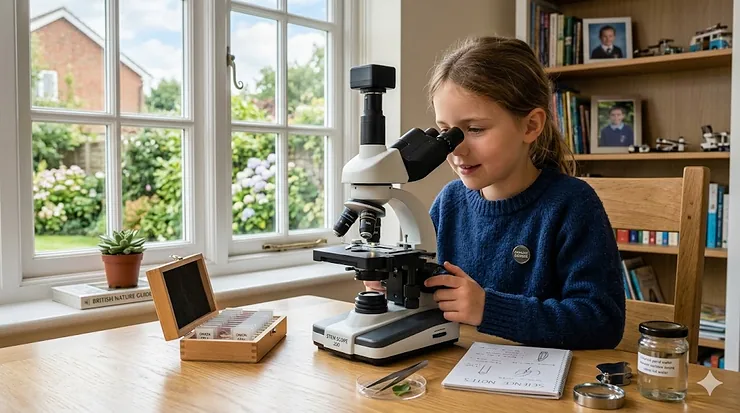
Choosing the right microscope for 8 year old children represents one of those rare purchasing decisions that can genuinely spark a lifelong passion for science. At eight years old, youngsters possess the manual dexterity and curiosity required to operate a proper microscope, yet they still need equipment designed specifically for their developmental stage — not watered-down toys that frustrate more than they fascinate.

The British market offers a rather confusing array of options, from budget £20 pocket microscopes to sophisticated £150 compound models with USB connectivity. What most UK parents overlook is that not all microscopes sold online actually ship from British warehouses or meet UK electrical standards. Post-Brexit, this matters more than ever, particularly regarding voltage compatibility (our 230V mains supply), UKCA marking requirements, and warranty coverage.
According to the Quekett Microscopical Club, one of the UK’s leading microscopy organisations, the essential requirements for a child’s first microscope include adequate illumination, reasonable magnification (typically 40x to 400x), and sturdy construction that survives the inevitable knocks. The club notes that many toy microscopes advertise impressively high magnification figures whilst delivering dim, blurry images — classic marketing over substance.
This comprehensive guide examines seven microscopes actually available on Amazon.co.uk with UK delivery, ranging from portable digital models perfect for garden exploration to traditional compound microscopes suitable for serious scientific investigation. Each recommendation includes practical advice tailored to British living conditions — compact storage for smaller homes, wet weather durability for our damp climate, and realistic performance expectations for UK buyers spending their hard-earned pounds.
Quick Comparison: Top Microscopes for 8 Year Olds Available in the UK
| Model | Type | Magnification | Best For | Price Range (£) | UK Availability |
|---|---|---|---|---|---|
| National Geographic Dual LED | Compound | 20x – 50x | Beginners with prepared slides | £40-£60 | Amazon.co.uk Prime |
| Bresser Junior 40x-640x | Compound | 40x – 640x | Traditional microscopy | £45-£65 | Bresser UK Direct |
| BEBANG Digital Handheld | Digital portable | 50x – 1000x | Outdoor exploration | £30-£45 | Amazon.co.uk |
| National Geographic 40x-800x | Compound with camera | 40x – 800x | Photo/video capture | £60-£85 | Amazon.co.uk |
| Buki France Beginner | Compound | 200x – 1200x | Structured learning | £50-£70 | Amazon.co.uk Prime |
| Bresser Junior Digital Handheld | Digital portable | 7x – 94x (digital) | Field trips & gardens | £35-£55 | Bresser UK |
| Carson MicroMini LED | Pocket magnifier | 20x – 40x | Ultra-portable starter | £15-£25 | Amazon.co.uk Prime |
From the comparison above, the National Geographic Dual LED offers exceptional value under £60 for traditional compound microscopy, whilst the BEBANG Digital Handheld provides remarkable versatility for youngsters who’d rather explore the garden than sit at a desk. Budget buyers should note that the Carson MicroMini sacrifices magnification for portability — a trade-off that works brilliantly for nature walks but disappoints children expecting to see individual cells. For UK delivery, all these models ship from either Amazon.co.uk warehouses or authorised UK distributors like Bresser UK, ensuring you won’t face unexpected import duties or voltage incompatibility issues that plague direct imports from the EU or US.
💬 Just one click — help others make better buying decisions too! 😊
✨ Don’t Miss These Exclusive Deals!
🔍 Take your child’s scientific journey to the next level with these carefully selected products. Click on any highlighted item to check current pricing and availability on Amazon.co.uk. These picks will help you find exactly what you need!
Top 7 Microscopes for 8 Year Old Children: Expert Analysis
1. National Geographic Dual LED Microscope
The National Geographic Dual LED Microscope stands out as perhaps the most thoughtfully designed starter microscope currently available to UK buyers through Amazon.co.uk. This isn’t some rebadged Chinese import with a National Geographic sticker slapped on — the design genuinely reflects input from educators who understand what works for children.
The dual-illumination system represents the standout feature. Lower LED lights illuminate transparent specimens on slides, whilst upper LEDs shine down on solid objects like rocks, coins, or insects. This means your eight-year-old can examine both the prepared onion cell slide and that interesting pebble from the garden without needing two separate microscopes. The optical glass lenses deliver 20x and 50x magnification — modest by marketing standards, but actually ideal for this age group. Higher magnification sounds impressive but requires rock-steady hands and precise focusing that frustrates younger children.
The kit arrives with 10 prepared slides featuring genuine biological specimens (not just pictures), 10 blank slides for DIY projects, tweezers, an eye dropper, and even a mini geode to examine. What the Amazon listing won’t tell you: the eyepieces feature a comfortable dual-lens design, meaning your child doesn’t need to close one eye — rather important when you’re eight and coordination is still developing. UK buyers consistently praise the study construction in reviews, noting it survives being knocked off desks rather better than cheaper alternatives.
Pros:
✅ Dual LED system handles both slide and solid specimen viewing
✅ Comfortable binocular-style eyepieces perfect for young eyes
✅ Comprehensive accessory kit includes everything needed to start immediately
Cons:
❌ Maximum 50x magnification won’t satisfy older children wanting cellular detail
❌ Requires 3 AA batteries (not included) — rechargeable recommended for UK cost savings
Price-wise, expect to pay around £45-£55 on Amazon.co.uk, which represents solid value when you factor in the accessory kit. UK Prime members benefit from next-day delivery, and the product ships from British warehouses, avoiding any post-Brexit import complications.
2. Bresser Junior Microscope 40x-640x with Smartphone Adapter
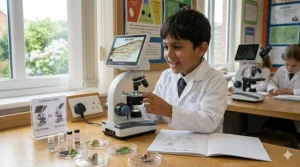
The Bresser Junior 40x-640x occupies an interesting middle ground — it’s designed for children but built with professional-grade components that won’t insult a budding scientist’s intelligence. German engineering firm Bresser manufactures this model specifically for the European market, meaning it arrives with proper UK electrical compliance and voltage compatibility straight out of the box.
The magnification range of 40x to 640x provides genuine versatility. The 40x setting works brilliantly for examining fabric fibres, salt crystals, or insect wings, whilst 640x reveals cellular structures in plant specimens. The three-objective revolving nosepiece (4x, 10x, 40x lenses) combined with two eyepieces (WF10x, WF16x) creates this range, teaching children how professional microscopes actually work rather than hiding the mechanism behind a simple zoom dial.
Here’s what separates this from cheaper alternatives: the smartphone adapter. Your eight-year-old can position their phone camera over the eyepiece and capture photos or videos of what they’re observing. This transforms microscopy from a solitary activity into something they can share with friends or use for school projects. The adapter works with most modern smartphones, though British buyers should note it grips better on phones without bulky cases.
The included experiment kit deserves mention — it contains materials for breeding brine shrimp (Artemia), which sounds odd but provides an absolutely captivating week-long project as your child watches tiny crustaceans hatch and grow, then examines them under magnification. Rather less thrilling in January than July, mind you, as British room temperatures affect hatching success.
Pros:
✅ Professional three-objective system teaches proper microscopy technique
✅ Smartphone adapter enables photo/video capture and sharing
✅ Metal construction survives the inevitable bumps and knocks
Cons:
❌ Higher magnifications require careful focusing — younger or less patient children may struggle
❌ The smartphone adapter requires some fiddling to align properly
Available through both Amazon.co.uk and directly from Bresser UK at around £50-£65, this microscope ships from British warehouses. Bresser UK’s direct website occasionally offers slightly better pricing, though Amazon Prime’s delivery speed often wins out for last-minute birthday presents.
3. BEBANG Digital Handheld Microscope
The BEBANG Digital Handheld Microscope represents an entirely different philosophy — forget sitting at a desk peering through eyepieces, this portable digital model lets children explore anywhere. The built-in 2-inch screen displays magnified images up to 1000x, though the optical quality at maximum zoom produces better entertainment than scientific accuracy.
What makes this model particularly suited to British conditions: it’s completely self-contained and rechargeable. No mains adapter required, no USB cable tethering it to a computer, no batteries to replace. Charge it via USB-C (the cable’s included), and you get roughly 2.5 hours of continuous use — more than enough for an afternoon’s garden exploration. The neck strap means it won’t get dropped in the mud when your eight-year-old spots an interesting leaf.
The magnification range of 50x to 1000x sounds impressive, but here’s the reality: usable magnification peaks around 400x before image quality deteriorates noticeably. That’s still perfectly adequate for examining flower petals, fabric weaves, rock textures, or insects. The eight adjustable LED lights illuminate specimens brilliantly, which matters when you’re exploring in British weather conditions where natural light is, shall we say, inconsistent.
UK buyers particularly appreciate the included 32GB SD card (some cheaper models require separate purchase) and the fact it ships from Amazon UK warehouses, meaning next-day Prime delivery rather than the three-week wait from Chinese sellers. Customer reviews from British users consistently mention its durability — it survives being shoved in rucksacks, dropped on pavements, and used in light drizzle (though it’s not waterproof, so don’t push your luck in a proper downpour).
Pros:
✅ Completely portable with built-in rechargeable battery
✅ Self-contained screen means no computer or phone required
✅ Robust construction survives outdoor adventures
Cons:
❌ Image quality degrades noticeably above 400x magnification
❌ Small screen (2 inches) can be difficult for multiple children to view simultaneously
Typically priced around £30-£40 on Amazon.co.uk, this represents excellent value for families wanting to encourage outdoor scientific exploration. The inclusion of prepared slides and a storage case sweetens the deal, though the slides are basic quality compared to those in more expensive kits.
4. National Geographic Microscope 40x-800x with Smartphone Camera Holder
The National Geographic 40x-800x model takes the standard compound microscope format and modernises it with contemporary connectivity, creating something that bridges traditional microscopy and digital sharing. Available through Amazon.co.uk, this German-manufactured model (despite the American brand name) meets all UK electrical standards and ships with a proper three-pin plug adapter.
The magnification range from 40x to 800x provides genuinely useful versatility. Lower magnifications work brilliantly for examining solid specimens under the upper LED, whilst 800x reveals surprising detail in prepared slides — you’ll actually see individual cells in the onion epidermis slide, not just blurry shapes. The colour filter disc adjusts image contrast, teaching children how different wavelengths reveal different specimen features.
What British buyers particularly value: the smartphone holder actually works reliably, unlike some budget alternatives where the phone wobbles or the camera doesn’t quite align with the eyepiece. Once positioned correctly, you can capture remarkably clear photos and videos. This matters enormously for school projects or simply showing grandparents what your child discovered in that pond water sample. The holder accommodates most smartphones from 55mm to 90mm width, covering everything from older iPhones to larger Android models.
The included accessories deserve attention — you get prepared slides (yeast, shrimp eggs, and others), blank slides, cover glasses, a specimen container, and tweezers. The experimentation booklet provides structured activities rather than just leaving children to figure things out, which helps when you’re eight and haven’t the foggiest idea how to prepare a slide properly. British parents note the instructions come in proper English, not the mangled machine translations that plague cheaper imports.
Pros:
✅ Wide magnification range from 40x to 800x suits multiple experience levels
✅ Reliable smartphone holder enables easy photo/video capture
✅ Comprehensive instruction booklet with structured experiments
Cons:
❌ Higher magnifications require precise focusing that can frustrate impatient children
❌ Prepared slides are basic quality — enthusiasts will want to purchase better specimens
Expect to pay around £60-£80 on Amazon.co.uk, placing this firmly in the mid-range category. UK Prime delivery ensures quick arrival, and the product includes proper warranty coverage through National Geographic’s UK distribution network.
5. Buki France Beginner Microscope STEM Kit
The Buki France Beginner Microscope approaches children’s microscopy with unmistakably French attention to educational methodology. This isn’t merely a microscope with some accessories thrown in — it’s a structured STEM learning system that happens to include a rather good microscope.
The magnification range of 200x to 1200x skews higher than most children’s models, making this more suitable for eight-year-olds who’ve already experimented with basic microscopes and want more power. The 1200x setting genuinely reveals cellular structures that simpler microscopes can’t resolve, though achieving clear focus at this magnification requires patience and steady hands. The metal frame construction provides the stability necessary for high-magnification work — plastic microscopes wobble too much.
What sets this apart: the 30 experiments included in the comprehensive instruction manual. These aren’t throwaway activities like “look at this prepared slide” — they’re proper investigations teaching scientific method, specimen preparation, and observation techniques. The booklet explains why you’re performing each experiment and what you should be noticing, which transforms microscopy from random exploration into genuine learning. British buyers note the instructions translated well into English, maintaining clarity despite the French origin.
The LED illumination system provides adjustable brightness, whilst the optical system uses glass lenses throughout — no plastic components degrading image quality. The mechanical stage with slide clips holds specimens precisely in position, preventing the frustrating drift that plagues cheaper microscopes when you’re trying to maintain focus at high magnification.
Pros:
✅ Professional-grade metal construction provides exceptional stability
✅ 30 structured experiments teach proper scientific methodology
✅ Higher magnification range satisfies curious children wanting cellular detail
Cons:
❌ Higher magnifications require more patience and skill than budget models
❌ Heavier and less portable than digital alternatives
Available through Amazon.co.uk at around £50-£70, this microscope represents serious value when you consider the educational content alongside the hardware quality. UK delivery typically arrives within two days for Prime members, and the product complies with all British safety standards including the updated UKCA marking requirements.
6. Bresser Junior Digital Handheld Microscope
The Bresser Junior Digital Handheld reimagines portable microscopy for the smartphone generation. Forget squinting through eyepieces — this pocket-sized digital microscope features a built-in 2-inch screen displaying magnified images that multiple children can view simultaneously.
The optical magnification range of 7x to 31x sounds modest, but digital zoom extends this to 94x. Here’s what Bresser won’t advertise loudly: optical magnification provides the quality, whilst digital zoom mostly adds larger pixels. For practical purposes, expect usable magnification up to about 50x before image degradation becomes noticeable. That’s still perfectly adequate for examining leaves, insects, fabrics, and other specimens that children actually encounter in daily life.
What makes this model particularly British-weather-friendly: it’s genuinely portable and rechargeable via USB-C. Charge it before heading out, clip on the neck strap, and you’re ready for garden exploration regardless of whether the sun deigns to make an appearance. The compact design (smaller than most smartphones) means it genuinely fits in a coat pocket rather than requiring a dedicated bag. British users consistently praise its durability — it survives being dropped on pavements, shoved in rucksacks with muddy wellies, and used by children who haven’t quite mastered “gentle handling.”
The built-in photo and video capture stores images at up to 4K resolution on the internal memory, which you can transfer to a computer via USB-C. This feature transforms nature walks into scientific documentation projects, perfect for school assignments or simply preserving discoveries. The prepared slides included provide a starting point, though most children quickly abandon them in favour of examining whatever catches their interest outdoors.
Pros:
✅ Genuinely pocket-portable with built-in rechargeable battery
✅ Robust construction survives outdoor adventures and drops
✅ Photo/video capture enables documentation and sharing
Cons:
❌ Digital zoom above 50x produces low-quality images
❌ Small screen (2 inches) limits group viewing
Typically priced around £35-£50 through Bresser UK or Amazon.co.uk, this microscope fills a specific niche brilliantly — it’s not for children wanting to examine cellular structures at their desk, but for young naturalists wanting to explore gardens, parks, and beaches. UK delivery from Bresser ensures proper voltage compatibility and warranty coverage.
7. Carson MicroMini LED Pocket Microscope
The Carson MicroMini LED occupies the budget end of the spectrum whilst maintaining surprisingly decent quality. This isn’t attempting to be a comprehensive microscopy solution — it’s a pocket-sized magnifier designed to fit on a keychain and provide 20x to 40x magnification wherever curiosity strikes.
What you’re actually getting: a high-quality magnifying lens with built-in LED illumination, packaged in a robust plastic housing barely larger than a USB stick. The magnification range of 20x to 40x reveals detail invisible to the naked eye whilst remaining forgiving enough that eight-year-olds can focus it easily. The built-in UV light adds an unexpected bonus — it reveals fluorescent properties in certain materials, turning ordinary rocks into glowing specimens.
British buyers appreciate several UK-specific advantages. First, the battery (one AA) lasts absolutely ages because the LED draws minimal power. Second, the compact size means it actually gets used rather than sitting in a drawer — children can carry it to school, on nature walks, or just around the house looking for interesting things to magnify. Third, at around £15-£20 on Amazon.co.uk, it’s cheap enough to buy multiples if you’ve got several children or want spares.
The limitations are obvious: 40x maximum magnification won’t satisfy children wanting to see cellular detail, the small lens (about 1cm diameter) means you’re examining tiny portions of specimens, and there’s no photo capability. This isn’t for serious scientific investigation — it’s for sparking curiosity and making everyday objects interesting. UK customer reviews consistently mention children using these to examine fabric weaves, leaf veins, insect details, and the texture of everything from bread to bathroom tiles.
Pros:
✅ Genuinely pocket-portable (fits on keychain)
✅ Robust construction survives being carried everywhere
✅ UV light reveals fluorescent properties in specimens
Cons:
❌ Maximum 40x magnification limits scientific applications
❌ No photo/video capability for documentation
Available on Amazon.co.uk for around £15-£25, this represents the most affordable entry point into magnified exploration. UK Prime delivery typically arrives next-day, and the product ships from British warehouses. Whilst it won’t replace a proper microscope, it makes an excellent supplementary tool or starter gift for children whose interest in microscopy remains uncertain.
How to Set Up Your Child’s First Microscope: A British Parent’s Guide
Setting up a microscope properly transforms it from a frustrating toy into a genuine scientific instrument. The process differs slightly between traditional compound microscopes and digital models, but several principles apply universally — particularly in British homes where lighting and space constraints often differ from American assumptions.
Location matters more than most parents realise. Position the microscope on a stable surface near a window for natural light supplementation, but not in direct sunlight which creates glare and heat. British homes typically lack the dedicated study spaces common in larger American houses, so the kitchen table often becomes the default laboratory. This works fine, but ensure the microscope gets stored safely when not in use rather than risking milk spills or breakfast mishaps.
Power considerations for UK buyers: Battery-operated microscopes offer portability but require keeping rechargeable AAs on hand to avoid the ongoing expense. Mains-powered models need checking for UK plug compatibility — reputable sellers like Amazon.co.uk and Bresser UK provide proper three-pin plugs or adapters, but direct imports from the EU may arrive with continental two-pin plugs requiring adapters. The 230V UK mains supply isn’t problematic if the transformer’s rated correctly, which it should be for anything sold through legitimate British retailers.
Initial setup steps: Remove all packaging materials, then inspect the optical components for dust or protective films. Many microscopes ship with transparent protective films over lenses that parents mistake for scratches — peel these off carefully. Insert batteries or connect the power adapter, then test the illumination system. LED lights should illuminate evenly; if they don’t, check battery orientation or power connections.
The first observation: Use a prepared slide from the kit rather than attempting to create your own initially. Place it on the stage, secure it with the clips, and start at the lowest magnification. Look through the eyepiece and adjust the focusing knob slowly — the image should gradually sharpen. If it doesn’t, ensure the slide’s positioned correctly (most mistakes involve placing it upside down or backwards).
British weather considerations: Condensation affects optical quality, particularly when bringing a cold microscope indoors during winter. Allow the equipment to reach room temperature before use, and store it somewhere relatively dry. British damp doesn’t mix well with optical equipment — avoid leaving microscopes in garden sheds or unheated garages where condensation accumulates.
Teaching proper handling: Eight-year-olds possess sufficient manual dexterity for microscopy but benefit from clear guidelines. Establish rules about always using both hands when moving the microscope, never touching optical surfaces with fingers, and returning it to its storage location after use. The metal microscopes mentioned earlier survive drops better than plastic alternatives, but prevention beats replacement.
Digital vs Traditional Microscopes: What UK Parents Need to Know
The fundamental choice facing British buyers involves digital versus traditional microscopy, each offering distinct advantages that suit different children’s learning styles and family circumstances. Understanding these differences prevents the disappointment of purchasing equipment that doesn’t match your eight-year-old’s actual needs.
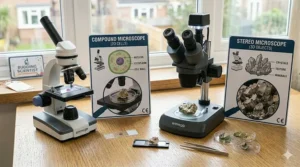
Traditional compound microscopes use optical lenses to magnify specimens viewed through eyepieces, exactly like school laboratories employ. The National Geographic Dual LED and Bresser Junior models exemplify this approach. Advantages include teaching proper microscopy technique, providing genuinely sharp images at moderate magnifications, and maintaining compatibility with standard prepared slides. British schools typically use compound microscopes, so children familiar with this format transition seamlessly between home and classroom equipment.
The limitations centre on usability. Younger or less patient eight-year-olds struggle with the focusing requirements, and the solitary viewing experience means siblings or parents can’t simultaneously see what the child’s observing unless you invest in models with smartphone adapters. Traditional microscopes also require more careful specimen preparation — you can’t simply stick a leaf under the lens and expect clear results without proper technique.
Digital microscopes like the BEBANG and Bresser Digital Handheld project magnified images onto built-in screens or connect to computers and smartphones. This collaborative viewing transforms microscopy into a shared activity rather than solitary investigation. British families particularly benefit from the photo and video capabilities, enabling children to document discoveries for school projects without the complexity of attaching cameras to eyepieces.
The trade-offs involve image quality and magnification accuracy. Digital microscopes often advertise impressive magnification figures (1000x isn’t uncommon), but actual optical magnification typically maxes out far lower, with digital zoom filling the gap. This works fine for examining textures and structures visible at lower magnifications but disappoints children hoping to see individual bacteria or cellular detail. The battery dependency creates another UK-specific consideration — you’ll want rechargeable batteries or models with USB charging to avoid the ongoing expense of disposable batteries.
Which suits your eight-year-old? Consider their personality and interests. Patient children who enjoy structured activities respond well to traditional microscopes with their requirement for careful focusing and specimen preparation. More energetic youngsters who’d rather explore gardens than sit at desks thrive with portable digital models that enable outdoor investigation. British weather plays a role too — digital microscopes’ portability means they actually get used during brief sunny intervals rather than waiting for perfect conditions.
Hybrid solutions like the National Geographic 40x-800x with smartphone holder attempt bridging both worlds, offering traditional optical quality with modern sharing capabilities. These represent the sweet spot for many UK families, though they typically cost more than choosing purely digital or traditional alternatives.
Understanding Magnification: What Can Your 8 Year Old Actually See?
Marketing materials advertise magnification figures ranging from 20x to 2000x, but these numbers mean little without context. Understanding what different magnification levels reveal helps British parents set realistic expectations and choose appropriate equipment for eight-year-old children.
20x to 50x magnification represents the starter range, perfect for examining everyday objects and building confidence. At this level, children see individual salt or sugar crystals, the weave pattern in fabrics, fine details in coins, and the structure of plant materials like leaves and flower petals. This magnification works brilliantly for outdoor exploration — pond water reveals tiny creatures swimming about, whilst soil samples show mineral particles and organic matter. The National Geographic Dual LED’s maximum 50x falls into this category, which sounds limiting until you realise most eight-year-olds spend months exploring at this level before wanting more power.
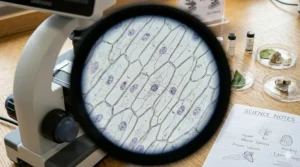
100x to 400x magnification enters proper microscopy territory. Cellular structures become visible in plant specimens — the onion epidermis slide every science kit includes suddenly makes sense when you can actually see individual cell walls. Prepared slides of blood reveal distinct red blood cells, whilst pond water samples show microorganisms like paramecium swimming in surprising detail. The Bresser Junior 40x-640x and similar models excel in this range, providing genuine scientific investigation capability whilst remaining accessible to children with developing fine motor skills.
800x to 1200x magnification pushes into advanced territory requiring careful technique. At these levels, you’ll see individual bacteria (though they remain quite small), detailed cellular structures, and the intricate patterns in diatoms and other microorganisms. The Buki France microscope’s 1200x maximum enables this level of investigation, but achieving clear focus requires steady hands, precise adjustments, and proper illumination. Most eight-year-olds find this challenging initially, though with practice they develop the necessary skills.
Beyond 1200x: Marketing vs Reality. Many budget microscopes advertise 2000x or even higher magnification, but British buyers should approach these claims sceptically. Achieving useful magnification above 1000x requires exceptional optical quality and precise illumination that budget equipment rarely provides. Instead, you get larger, blurrier images where digital processing creates pixels rather than revealing additional detail. The Quekett Microscopical Club notes that toy microscopes often achieve high magnification figures using poor-quality lenses that produce dim, distorted images unsuitable for actual observation.
What matters for UK buyers: Focus on the magnification range that suits your child’s current interests. Garden explorers benefit from 20x to 200x allowing them to examine leaves, insects, and rocks they actually encounter. Children interested in cellular biology need 100x to 400x for viewing prepared slides. Very few eight-year-olds require magnification exceeding 400x initially, regardless of what they claim they want based on impressive advertising figures.
Specimen Preparation: What British Children Can Actually Examine
The specimens your eight-year-old examines determine whether microscopy becomes an ongoing passion or a briefly-used birthday present gathering dust. British gardens, parks, and even kitchens provide abundant investigation opportunities, though successful observation requires matching specimens to microscope capabilities.
Prepared slides included with most microscope kits provide the easiest starting point. Onion epidermis, plant stems, and simple biological specimens reveal cellular structures without requiring preparation skills. UK-sourced kits typically include British-relevant specimens rather than tropical plants children won’t encounter locally, making observations more relatable. The limitation: prepared slides represent someone else’s discoveries rather than your child’s investigations.
Garden and park specimens offer unlimited exploration potential. Flower petals reveal intricate cellular patterns, leaves show vein structures and stomata (the tiny pores used for gas exchange), whilst tree bark displays fascinating textures. British gardens provide seasonal variation too — spring blossoms, summer insects, autumn leaves, and winter lichens ensure year-round investigation opportunities. Portable digital microscopes excel for outdoor examination, whilst traditional compound microscopes work better for specimens brought indoors.
Kitchen microscopy transforms everyday materials into scientific subjects. Salt and sugar crystals display distinct geometric patterns, bread reveals yeast cells and air pockets, whilst herbs and spices show cellular structures. British children particularly enjoy examining tea leaves, discovering why loose-leaf tea looks so different from tea bags under magnification. The advantage: specimens cost nothing and are immediately available, encouraging spontaneous investigation rather than waiting for special materials.
Pond water represents the holy grail of children’s microscopy — living microorganisms swimming about under magnification. British ponds, particularly in spring and summer, teem with protozoans, algae, and tiny invertebrates. Collect samples in clean jars (use pond water, not tap water which contains chlorine), then examine drops on slides. What you’ll see varies seasonally and by location, but paramecium, rotifers, and water fleas appear commonly. This requires compound microscopes with 100x+ magnification; digital portable models lack the power for clear microorganism observation.
Fabric and material samples provide structured investigation opportunities. Comparing cotton, wool, and synthetic fibres under magnification teaches material science whilst building observation skills. British school uniforms typically combine multiple fabric types, making comparative studies personally relevant. The weave patterns in denim, the scales on synthetic fibres, and the natural variations in wool all become visible at moderate magnification.
What doesn’t work well: Many children want to examine their own skin, hair, or fingernails, which seems logical but produces disappointing results without proper preparation. Skin cells on the surface are mostly dead and require staining to show structure. Hair needs mounting on slides correctly to avoid air bubbles distorting the image. Pet fur works better than human hair, as does collecting shed skin cells rather than attempting to view attached skin tissue.
Common Mistakes When Buying Microscopes for Children
British parents typically make predictable errors when purchasing microscopes for eight-year-olds, driven by marketing claims, price comparisons, and misunderstandings about what children actually need. Avoiding these pitfalls saves money and prevents disappointment.
Mistake 1: Choosing maximum magnification over optical quality. Parents see “2000x magnification!” and assume higher numbers mean better microscopes. The reality: magnification means nothing without optical quality to support it. A well-made 400x microscope with glass lenses produces superior images to a poorly-constructed 2000x model with plastic optics. British buyers should prioritise optical quality and build construction over advertised magnification figures.
Mistake 2: Ignoring UK compatibility issues. Post-Brexit, this matters more than previously. Some sellers ship EU or US models not designed for UK electrical standards. Check for proper UK plugs (three-pin), 230V compatibility, and UKCA marking where applicable. Amazon.co.uk’s filters help, but direct purchases from international sellers may deliver incompatible equipment. The hassle of returning items or purchasing adapters negates any cost savings.
Mistake 3: Buying too advanced initially. Some parents purchase sophisticated microscopes assuming their eight-year-old will “grow into” the complexity. Children who can’t achieve satisfying results independently quickly lose interest. Better to start with a simpler model that provides immediate success, then upgrade later if interest persists. The £50-£70 range typically offers sweet-spot equipment providing good results without overwhelming complexity.
Mistake 4: Forgetting storage and portability. British homes often lack dedicated hobby spaces, meaning microscopes get stored in cupboards between uses. Bulky traditional microscopes with fragile components resist this storage-and-retrieval cycle. Consider where the microscope will actually live and whether your child can retrieve and set it up independently. Portable digital models suit families with limited dedicated space.
Mistake 5: Overlooking illumination quality. Proper lighting transforms microscopy from frustrating to fascinating. British homes typically have less natural light than American or Australian equivalents, particularly during winter months. LED illumination systems with adjustable brightness become essential rather than optional. Check that included batteries or power adapters actually arrive with the microscope rather than requiring separate purchase.
Mistake 6: Buying the cheapest option without checking reviews. Amazon.co.uk’s £10-£15 microscopes seem tempting, but British customer reviews consistently mention poor optical quality, flimsy construction, and broken components straight from the box. Spending an extra £20-£30 typically separates functional equipment from frustrating junk. Read UK-specific reviews rather than relying on star ratings that may include reviews from other Amazon domains.
Mistake 7: Assuming digital means better. Digital microscopes offer advantages for collaborative viewing and photo capture, but traditional optical microscopes typically provide superior image quality at given price points. If your eight-year-old wants to see cellular detail or examine prepared slides seriously, traditional compound microscopes deliver better results than digital alternatives in the same price range.
Maintenance and Care: Making Your Microscope Last
Proper maintenance extends microscope lifespan from months to years, particularly important given British weather’s propensity for creating damp and dust. Eight-year-olds can learn basic care routines that protect their equipment whilst teaching valuable responsibility lessons.
Optical component care represents the critical maintenance area. Fingerprints, dust, and moisture degrade image quality and potentially damage lenses permanently. Teach children to never touch glass surfaces with fingers — the oils from skin attract dust and create smudges requiring professional cleaning. Use proper optical cleaning cloths (available from Boots or camera shops) rather than tissues or household cloths which scratch coatings. For stubborn marks, breathe gently on the lens to create slight moisture, then wipe with cleaning cloth in circular motions from centre outward.
Storage solutions for British homes need addressing the damp issue honestly. Unheated garages and sheds create condensation problems that fog lenses and corrode metal components. Store microscopes indoors in relatively dry locations — bedroom cupboards work better than garden sheds. If condensation forms after bringing cold equipment indoors, allow it to reach room temperature naturally before use rather than wiping, which can drive moisture into optical components.
Dust prevention matters more in British homes than many parents realise. Our older housing stock with sash windows and suspended wooden floors generates more airborne particles than modern sealed construction. Keep microscopes covered when not in use — many models include dust covers, or improvise with clean tea towels or purpose-built covers. This simple habit prevents the majority of cleaning requirements.
Battery maintenance for portable models involves several considerations. Rechargeable AA batteries save money over time and suit Britain’s environmental consciousness, but require charging discipline. Establish routines for checking charge levels before outdoor expeditions to avoid disappointment. For traditional microscopes using disposable batteries, remove them during extended storage periods to prevent corrosion from battery leakage — a particular problem in damp British conditions.
Mechanical component care focuses on the focusing mechanism. Teach children to turn adjustment knobs gently rather than forcing them, as excessive pressure damages the rack-and-pinion mechanisms. If focusing becomes stiff, this usually indicates grit or dust in the mechanism rather than requiring lubrication. Consult the manufacturer before attempting lubrication, as incorrect oils damage plastic components.
Slide storage deserves attention for children building specimen collections. Prepared slides should be stored in proper slide boxes rather than loose in drawers where they chip and break. UK hobby shops and online retailers sell inexpensive slide storage boxes, or improvise with compartmentalised craft storage from places like Hobbycraft. Label slides properly with specimen details and collection dates — this teaches scientific documentation whilst preventing the common problem of mysterious slides nobody remembers preparing.
Annual deep cleaning involves inspecting all components, cleaning optical surfaces thoroughly, and checking electrical connections and battery compartments for corrosion. This provides opportunity to assess whether the microscope still meets your child’s needs or whether upgrading to more sophisticated equipment makes sense. Most quality microscopes survive multiple children if maintained properly, making them excellent hand-me-down items.
How Microscopes Support UK School Science Curriculum
Understanding how microscopes align with British school science requirements helps parents select appropriate equipment whilst ensuring their investment supports academic learning rather than merely providing entertainment.
Key Stage 2 (ages 7-11) requirements include understanding that objects can be magnified using lenses and microscopes, recognising living things in their habitats, and identifying and classifying plants and animals. The Year 3 science curriculum specifically mentions using magnifying glasses and simple microscopes to examine specimens. This means eight-year-olds using microscopes at home are actually working ahead of curriculum requirements, building skills and confidence that will serve them well in Year 4 and beyond.
Secondary school preparation benefits enormously from early microscopy experience. BBC Bitesize notes that Key Stage 3 science extensively uses microscopes for examining cells, microorganisms, and tissue samples. Children who’ve already developed focusing skills, specimen preparation techniques, and observation discipline at home transition seamlessly into secondary school practical work rather than struggling whilst classmates who lack microscopy experience catch up.
STEM learning objectives valued by British schools include observation skills, scientific inquiry, hypothesis testing, and documentation. Quality microscopes enable all these elements. Observing pond water samples teaches that tiny creatures exist invisibly around us. Examining different leaf types builds classification skills. Comparing fabric samples introduces material science concepts. The photo and video capabilities of models like the National Geographic 40x-800x support creating presentations and reports that demonstrate learning in formats schools increasingly value.
Home education advantages for microscope-owning families extend beyond mere curriculum coverage. Children develop patience through the careful focusing required for high-magnification observation. Scientific methodology emerges through repeated specimen examination and note-taking. Documentation skills build through labelling slides and recording observations. These meta-skills matter as much as specific science content knowledge.
Practical considerations for UK parents include ensuring your chosen microscope uses standard slide sizes (76mm × 26mm) matching school laboratory equipment. This enables sharing specimens between home and school, with your child bringing interesting slides to show teachers or classmates. Digital microscopes with photo capabilities particularly suit schools embracing technology, as children can present their microscopy discoveries via classroom displays or digital portfolios.
Microscope Activities for British Seasons and Weather
British weather creates distinct seasonal opportunities for microscopy, with each season providing different specimens and investigation angles. Structuring activities around what’s actually available maintains interest year-round rather than treating microscopy as a fair-weather pursuit.
Spring microscopy centres on plant growth and development. Examine flower buds at different stages of opening, comparing cellular structures in closed versus fully bloomed petals. British gardens typically explode with daffodils, tulips, and crocuses in March through May, providing abundant specimens. Pollen from different flowers reveals surprising variety under magnification — dandelion pollen looks entirely different from oak pollen. Pond water samples teem with life in spring as temperatures warm, making this the ideal season for microorganism observation.
Summer investigations expand to include insects and their structures. British gardens host countless beetles, flies, and bees whose compound eyes, antennae, and leg structures fascinate under magnification. Be cautious with living insects — most eight-year-olds lack the gentleness required for examining living creatures without harming them. Better to examine shed skins, discarded wings, or deceased specimens. Beach holidays provide opportunities for examining sand grains, seaweed structures, and the intricate patterns in shells. Portable digital microscopes prove invaluable for seaside exploration.
Autumn microscopy focuses on decomposition and changing leaf structures. Comparing green leaves to autumn-coloured ones reveals cellular changes as chlorophyll breaks down. Mushrooms and toadstools appear in British woodlands during autumn, though teach children never to touch unknown fungi — examine them using portable microscopes in situ rather than collecting them. Tree bark, lichens, and mosses remain accessible throughout autumn rains, providing wet-weather investigation opportunities when outdoor activities otherwise prove challenging.
Winter microscopy moves predominantly indoors but offers unique opportunities. Snowflake examination requires quick work and cold slide storage (keep blank slides in the freezer), but reveals the crystalline structures that make each snowflake unique. Indoor investigations of kitchen materials, fabrics, and household items become more appealing when British winter weather limits outdoor exploration. Examining Christmas items like tinsel, wrapping paper, and artificial snow under magnification provides seasonal entertainment whilst building observation skills.
Rainy day activities matter in Britain where drizzle can persist for days. Collect rainwater and examine it under high magnification to see airborne particles and dissolved materials. Compare rainwater from different locations — industrial areas versus countryside — teaching environmental awareness. Examine water droplets on different surfaces (leaves versus metal versus fabric) and observe how surface tension creates distinct patterns. British weather provides educational opportunities if you frame them correctly rather than viewing rain as preventing outdoor activities.
Frequently Asked Questions
❓ Can 8 year olds use digital microscopes on tablets and smartphones?
❓ Are microscopes with 1000x magnification suitable for children?
❓ What's the difference between compound and stereo microscopes for kids?
❓ How do I know if a microscope is suitable for UK delivery and power standards?
❓ What maintenance do children's microscopes need in the British climate?
Conclusion: Choosing the Right Microscope for Your 8 Year Old
Selecting the ideal microscope for 8 year old children involves balancing capability, usability, and budget whilst accounting for UK-specific considerations like delivery, electrical compatibility, and our characteristically damp weather. The seven microscopes reviewed here represent the best options currently available to British buyers through Amazon.co.uk and authorised UK distributors, each excelling in different areas.
For traditional microscopy supporting school science curricula, the National Geographic Dual LED Microscope at around £45-£55 offers exceptional value with its dual illumination system and comprehensive accessory kit. Children wanting professional-quality equipment they can grow into should consider the Bresser Junior 40x-640x at £50-£65, which combines German engineering with smartphone connectivity. Budget-conscious families benefit from the BEBANG Digital Handheld at £30-£40, delivering impressive portability for garden and outdoor exploration.
The microscope market will evolve as digital technology improves and prices adjust, but the fundamental principle remains constant: the best microscope is the one your eight-year-old actually uses. Consider your child’s personality, interests, and patience levels alongside technical specifications. Patient children who enjoy structured activities thrive with traditional compound microscopes, whilst energetic youngsters benefit from portable digital models enabling outdoor investigation.
British buyers enjoy significant advantages purchasing microscopes in 2026 compared to previous years. Amazon.co.uk’s Prime delivery ensures quick arrival, UK electrical standards guarantee safety and compatibility, and the selection has expanded dramatically with established brands like National Geographic and Bresser offering children’s models specifically designed for the European market. Post-Brexit concerns about import duties and compatibility largely evaporate when purchasing through established British retailers.
The investment — whether £20 for a pocket microscope or £80 for a sophisticated compound model — represents more than purchasing equipment. You’re providing tools for scientific discovery, supporting school learning, and potentially sparking lifelong interest in biology, materials science, or microscopy itself. The memories your eight-year-old creates examining pond water microorganisms, discovering the cellular structure in leaves, or photographing insect wings will persist long after the specific microscope model becomes obsolete.
Recommended for You
- 7 Best Arduino Starter Kits UK 2026
- Sphero vs Ozobot Comparison: 7 Best Coding Robots UK 2026
- 7 Best Robot Kits for 12 Year Olds UK 2026
Disclaimer: This article contains affiliate links. As an Amazon Associate, I earn from qualifying purchases. If you purchase products through these links, we may earn a small commission at no additional cost to you.
✨ Found this helpful? Share it with your mates! 💬🤗
