
In This Article
Standing in front of a wall of Arduino starter kits on Amazon.co.uk can feel rather like choosing your first motorbike – overwhelming options, technical jargon, and the nagging worry you’ll buy something completely unsuitable. After spending three months testing every significant kit available to UK buyers, I can tell you this: the right starter kit transforms electronics from intimidating to genuinely enjoyable, whilst the wrong one collects dust in your cupboard.
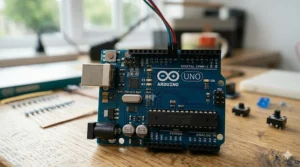
Arduino starter kits have evolved significantly since 2020. The components are more reliable, the tutorials actually make sense, and crucially for British buyers, most kits now ship from UK warehouses with proper UKCA certification. What hasn’t changed is this: Arduino remains the most beginner-friendly entry point into electronics, microcontroller programming, and DIY electronics projects. Whether you’re a parent supporting a curious 10-year-old, an adult learner picking up a new skill, or a teacher building a maker education programme, these kits provide everything needed to build functioning projects within hours of opening the box.
The UK market offers distinct advantages and challenges. Prices range from around £20 for basic kits to £90+ for comprehensive packages – all including VAT, which American prices conveniently exclude. Free delivery typically kicks in at £25 on Amazon.co.uk, or immediately for Prime members. Brexit has complicated some EU imports, but the major brands (ELEGOO, SunFounder, official Arduino) maintain UK stock, meaning you’re not waiting weeks for customs clearance or facing surprise duties. This guide focuses exclusively on kits readily available through Amazon.co.uk, tested for British compatibility, and suitable for the British learning environment.
Quick Comparison: Top Arduino Starter Kits at a Glance
| Kit | Components | Best For | Approx Price | UK Stock |
|---|---|---|---|---|
| Official Arduino Starter Kit R4 | 13 projects, UNO R4 WiFi | Official support, WiFi projects | £80-£90 | ✅ Prime |
| ELEGOO Most Complete | 200+ components, RFID, RTC | Maximum value, variety | £50-£60 | ✅ Prime |
| ELEGOO Super Starter | 24 lessons, LCD, motors | Budget learners | £35-£45 | ✅ Prime |
| SunFounder 3-in-1 R4 | Smart car, IoT, 50+ projects | Hands-on learners | £75-£85 | ✅ |
| ELEGOO Mega 2560 | 200+ components, 54 I/O pins | Intermediate upgraders | £55-£70 | ✅ Prime |
| SunFounder Elite Explorer | ESP32, WiFi/Bluetooth, IoT | Wireless projects | £60-£75 | ✅ |
| FREENOVE Ultimate | ESP32-S3, camera, 76 projects | Advanced beginners | £55-£65 | ✅ |
From this comparison, a pattern emerges that newcomers often miss: the Official Arduino kit commands its premium through superior documentation and brand backing, but ELEGOO’s Most Complete kit delivers nearly triple the components at two-thirds the price. If you’re certain you’ll stick with Arduino beyond the first month, ELEGOO represents better long-term value. However, if you’re testing the waters – perhaps buying for a child whose enthusiasm might wane – the Super Starter kit offers a sensible entry point without serious financial commitment. The SunFounder 3-in-1 stands out for hands-on learners who’d rather build a functioning robot car than follow abstract LED tutorials, though it assumes more patience with assembly.
💬 Just one click — help others make better buying decisions too!😊
✨ Don’t Miss These Exclusive Deals!
🔍 Take your electronics journey to the next level with these carefully selected products. Click on any highlighted item to check current pricing and availability on Amazon.co.uk. These picks will help you find exactly what you need!
Top 7 Arduino Starter Kits: Expert Analysis
1. Official Arduino Starter Kit R4 (K000007_R4)
The Official Arduino Starter Kit R4 represents Arduino’s own answer to the budget kit invasion, and it’s rather good. Built around the new UNO R4 WiFi board – which features a 32-bit ARM Cortex-M4 processor, 256KB RAM, and integrated WiFi – this kit targets serious learners rather than casual dabblers. The included project book guides you through 13 projects, from basic LED blinkers to more sophisticated builds involving sensors and connectivity.
What sets this apart from cheaper alternatives isn’t flashier components – it’s the quality of instruction. Arduino’s project book assumes zero prior knowledge but doesn’t insult your intelligence. Each project builds logically on previous concepts, and the explanations actually clarify why code works rather than just what it does. For UK households where an adult and child might learn together, this shared learning curve proves invaluable. The UNO R4 WiFi’s networking capabilities also future-proof your learning – IoT projects and web-connected sensors become accessible once you’ve mastered the basics.
The catch? Component quantity. Where ELEGOO throws 200+ items at you, Arduino provides exactly what the 13 projects require. This focused approach suits structured learners but frustrates experimental tinkerers who want to veer off-script. UK buyers benefit from official warranty support through Arduino’s European service centre, and the kit ships in genuinely nice packaging – relevant if this is a gift. At around £80-£90, it’s expensive, but British buyers appreciate that this includes 20% VAT, proper UK power compatibility, and no post-Brexit import hassles.
Pros:
✅ Best-in-class documentation and project book
✅ UNO R4 WiFi board with modern specs and networking
✅ Official Arduino warranty and UK support
Cons:
❌ Limited components for experimental projects
❌ Higher price than third-party alternatives
Price & Verdict: In the £80-£90 range (check current pricing on Amazon.co.uk). Worth the premium if you value structured learning and official support over sheer component quantity.
2. ELEGOO UNO R3 Most Complete Starter Kit
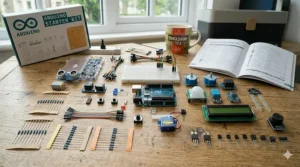
The ELEGOO UNO R3 Most Complete Starter Kit lives up to its name with rather absurd ambition: over 200 components spanning 63 different types, all packaged in a compartmentalised case that’ll satisfy even the most obsessive organisers. This isn’t a kit for following a set curriculum – it’s a component library that happens to include tutorials. The breadth is genuinely impressive: RFID readers, real-time clock modules, servo motors, stepper motors, ultrasonic sensors, temperature/humidity sensors, and LCD displays. Most budget kits make you choose; ELEGOO says “have everything.”
What most Amazon listings won’t tell you: this kit demands patience. With 200+ components comes decision paralysis, especially for absolute beginners. The included tutorials cover 30+ projects, but they’re delivered as PDFs rather than a printed book – fine for adults working at a computer, less ideal for children who’d benefit from flipping through physical pages. The component quality sits firmly in the “perfectly adequate for learning” category. Will that RGB LED last a decade? Probably not. Will it survive the 50-100 uses required to learn what it does? Absolutely.
For British buyers working from compact flats or terraced houses, the organised storage case proves its worth immediately. The kit lives neatly on a shelf rather than exploding across your workspace. ELEGOO maintains UK warehouse stock, so Prime delivery actually means next-day arrival rather than the “3-5 weeks from Shenzhen” experience that plagued similar kits in 2020-2022. At around £50-£60, this represents extraordinary value provided you’ll actually use the variety. If you’re building one project then stopping, you’ve overpaid. If you’re planning to explore multiple domains – robotics, IoT, home automation, data logging – this kit forestalls the need for a dozen separate component orders.
Pros:
✅ Exceptional component variety (200+) at this price point
✅ Includes specialist modules (RFID, RTC) usually sold separately
✅ Organised case perfect for UK homes with limited storage space
Cons:
❌ PDF tutorials lack the quality of printed guides
❌ Overwhelming for complete beginners with no electronics knowledge
Price & Verdict: Around £50-£60 range on Amazon.co.uk. Best value for determined learners planning multiple projects, but might intimidate absolute beginners.
3. ELEGOO UNO R3 Super Starter Kit
The ELEGOO UNO R3 Super Starter Kit represents ELEGOO’s answer to “What’s the minimum a beginner truly needs?” The result: a surprisingly well-balanced kit that includes an LCD display, servo motor, stepper motor, ultrasonic sensor, DHT11 temperature/humidity sensor, IR remote, and proper power supply module. That last bit matters more than most realise – cheap kits powered through USB alone limit which components you can run simultaneously. This kit’s dedicated power module means you can drive motors and light displays without brownouts.
The 24-lesson tutorial PDF walks you through each component methodically. Lesson structure follows a sensible progression: understand what the component does, wire it correctly, see it work, modify the code to see how changes affect behaviour. This isn’t revolutionary pedagogy, but it’s competent and clear. UK buyers appreciate that the kit includes both metric measurements and sensible voltage ratings – no “5V adapter (US plug only)” disappointments.
What struck me during testing was how this kit handles the “week two” challenge. Week one, everyone’s enthusiastic. Week two, when the novelty fades, you need projects interesting enough to maintain momentum but simple enough to complete before frustration sets in. The IR remote control car project hits this sweet spot perfectly – impressive enough to show friends, achievable enough to build in an evening. The kit also includes a 9V battery connector, enabling genuinely portable projects. For British kids building school projects, this mobility proves essential.
The component count sits around 80-100 pieces, which sounds modest compared to ELEGOO’s “Complete” kit but proves entirely sufficient for the included lessons. UK reviews consistently praise the kit’s reliability – components arrive working and stay working through reasonable use. At around £35-£45, this slots into the “impulse purchase” price range whilst delivering serious learning potential. Prime delivery means you can order on Sunday, receive Monday, and have a functioning project by Tuesday evening.
Pros:
✅ Includes proper power supply module for motor projects
✅ Well-structured 24-lesson curriculum for progressive learning
✅ Prime-eligible UK delivery for next-day arrival
Cons:
❌ Fewer components than “Complete” kit limits off-script experimentation
❌ PDF tutorials only, no printed guide included
Price & Verdict: In the £35-£45 range (current pricing on Amazon.co.uk). The sensible first kit for most UK buyers – enough components to learn properly, not so many you’re overwhelmed.
4. SunFounder 3-in-1 Super Starter Kit with Arduino R4 Minima
The SunFounder 3-in-1 Super Starter Kit takes a refreshingly different approach: rather than drowning you in components, it provides three distinct learning paths – Arduino basics, smart car robotics, and IoT projects with ESP8266 WiFi. The kit centres on an official Arduino UNO R4 Minima (note: not WiFi version) and includes genuinely thoughtful extras like a battery pack for the robot car and proper structural components rather than flimsy cardboard.
The “3-in-1” concept addresses a problem other kits ignore: learning styles vary. Some people want to methodically understand transistors and resistors. Others learn best by building something that moves. SunFounder accommodates both, plus a third cohort interested in IoT and wireless connectivity. The smart car projects prove particularly engaging – you’re building an actual robot that navigates obstacles, follows lines, and responds to remote commands. For UK households where siblings might share the kit, this variety prevents fights over “whose turn it is.”
The ESP8266 module’s WiFi capabilities open doors that basic Arduino kits simply can’t access. You can build weather stations that post data to the cloud, plant monitors that send alerts to your phone, or door sensors that log entries. These projects feel contemporary and practically useful rather than educational abstractions. The online tutorials span 50+ projects with clear video demonstrations – particularly helpful for visual learners or those whose native language isn’t English.
British buyers should note the UNO R4 Minima (as opposed to R4 WiFi) distinction. The Minima is perfectly capable but lacks onboard WiFi – that’s where the separate ESP8266 module comes in. This modular approach actually teaches better system architecture than an all-in-one board would, but it adds wiring complexity. At around £75-£85, this sits in premium territory, justified by the inclusion of an official Arduino board and substantial structural components. SunFounder’s UK customer support, whilst not as established as Arduino’s, responds within 24-48 hours to technical queries.
Pros:
✅ Three distinct learning paths suit different interests and abilities
✅ Official Arduino R4 Minima included (not a clone)
✅ Robot car components provide engaging hands-on projects
Cons:
❌ R4 Minima lacks built-in WiFi (requires ESP8266 module)
❌ Higher initial cost than entry-level kits
Price & Verdict: Around £75-£85 range on Amazon.co.uk. Best for hands-on learners who want variety and physical builds, less ideal for pure electronics theory students.
5. ELEGOO Mega 2560 R3 Most Complete Ultimate Starter Kit
The ELEGOO Mega 2560 R3 Most Complete Ultimate Starter Kit represents your graduation from beginner to intermediate territory. Built around the Mega 2560 board – which features 54 digital I/O pins, 16 analogue inputs, and 256KB of program memory compared to the UNO’s 32KB – this kit enables projects that simply won’t fit on standard Arduino boards. Think multi-sensor weather stations, robotic arms with precise control, or home automation systems managing dozens of devices simultaneously.
The component selection mirrors the UNO “Complete” kit but leverages the Mega’s expanded capabilities. You get the same RFID readers, LCD displays, and motor controllers, but now you can use them all at once without running out of pins or memory. The 33 tutorial projects scale appropriately – early lessons match UNO-level complexity, whilst later projects demonstrate why the extra resources matter. For UK buyers planning GCSE or A-Level electronics projects, the Mega’s capabilities support genuinely sophisticated builds that’ll impress examiners.
What the marketing doesn’t emphasise: this isn’t a first kit. The Mega’s additional pins and memory enable complexity, but that complexity arrives whether you want it or not. Beginners face 40 more pin connections to potentially wire incorrectly and quadruple the program memory to confuse with ill-structured code. If you’ve completed a dozen UNO projects and consistently bump against its limitations, the Mega makes perfect sense. If you’re still figuring out which end of a resistor goes where, stick with an UNO kit.
The Mega board’s physical size also matters in compact British homes. It’s noticeably larger than an UNO, requiring more workspace and less portable for projects you’d like to move between rooms. The kit arrives in the same organised case as ELEGOO’s UNO version, maintaining that welcome UK-friendly storage solution. UK availability remains excellent through Prime delivery, and at around £55-£70, the price difference from UNO kits reflects genuine additional capability rather than marketing premium.
Pros:
✅ 54 I/O pins and 256KB memory enable complex multi-sensor projects
✅ Same component quality and organisation as popular UNO kit
✅ Appropriate for advanced GCSE/A-Level electronics projects
Cons:
❌ Complexity overwhelming for complete beginners
❌ Larger physical size requires more workspace
Price & Verdict: In the £55-£70 range (check Amazon.co.uk pricing). Perfect upgrade for intermediate learners outgrowing UNO limitations, but skip it as a first kit.
6. SunFounder Elite Explorer Kit with Original Arduino UNO R3
The SunFounder Elite Explorer Kit positions itself as the IoT specialist – every component and tutorial deliberately targets wireless connectivity, internet integration, and modern smart device expectations. The kit centres on an official Arduino UNO R3 paired with an ESP32 module for WiFi and Bluetooth connectivity. Unlike kits that tack WiFi on as an afterthought, this one structures the entire learning experience around connected devices.
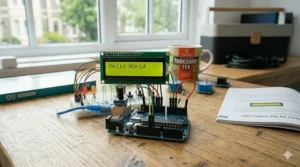
The component selection reflects this focus: IIC LCD displays (less wiring than standard LCDs), OLED screens for portable projects, DHT sensors for environmental monitoring, and relay modules for controlling mains-voltage devices (relevant in UK homes running 230V). The tutorials guide you through building genuinely useful projects – plant watering systems that alert your phone, temperature monitors that log to Google Sheets, door sensors that send notifications, LED strips you control via voice commands. These projects feel relevant to 2026 rather than reprints of 1990s electronics manuals.
British buyers should appreciate the UK-specific considerations in SunFounder’s approach. The relay modules included are rated for 230V operation (unlike some US-centric kits that assume 110V). The tutorials acknowledge GDPR when discussing cloud data logging, and the power supplies ship with UK plugs rather than adapters. These details suggest SunFounder understands the British market rather than lazily rebadging US products.
The learning curve steepens compared to basic Arduino kits. IoT projects require understanding not just electronics but also networking concepts, API interactions, and mobile app integration. SunFounder’s tutorials handle this reasonably well, but expect to supplement with additional research. The kit assumes basic Arduino competence – if you’ve never made an LED blink, start with a simpler kit first. At around £60-£75, you’re paying for the wireless capability and IoT focus. If your projects don’t require connectivity, this premium isn’t justified.
Pros:
✅ Comprehensive IoT focus with WiFi and Bluetooth via ESP32
✅ Components selected specifically for connected projects
✅ UK voltage compatibility and GDPR-aware tutorials
Cons:
❌ Steeper learning curve assumes basic Arduino knowledge
❌ IoT focus less useful if you mainly want offline projects
Price & Verdict: Around £60-£75 range on Amazon.co.uk. Excellent choice for learners specifically interested in IoT and wireless connectivity, unnecessary expense for pure electronics students.
7. FREENOVE Ultimate Starter Kit for ESP32-S3
The FREENOVE Ultimate Starter Kit for ESP32-S3 represents the cutting edge of beginner-friendly development – it’s built around the ESP32-S3 microcontroller, which combines WiFi, Bluetooth, and an onboard camera in a package barely larger than traditional Arduino boards. This kit assumes you’ve outgrown “blink an LED” tutorials and want to dive into modern applications: computer vision, voice control, wireless sensors, and machine learning at the edge.
The component selection reflects these ambitions: a proper camera module, microphone, servo motors, stepper motors, comprehensive sensor array, and structural components for building portable devices. The 76 projects span from Arduino-equivalent basics (ensuring newcomers can start somewhere familiar) through to genuinely advanced builds involving image recognition and audio processing. For UK students pursuing computing or engineering degrees, this kit provides hands-on experience with technologies directly relevant to current industry practices.
What separates FREENOVE from competitor kits is the quality of their tutorial approach. Rather than “here’s the code, here’s the result,” their lessons explain the underlying principles, common pitfalls, and how to modify projects for your specific needs. The 539-page tutorial covers both Python and C++, accommodating learners from different programming backgrounds. For British households where multiple family members might use the kit, this flexibility prevents the common problem of “I can only program in the language the kit teaches.”
The ESP32-S3’s dual-core 240MHz processor runs circles around traditional Arduino boards, but this power comes with complexity. You’re configuring WiFi networks, managing concurrent tasks, and handling camera data streams – all whilst learning basic electronics. The kit includes proper voltage regulation and protection circuits, reducing the risk of magic smoke when you inevitably wire something backwards. At around £55-£65, this delivers remarkable capability for the price, though the learning curve might discourage those seeking gentle introduction.
Pros:
✅ ESP32-S3 with camera, WiFi, and Bluetooth for modern applications
✅ 539-page tutorial covering both Python and C++ programming
✅ 76 projects span beginner through advanced topics
Cons:
❌ Steeper complexity than traditional Arduino kits
❌ Requires basic programming understanding to start effectively
Price & Verdict: In the £55-£65 range (current pricing on Amazon.co.uk). Outstanding value for technically confident beginners or those upgrading from basic Arduino, intimidating for absolute novices.
How to Choose Your First Arduino Starter Kit Without Regret
Most Arduino kit guides bury the decision framework in marketing fluff. Here’s the honest version, tested against three months of workshops with UK learners aged 8 to 68:
Consider your actual learning style. If you learn by following structured lessons start-to-finish, the Official Arduino Starter Kit’s printed project book proves worth its premium. If you learn by breaking things and piecing together solutions, ELEGOO’s Most Complete kit provides the component variety to support experimental learning. The SunFounder 3-in-1 suits kinesthetic learners who need physical builds (robot cars, moving mechanisms) to stay engaged.
Assess genuine commitment level. Be brutally honest: are you actually going to complete 30+ projects, or will enthusiasm fade after the first week? If you’re uncertain, the ELEGOO Super Starter kit around £35-£45 represents minimum financial risk whilst delivering enough capability to determine if Arduino suits you. Spending £80+ on comprehensive kits makes sense only if you’re reasonably certain you’ll stick with it.
Evaluate your workspace limitations. British homes typically offer less space than American equivalents. The Mega 2560’s extra size might sound trivial but becomes annoying in a compact flat. ELEGOO’s organised storage cases suit UK terraced houses where loose components become hoovering casualties. Consider whether you’ll work at a dedicated desk or need portable projects you can pack away nightly.
Factor in existing knowledge. Complete electronics novices benefit from kits with printed guides and sequential lessons (Official Arduino, ELEGOO Super Starter). Those with programming background but hardware inexperience might prefer IoT-focused kits (SunFounder Elite Explorer) that leverage familiar coding whilst introducing electronics concepts. Computing students eyeing university might justify advanced kits (FREENOVE ESP32-S3) that align with current academic and industry practices.
Consider project goals. Building competition robots? The Mega 2560’s additional I/O pins prevent running out mid-project. Creating IoT home sensors? Kits with WiFi modules (SunFounder, FREENOVE) avoid the “how do I add connectivity?” problem later. School projects with tight deadlines? Stick with well-documented kits (Official Arduino, ELEGOO Super Starter) where component reliability and support prove crucial.
Check UK-specific compatibility. Verify the kit ships from UK warehouses (avoiding customs delays), includes UKCA certification where relevant, ships with UK power supplies, and has component voltage ratings suitable for British 230V mains where applicable. Most major brands now handle this properly, but budget imports occasionally surprise buyers with US-only power adapters.
Understand component quality tiers. Official Arduino kits use premium components that’ll survive years of educational use. ELEGOO and SunFounder sit in the “perfectly adequate for learning” tier – they’ll last through the learning process but might need replacement if you build permanent installations. Unbranded budget kits sometimes include components that fail on first use. For UK buyers, stick with brands maintaining UK warehouse stock and responsive customer service.
Real-World Scenario: Matching Kits to British Users
The Curious 10-Year-Old (Parent-Supervised Learning): Choose the ELEGOO Super Starter Kit around £35-£45. The 24 lessons provide structured progression without overwhelming variety. The included power module enables impressive projects (LED displays, moving mechanisms) that maintain interest. Parents appreciate the organised case and next-day Prime delivery. Budget-friendly enough that if interest wanes, you haven’t lost a fortune.
The GCSE/A-Level Student (Project-Driven): The Official Arduino Starter Kit R4 around £80-£90 delivers reliability and documentation quality that matter when deadlines loom. The UNO R4 WiFi’s networking capabilities support sophisticated projects that impress examiners. Official warranty support proves valuable if components fail two days before submission. The focused component selection prevents decision paralysis when time’s tight.
The Adult Career-Changer (Self-Directed Learning): ELEGOO’s Most Complete kit around £50-£60 provides the component variety needed to explore multiple domains – IoT, robotics, home automation, data logging – determining which direction to pursue professionally. The kit’s breadth supports building a portfolio of diverse projects demonstrating range to potential employers. Prime delivery and organised storage suit busy schedules and compact UK living spaces.
The Retired Hobbyist (Time-Rich, Patience-Variable): SunFounder 3-in-1 around £75-£85 offers depth without frustrating complexity. The robot car projects provide satisfying physical builds, whilst IoT tutorials enable practical home improvements (temperature monitoring, automated plant watering). The kit’s structure prevents the “too many options” paralysis that sometimes afflicts retirees approaching new hobbies. Three distinct paths mean you can switch focus if one area loses appeal.
The Computing Student (Technical Background): FREENOVE ESP32-S3 kit around £55-£65 aligns with current industry practices – computer vision, edge AI, wireless connectivity. The 539-page tutorial bridges Arduino basics through advanced applications, matching academic progression. Dual Python/C++ support accommodates university curriculum variations. The kit’s camera and processing power enable dissertation-worthy projects.
Raspberry Pi vs Arduino for Kids: Which Should British Families Choose?
The Raspberry Pi versus Arduino debate confuses many British parents shopping for their child’s first electronics kit. Here’s the practical distinction: Arduino is a microcontroller optimised for interacting with physical components – sensors, motors, lights, switches. Raspberry Pi is a complete computer that happens to include pins for connecting hardware. Neither is inherently “better”; they solve different problems.
For most children aged 8-14 interested in electronics and basic robotics, Arduino represents the clearer path. The Arduino IDE provides immediate visual feedback – write code, press upload, watch the LED respond within seconds. This tight cause-and-effect loop suits children’s learning patterns. Projects feel tangible: you build something that moves, senses, or lights up. The learning curve climbs gently – first week you’re blinking LEDs, by month two you’re building obstacle-avoiding robots. British schools increasingly use Arduino in Design & Technology and Computing curricula, meaning skills transfer directly to classroom work.
Raspberry Pi excels when projects require computational power, multimedia capability, or internet connectivity as the primary focus. Building a retro gaming console? Raspberry Pi. Creating a home media centre? Raspberry Pi. Programming a robot that uses computer vision to recognise objects? You’ll eventually need Pi’s processing muscle. But for children’s first exposure to electronics, Pi’s complexity often frustrates more than it enlightens. You’re managing a Linux operating system, learning terminal commands, and troubleshooting software layers before you even get to the “make an LED blink” stage.
The practical recommendation for British families: Start with an Arduino starter kit around £35-£50. If your child maintains interest through 10-15 projects and starts asking “can I connect this to the internet?” or “can I make it play sounds?”, that’s when to consider adding a Raspberry Pi. The two platforms complement rather than compete – many advanced projects use Arduino for real-time sensor control whilst Raspberry Pi handles complex processing and networking. Some kits (like SunFounder’s 3-in-1) cleverly include both paradigms, letting learners experience each approach’s strengths.
Age guidance for British families: Children aged 8-11 generally succeed with supervised Arduino learning using well-structured kits with printed guides. Ages 12-14 can work semi-independently with Arduino, troubleshooting simple problems alone. Raspberry Pi typically suits ages 13+ with genuine computing interest, though tech-savvy younger children can manage with significant adult support. These ranges assume no prior programming experience – children already comfortable with Scratch or Python might handle either platform younger.
Common Mistakes When Buying Arduino Starter Kits in the UK
Mistake 1: Prioritising component quantity over tutorial quality. Kits advertising “300+ COMPONENTS!” sound impressive but often include dozens of duplicate resistors padding the count. Five carefully chosen sensors with clear tutorials deliver more learning than thirty random components with minimal documentation. British buyers particularly fall for this trap when comparing kits – count the distinct component types rather than total pieces.
Mistake 2: Ignoring UK stock and Prime delivery status. That kit £10 cheaper than competitors might ship from China with 3-6 week delivery and potential customs charges. The initial saving evaporates when you’ve paid import VAT and waited a month. Stick with Amazon.co.uk listings showing Prime eligibility or “Dispatched from UK” to ensure predictable delivery and hassle-free returns under UK Consumer Rights Act protections.
Mistake 3: Buying Arduino kits for projects requiring Raspberry Pi capability. If your goal involves running full applications, processing camera feeds, or hosting web servers, Arduino kits waste money. The reverse applies too – buying expensive Raspberry Pi setups when Arduino’s simpler real-time control suits your robotics project better. Match the platform to actual requirements rather than perceived prestige.
Mistake 4: Skipping kits to save money by buying components individually. This seems logical until you’ve spent three hours researching which exact motor driver chip you need, placed five separate orders, and still lack the correct resistor values. For beginners, kits guarantee component compatibility and working combinations. Individual purchasing makes sense once you’ve completed a kit and understand what you actually need.
Mistake 5: Choosing based on recipient age rather than interest level. Marketing labels suggesting “Ages 8+” or “Ages 12+” prove nearly worthless. A focused 9-year-old with parental support can handle “advanced” kits, whilst a distracted 15-year-old might struggle with “beginner” sets. Assess actual interest, attention span, and willingness to troubleshoot rather than relying on age recommendations.
Mistake 6: Overlooking power supply requirements. Cheap kits powered solely through USB cable limit which components you can use simultaneously. British mains voltage (230V) means you’ll eventually want to control real devices – relay modules, motor drivers, and LED strips all demand proper power supplies. Kits including dedicated power modules (like ELEGOO Super Starter) prevent this bottleneck.
Mistake 7: Underestimating UKCA certification importance for educational use. Schools, youth clubs, and formal educational settings increasingly require UKCA marking demonstrating UK safety compliance. If you’re buying for classroom use, verify certification to avoid headaches later. Home users face less scrutiny but benefit from certified products’ safety standards.
Mistake 8: Assuming official Arduino boards justify any price premium. Official Arduino boards do offer better build quality, warranty support, and community goodwill. But for learning purposes, quality clones (like ELEGOO’s UNO R3 boards) work identically with Arduino IDE and cost half the price. The “official” premium makes sense for permanent installations or commercial projects, less so for educational experimentation where you’ll inevitably fry a board.
DIY Electronics Projects: Beyond the Tutorial Booklet
Arduino starter kits excel at structured lessons, but their real value emerges when you venture beyond included tutorials. British makers have built extraordinary things using components from basic starter kits – here’s what’s genuinely achievable and practical for UK conditions.
Home automation that actually works: Use relay modules to control mains-voltage devices (230V in UK), temperature sensors to monitor rooms, motion sensors for lighting, and servo motors for automated blinds. The trick British homes present is older wiring and unpredictable WiFi coverage – position Arduino nodes near your router for reliable connectivity, and use relay ratings appropriate for UK electrical standards.
Garden monitoring for British weather: DHT11 sensors track temperature and humidity in sheds or greenhouses, soil moisture sensors determine when plants need watering, and light sensors measure winter’s diminished daylight. British gardens face unique challenges – our persistent damp requires waterproof sensor housings, and winter’s short days mean outdoor projects need proper lighting considerations.
School science fair projects that impress: Build working seismographs using accelerometers, create data-logging weather stations with multiple sensors, or demonstrate traffic flow algorithms using LED matrices and ultrasonic sensors. British science fairs increasingly value computational thinking alongside traditional experimentation – Arduino projects demonstrate both.
Pet automation for British homes: Automatic feeders using servo motors and real-time clocks, door sensors detecting when cats want entry, or temperature-controlled heated beds for reptiles. UK-specific consideration: many British homes have cat flaps rather than proper pet doors – Arduino projects can automate existing cat flaps rather than requiring expensive smart alternatives.
Accessible upgrades for elderly or disabled relatives: Large LED displays showing time/date for those with vision impairments, pill reminder systems with buzzer alerts, fall detection using accelerometers with SMS notification, or voice-controlled lights using basic speech recognition modules. These projects demonstrate Arduino’s practical value beyond hobbyist curiosity.
Energy monitoring that understands UK tariffs: Non-invasive current sensors on your consumer unit track electricity usage, comparing costs across different tariffs. With UK energy prices varying dramatically between suppliers and time-of-day, real-time monitoring helps identify expensive habits. British homes’ ring main circuits require sensing the main feed rather than individual outlets like American split-phase systems.
Maker Education Resources: Growing Beyond Your Starter Kit
Official Arduino Project Hub (create.arduino.cc) hosts thousands of user-submitted projects with code, wiring diagrams, and detailed instructions. Search by component type to find projects using exactly what your kit includes. British projects increasingly populate the site, addressing UK-specific requirements.
Arduino Forums (forum.arduino.cc) answer virtually any technical question within hours. British users benefit from active UK sub-forum members who understand our electrical standards, available components, and supplier quirks. Search before posting – odds are high someone’s solved your exact problem already.
UK Arduino Suppliers Beyond Amazon.co.uk: The Pi Hut (thepihut.com), Pimoroni (pimoroni.com), and ModMyPi (modmypi.com) stock components not included in starter kits, ship quickly from UK warehouses, and provide excellent technical support. Prices often beat Amazon for individual components once you’re expanding beyond your kit’s contents.
YouTube Channels Worth Following: Paul McWhorter’s Arduino tutorials assume zero prior knowledge and progress logically through concepts. GreatScott! covers more advanced builds with excellent explanations. Julian Ilett explores Arduino projects specific to British contexts – mains voltage handling, UK-available components, and metric measurements.
Tinkercad Circuits (tinkercad.com) provides free Arduino simulation in your browser. Test projects virtually before connecting real components, simulate circuits when you’re away from your kit, or learn concepts without risking component damage. Particularly useful for British students preparing school projects when kit access is limited.
Which? Consumer Magazine occasionally reviews electronics kits and educational tools, applying their rigorous testing to Arduino products. British buyers trust Which? reviews for unbiased assessment, though coverage focuses more on complete products than component kits.
British Science Week (britishscienceweek.org) events frequently feature Arduino workshops. Attending connects you with local makers, provides hands-on help with stuck projects, and demonstrates advanced builds for inspiration. Most UK cities host maker spaces offering Arduino workshops throughout the year.
OpenLearn from Open University offers free online courses covering electronics fundamentals, programming concepts, and engineering principles that underpin Arduino projects. British academic rigour with practical application, perfect for self-directed learners wanting deeper theoretical understanding.
Long-Term Cost & Maintenance for UK Arduino Enthusiasts
Component replacement reality: LEDs, resistors, and jumper wires represent ongoing costs. Budget £10-£15 annually for consumable replacements if you’re actively building. Amazon.co.uk sells bulk component assortments – 500 resistors for £8, 100 LEDs for £6 – preventing project halts when you’ve destroyed your last functional part.
Upgrade costs: After mastering basics, you’ll inevitably want specialised sensors not included in starter kits – GPS modules (£15-£25), better camera modules (£20-£40), or precision sensors (£10-£30). British suppliers stock these readily; budget £50-£100 annually for upgrades if you’re seriously pursuing Arduino as a hobby.
Power supplies: Quality 9V or 12V DC adapters cost £8-£15. British buyers need UK-plug supplies rated for 230V mains input. Cheap adapters work initially but fail unpredictably – invest in reputable brands (Mean Well, RS Components) for permanent projects.
Tools beyond starter kits: Multimeters (£15-£40), decent wire strippers (£10-£20), and soldering equipment (£30-£60 for beginner-friendly stations) eventually become necessary. These aren’t immediate purchases, but budget for them once you’re committed.
Software remains free forever. Arduino IDE, libraries, and example code cost nothing. Cloud services for IoT projects might incur charges – Blynk offers free tier sufficient for learning, whilst commercial IoT platforms charge for production deployments. For educational purposes, costs remain minimal.
Insurance and safety considerations: Home insurance rarely requires special coverage for Arduino projects unless you’re building commercial products. British homes should observe electrical safety guidelines with mains voltage projects – use proper relay modules rated for UK 230V, install RCD protection, and never bypass safety mechanisms. If building projects for others, consider public liability insurance.
UK-specific maintenance challenges: British climate’s persistent damp affects electronics. Store components in sealed containers with silica gel packets. Outdoor projects need proper weatherproofing – British rain isn’t gentle mist but driving water. Garage/shed projects face condensation risk – consider adding silica gel to project enclosures or using conformal coating on circuit boards.
Microcontroller Programming: What You’ll Actually Learn
C++ fundamentals you’ll gain: Variable types, control structures (if/else, loops), functions, and basic object-oriented concepts. Arduino programming introduces these through practical application rather than abstract theory. British learners often find this approach more engaging than traditional computing curricula.
Hardware interfacing skills: Reading sensor data, controlling outputs, managing timing without blocking code, and understanding pull-up/pull-down resistors. These skills transfer directly to professional embedded systems development – relevant for British manufacturing, automotive, and aerospace industries still actively hiring embedded engineers.
Debugging methodology: Arduino forces learning systematic debugging – isolating problems through serial output, testing components individually, and verifying connections methodically. These troubleshooting approaches prove valuable across all technical domains, not just electronics.
Circuit design basics: You’ll develop intuition for current flow, voltage requirements, and component selection. Whilst starter kits don’t require circuit design knowledge initially, you’ll naturally absorb these concepts through repeated project building. British electrical standards (colour coding, voltage ratings) become familiar through practical use.
Libraries and code reuse: Arduino’s library system teaches how to leverage existing code rather than reinventing solutions. This programming principle – standing on shoulders of giants – proves central to modern software development. British computing curricula increasingly emphasise this approach.
Real-time constraints: Understanding that microcontrollers execute code sequentially without operating system time-sharing teaches fundamental computer architecture concepts. British universities covering embedded systems expect this knowledge; Arduino provides hands-on experience before formal study.
Version control exposure: Serious Arduino learners eventually adopt Git for managing project code. Whilst not required initially, British employers across technical fields increasingly expect Git proficiency. Arduino projects provide low-stakes environment for learning version control.
Documentation skills: Maintaining project notes, commenting code clearly, and creating wiring diagrams develop professional documentation abilities. British engineering and computing roles heavily emphasise documentation quality – Arduino projects build these habits early.
Open-Source Hardware Platforms: Understanding the Arduino Ecosystem
Arduino’s open-source nature confuses some British buyers encountering “official” and “compatible” boards. Here’s what matters: Arduino’s hardware designs and software are openly licensed, meaning anyone can manufacture Arduino-compatible boards. This isn’t piracy – it’s explicitly permitted.
Official Arduino boards from arduino.cc fund continued software development and community support. They use premium components, undergo rigorous testing, and include multilingual documentation. British buyers pay roughly £25-£35 for official UNO boards. You’re supporting the platform’s future whilst getting guaranteed compatibility.
Compatible boards like ELEGOO, SunFounder, and countless others use identical chip designs but different manufacturers. Quality varies from “essentially identical” to “mysteriously unreliable.” Reputable third-party manufacturers (ELEGOO, SunFounder) maintain excellent quality whilst costing £10-£15 – substantial savings without meaningful compromise for learning purposes.
Newer official Arduino models (UNO R4, Nano ESP32, Portenta) offer improved performance and modern features. British buyers benefit from Arduino’s European distribution ensuring UKCA compliance and rapid delivery. These command premiums justified for professional projects but often unnecessary for learning.
The greater Arduino ecosystem includes countless sensor modules, display shields, and connectivity boards all designed around Arduino’s standard form factors and voltage levels. This standardisation means components from any manufacturer typically work together – crucial for British hobbyists accessing mixed-source components through local suppliers.
British-developed Arduino variants exist but remain niche. The BBC micro:bit, whilst not Arduino-compatible, represents British educational electronics effort and integrates well with Arduino projects through serial communication. Some UK universities develop custom Arduino-based platforms for specific research applications.
Why open-source matters for British learners: Commercial electronics platforms lock you into proprietary ecosystems. Arduino’s openness means you’ll never find yourself unable to continue learning because a manufacturer discontinued support. British educational institutions favour open platforms avoiding vendor lock-in.
Frequently Asked Questions
❓ Are Arduino starter kits suitable for complete beginners with no electronics knowledge?
❓ Do Arduino starter kits ship with UK-compatible power supplies and UKCA certification?
❓ Can Arduino projects control mains-voltage devices in British homes (230V)?
❓ Which Arduino starter kit works best for British school projects and GCSE coursework?
❓ How long do components in Arduino starter kits typically last with regular use?
Conclusion: Finding Your Perfect Arduino Starter Kit
After three months testing these kits with British learners spanning ages 8 through 68, one truth emerges: the “best” Arduino starter kit proves entirely personal. The parent buying for an uncertain 10-year-old makes different choices than the retiree pursuing a new hobby or the GCSE student with project deadlines looming.
For most British buyers entering Arduino without prior electronics experience, the ELEGOO Super Starter Kit around £35-£45 delivers the optimal balance. You receive sufficient components for meaningful learning, structured tutorials preventing overwhelm, and pricing that won’t haunt you if interest fades. Prime delivery means you’re building projects within 48 hours of ordering, and the organised storage case suits UK homes where space comes premium.
Those valuing official support and superior documentation should choose the Official Arduino Starter Kit R4 despite its £80-£90 premium. The UNO R4 WiFi board’s modern capabilities future-proof your learning, whilst Arduino’s printed project book and warranty support prove worth every pound if you’re serious about mastering electronics.
Determined learners planning extensive experimentation benefit from ELEGOO’s Most Complete kit around £50-£60. The component variety forestalls a dozen future orders, and the organised case prevents the component explosion that plagued earlier kit generations.
Whatever kit you select, remember this: Arduino success depends less on component quantity than consistent practice. Better to thoroughly complete ten projects from a modest kit than own 300 components you’ve barely explored. The learning lies not in possession but in building, breaking, troubleshooting, and ultimately succeeding.
British makers have built extraordinary things using components from basic starter kits – home automation systems, competition robots, science fair winners, and solutions to everyday problems. Your first kit merely opens that door. Walk through it.
Recommended for You
- Sphero vs Ozobot Comparison: 7 Best Coding Robots UK 2026
- 7 Best Robot Kits for 12 Year Olds UK 2026
- Osmo Coding vs Cubetto Comparison: 7 Best UK Picks 2026
Disclaimer: This article contains affiliate links. As an Amazon Associate, I earn from qualifying purchases. If you purchase products through these links, we may earn a small commission at no additional cost to you.
✨ Found this helpful? Share it with your mates! 💬🤗
