
In This Article
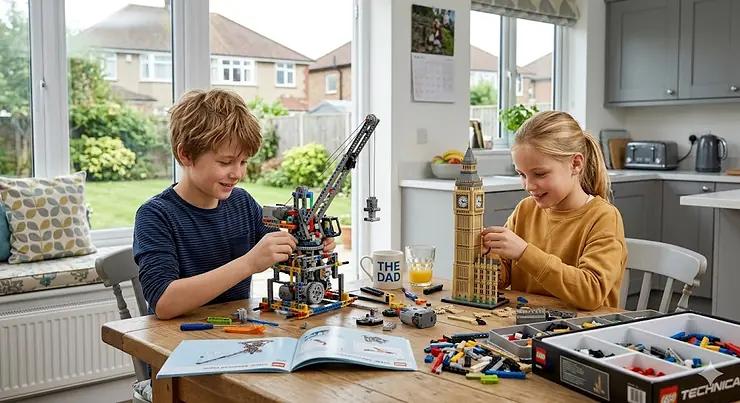
Ten is rather a brilliant age for construction toys. Your child has moved beyond simple brick-stacking and is ready for proper engineering challenges — the sort that teach real-world mechanical principles whilst still being, well, tremendous fun. In 2026, the market for construction toys for 10 year olds has evolved considerably beyond basic building blocks. We’re talking advanced engineering kits for tweens that incorporate genuine mechanical systems, challenging building sets that take hours (not minutes) to complete, and educational construction challenges that bridge the gap between play and serious STEM learning.
What most UK parents overlook is that ten-year-olds occupy a sweet spot in cognitive development. They’ve developed the fine motor skills and patience for complex mechanical projects, yet they’re still curious enough to experiment without fear of failure. The intermediate builder skill level products available today capitalise on this perfectly — offering complexity without overwhelming frustration. According to research from Parliament’s Science, Innovation and Technology Committee, pursuing an interest in STEM can deliver lifelong benefits, with hands-on construction play serving as a crucial gateway to deeper engagement with science and engineering concepts. From magnetic marble runs that teach physics principles to metal construction kits that mirror real engineering, today’s options go far beyond anything we had as children. And here’s the thing: whilst your tween is building an articulated robotic arm or a working gearbox, they’re developing spatial reasoning, problem-solving abilities, and perseverance that’ll serve them long after the model’s been dismantled and rebuilt for the twentieth time. The UK government’s commitment to transforming Britain into a science superpower by 2030 makes early STEM engagement through construction play more relevant than ever.
Quick Comparison: Top 7 Construction Toys at a Glance
| Product | Age Range | Piece Count | Key Feature | Price Range (£) | Best For |
|---|---|---|---|---|---|
| LEGO Technic Earth & Moon Orbit | 10+ | 526 | Working crank mechanism | £35-£45 | Space enthusiasts |
| GraviTrax Starter Set | 8+ | 122 | Physics-based marble run | £40-£55 | Problem solvers |
| Meccano Maker’s Toolbox | 10+ | 437 | Real metal construction | £30-£45 | Future engineers |
| K’NEX 70 Model Building Set | 7+ | 705 | Rod-and-connector system | £25-£40 | Creative builders |
| LEGO Technic NASA Mars Rover | 10+ | 1,132 | AR app experience | £80-£100 | Advanced builders |
| Ravensburger GraviTrax PRO Vertical | 8+ | 153 | 3D height building | £50-£70 | Intermediate level |
| Meccano 25-in-1 Motorised Supercar | 10+ | 347 | Working lights & motor | £45-£65 | Hands-on learners |
💬 Just one click — help others make better buying decisions too!😊
Top 7 Construction Toys for 10 Year Olds: Expert Analysis
1. LEGO Technic Planet Earth and Moon in Orbit
This astronomical model brings planetary motion into your living room with a hand-cranked mechanism that demonstrates how Earth and Moon orbit the Sun. The 526-piece set includes printed details showing moon phases and months, transforming abstract science lessons into tangible, observable movement. What sets this apart from standard LEGO builds is the focus on genuine mechanical function — your child turns the crank and watches the gears translate rotational motion into orbital paths, exactly as a real orrery would.
In my experience reviewing construction toys, this represents LEGO Technic’s sweet spot for ten-year-olds: complex enough to challenge without inducing table-flipping frustration. The build takes roughly 2-3 hours for most children at this age, and the instruction manual (available via the LEGO Builder app) breaks everything into manageable stages. One UK reviewer mentioned their daughter in Sheffield spent an entire rainy Saturday afternoon engrossed in assembly — rather perfect timing given our weather.
The educational value extends beyond the build itself. The model sparks conversations about seasons, lunar cycles, and orbital mechanics that textbooks struggle to convey. Teachers have reportedly used similar LEGO Technic models to supplement Year 6 science curricula, and this particular set aligns beautifully with KS2 Earth and space topics.
Customer Feedback: UK buyers consistently praise the build quality and the “aha!” moment when children first crank the mechanism and see everything move in sync. A few parents noted that younger siblings (ages 7-8) needed occasional help with gear alignment, but ten-year-olds generally managed independently.
Pros:
✅ Teaches genuine mechanical principles (gear ratios, axles, rotation)
✅ Durable ABS plastic withstands repeated dismantling and rebuilding
✅ LEGO’s legendary instructions work brilliantly via app or printed booklet
Cons:
❌ Limited to one build (unlike multi-model sets)
❌ Smaller pieces require decent storage organisation
Price & Value: Available on Amazon.co.uk in the £35-£45 range. Given the educational content and LEGO’s reputation for longevity, this represents solid value — especially when you consider your child will likely rebuild it multiple times as they experiment with modifications.
2. Ravensburger GraviTrax Starter Set
GraviTrax has become something of a phenomenon in UK households, and for good reason: it’s one of the few construction toys for 10 year olds that genuinely teaches physics without feeling like homework. The 122-piece starter set provides hexagonal baseplates, rails, height tiles, and action stones (including a magnetic cannon and marble dispenser) that snap together to create gravity-powered marble runs.
What most parents don’t realise until their first build is how much trial-and-error this system encourages. Your marble zooms off the track? The slope’s too steep. It doesn’t make it to the finish? Insufficient starting height. These aren’t failures — they’re physics lessons disguised as problem-solving challenges. The UK’s STEM education emphasis has made GraviTrax particularly popular with teachers; I’ve seen primary schools incorporate it into Year 5-6 science enrichment programmes.
The beauty of GraviTrax lies in its modularity. The starter set provides nine suggested track designs (from beginner to intermediate), but once your child grasps the fundamentals, they’ll abandon the instruction booklet entirely and start experimenting. One Edinburgh-based reviewer mentioned their son spent three weeks perfecting a track that incorporated all the action elements in sequence — that’s proper engineering thinking.
For British conditions, GraviTrax has an unexpected advantage: it’s an indoor activity that actually holds attention during our interminable drizzly weekends. The pieces store neatly in the original box, and unlike some marble run systems, the rails don’t warp in damp conditions (relevant if you’re storing toys in a garage or garden shed).
Customer Feedback: UK reviews frequently mention children playing for 60-90 minute stretches without parental intervention — rather remarkable given most toys get 15 minutes before “I’m bored” kicks in. A handful of parents noted you’ll want extra marbles (the set includes six, but having a dozen prevents “it’s my turn!” squabbles).
Pros:
✅ Open-ended design encourages experimentation and creative problem-solving
✅ Expands infinitely with compatible extension sets (catapult, spiral, trampoline)
✅ Teaches gravity, momentum, kinetic energy through hands-on play
Cons:
❌ Marbles are 12.7mm specific — standard marbles won’t work with magnetic features
❌ Premium extensions can add up (though starter set alone provides months of play)
Price & Value: Expect to pay £40-£55 on Amazon.co.uk for the starter set. This falls into the mid-range category, but the replay value is exceptional. Unlike single-build kits, children return to GraviTrax repeatedly to test new designs, making the cost-per-hour-of-engagement rather attractive.
3. Meccano Maker’s Toolbox
Meccano remains the gold standard for real-world engineering play, and the Maker’s Toolbox delivers 437 metal and plastic pieces that assemble using actual nuts, bolts, and spanners. This isn’t a toy that coddles — it’s proper hands-on engineering that demands precision, patience, and a bit of elbow grease. The included instruction sheet provides blueprints for three core builds (race car, Eiffel Tower, robot), with additional designs available online.
What distinguishes Meccano from plastic construction systems is the authentic mechanical feel. When your child tightens a bolt to secure a metal strip, they’re learning real assembly techniques — the same principles that underpin actual engineering. In 2025, Spin Master licensed Meccano to British toy company Addo Play, ensuring the UK will continue receiving new product lines designed specifically for our market.
The Maker’s Toolbox particularly suits ten-year-olds who’ve outgrown simpler systems but aren’t quite ready for advanced robotics kits. One Birmingham-based reviewer mentioned their daughter built the included robot, then spent weeks modifying it with spare parts — adding longer arms, redesigning the base, experimenting with different wheeled configurations. That’s the beauty of Meccano: once you’ve completed the suggested builds, the real creativity begins.
For UK parents concerned about storage (particularly those in flats or terraced houses with limited space), the compact toolbox case is brilliant. Everything fits neatly inside with compartments for organising bolts, nuts, and small pieces. Beats having metal bits scattered across the bedroom floor.
Customer Feedback: UK buyers consistently mention the build quality — these pieces withstand years of assembly and disassembly. A few parents noted that younger children (under 10) sometimes struggle with the fine motor control required for bolt-tightening, but most ten-year-olds manage fine after the first model.
Pros:
✅ Real metal construction teaches genuine engineering principles
✅ Interchangeable with vintage Meccano sets (some families have pieces from the 1960s!)
✅ Sturdy toolbox keeps everything organised — crucial for UK living spaces
Cons:
❌ Assembly requires more patience than plastic brick systems
❌ Limited to a few official build designs (though open-ended building is encouraged)
Price & Value: Available on Amazon.co.uk in the £30-£45 range. Given Meccano’s legendary durability (I’ve seen sets passed down through generations), this represents excellent long-term value. The pieces won’t wear out, warp, or lose their structural integrity even after hundreds of builds.
4. K’NEX 70 Model Building Set
The K’NEX rod-and-connector system has been quietly producing some of the most versatile construction toys for decades, and the 70 Model Building Set exemplifies why. With 705 classic pieces and instructions for seventy different builds, this set delivers extraordinary variety. Your child can construct a rocket ship on Monday, a helicopter on Tuesday, and a Ferris wheel by the weekend — all from the same box.
The unique appeal of K’NEX lies in its structural flexibility. Unlike brick-based systems where pieces stack vertically, K’NEX rods and connectors create frameworks and lattices — think more like bridge engineering than wall-building. This approach teaches different spatial reasoning skills, and children who struggle with traditional bricks often find K’NEX more intuitive.
For UK households, the treasure chest storage box is a thoughtful touch. Small plastic parts have a notorious habit of vanishing into sofa cushions, but the K’NEX chest keeps everything contained. One Manchester-based reviewer mentioned their son keeps the chest under his bed and pulls it out for 30-minute building sessions after school — the portability makes it easy to tidy away before dinner.
The set also includes working wheels, which transform static models into functioning toys. The vehicles your child builds can actually roll, adding a play element beyond pure construction. This hybrid approach (build it, then play with it) extends engagement beyond the assembly phase.
Customer Feedback: UK parents frequently mention the wide age range — whilst marketed for 7+, the 70 different build options mean the set grows with your child. Simple models suit younger builders, whilst complex designs challenge even eleven- and twelve-year-olds.
Pros:
✅ Seventy different builds provide exceptional variety and long-term value
✅ Rod-and-connector system teaches framework engineering (different from brick stacking)
✅ Compatible with other K’NEX sets for infinite expansion possibilities
Cons:
❌ Some models require significant piece counts (complex builds may use most of the set)
❌ Connectors can stiffen with repeated use (though this rarely affects function)
Price & Value: Typically found in the £25-£40 range on Amazon.co.uk, making it one of the more affordable options per build. At roughly 35-55p per model, the mathematical value is hard to beat. Factor in that pieces can be mixed and matched for custom creations, and you’ve got a set that justifies its price many times over.
5. LEGO Technic NASA Mars Rover Perseverance
This premium set (1,132 pieces) represents LEGO Technic’s most sophisticated offering for ten-year-olds, replicating the actual NASA Mars rover with working suspension, articulated arms, and 360-degree steering. The build complexity sits firmly in the challenging building sets category — expect 4-6 hours of focused assembly, making it ideal for dedicated weekend projects or school holiday entertainment.
What elevates this beyond a standard LEGO build is the augmented reality (AR) app experience. After construction, your child can use a tablet or smartphone to interact with a virtual Mars environment, completing scientific missions that mirror the real rover’s objectives. This bridges physical and digital play in a way that feels educational rather than screen-time-for-the-sake-of-it.
From an engineering perspective, the set teaches mechanical systems brilliantly. The suspension actually compresses when you roll the rover over obstacles, the arm joints move through multiple axes, and the steering mechanism connects all six wheels. These aren’t cosmetic details — they’re functioning components that demonstrate genuine engineering principles. LEGO Education has been a pioneer in hands-on STEM learning since 1980, with the Technic line specifically designed to teach mechanical engineering concepts through play.
UK availability has been solid since launch, with Amazon.co.uk typically maintaining stock (though popular LEGO Technic sets do occasionally sell out during Christmas). Prime members benefit from next-day delivery, which matters when you’ve promised a birthday gift.
Customer Feedback: UK buyers consistently rate this as one of LEGO Technic’s best sets for the 10-12 age bracket. Several reviewers mentioned children returning to modify and improve the rover weeks after initial assembly — a sign of deep engagement.
Pros:
✅ Over 1,100 pieces provide days of challenging construction
✅ AR app integration adds educational digital element without feeling gimmicky
✅ Working mechanical systems (suspension, steering, articulated arm) teach real engineering
Cons:
❌ Premium price point (£80-£100) may stretch some budgets
❌ Complex build may frustrate children who prefer quicker results
Price & Value: The £80-£100 range positions this firmly in the premium category. However, the piece count, build complexity, and AR functionality justify the cost for families seeking advanced engineering toys for older children. Consider it an investment in STEM learning that’ll provide months of engagement.
6. Ravensburger GraviTrax PRO Starter Set Vertical
The PRO Vertical set builds upon the standard GraviTrax foundation by introducing height elements — pillars, walls, and balconies that enable true 3D construction. With 153 pieces including these vertical components, your child can design multi-level marble runs where balls drop between floors, launch across gaps, and navigate truly complex pathways.
What sets the PRO range apart is the engineering challenge it presents. Standard GraviTrax teaches horizontal track design and physics fundamentals, but adding vertical space introduces new variables: terminal velocity, drop height calculations, and structural stability. Your marble doesn’t just roll — it falls, bounces, and careens through three-dimensional space, demanding considerably more planning and problem-solving.
For UK homes where space is at a premium, the vertical building actually proves advantageous. Rather than sprawling across the dining table, PRO tracks build upward, creating impressive structures within a smaller footprint. One London flat dweller mentioned this was crucial for their family — the standard set consumed their entire table, but PRO allowed similar complexity in half the horizontal space.
The set comes with clear instructions for suggested builds, but experienced GraviTrax users will quickly abandon these to experiment. The learning curve from standard to PRO is manageable; if your child has mastered the basics, they’ll adapt to vertical building within an hour or two.
Customer Feedback: UK reviews suggest this works brilliantly as a next step for children who’ve exhausted the standard GraviTrax. Several parents noted their ten-year-olds combined PRO pieces with original starter set components, effectively doubling their building possibilities.
Pros:
✅ Vertical building adds genuine engineering complexity beyond standard GraviTrax
✅ Compatible with all GraviTrax and GraviTrax PRO sets for unlimited expansion
✅ Compact vertical footprint suits smaller UK living spaces
Cons:
❌ Requires standard GraviTrax starter set for optimal use (though functional standalone)
❌ Higher complexity may frustrate younger or less experienced builders
Price & Value: Expect £50-£70 on Amazon.co.uk. This falls into the upper-mid range, but the addition of three-dimensional building justifies the premium over the standard starter set. For children who’ve demonstrated sustained interest in GraviTrax, the PRO upgrade delivers significant new challenges.
7. Meccano 25-in-1 Motorised Supercar Set
This ambitious set combines Meccano’s traditional metal construction with a 6V motor and working LED lights, creating builds that genuinely move and illuminate. The 347 pieces assemble into twenty-five different motorised models, from sports cars to construction vehicles, each featuring functional components powered by the included motor.
What makes this particularly engaging for ten-year-olds is the satisfaction of building something that truly works. Your child constructs a vehicle, flips the switch, and watches their creation spring to life — lights flashing, wheels turning. This immediate feedback between construction and function creates powerful learning moments. When something doesn’t work (the motor stalls, the gears bind), children learn to troubleshoot: is the gear alignment correct? Are the axles properly secured? These are genuine engineering diagnostic skills.
The motorised element also introduces basic electrical circuits. The motor connects to a battery pack, which connects to the LED lights — all assembled by hand using the included tools. For UK schools incorporating electrical circuit topics into Year 6 science, this provides hands-on reinforcement at home.
Build time varies considerably between models. Simple vehicles might take 60-90 minutes, whilst complex designs (particularly the titular supercar) can require 3-4 hours. One Glasgow-based reviewer mentioned their son treated each build as a weekend project, working steadily through the full twenty-five over several months.
Customer Feedback: UK buyers particularly appreciate the motorised function, noting it bridges the gap between static construction toys and proper robotics kits. A few parents mentioned battery consumption (requires 4x AA batteries, not included) can add up with regular use, so rechargeable batteries make economic sense.
Pros:
✅ Motorised builds introduce electrical circuits and mechanical engineering
✅ Twenty-five different models provide months of varied construction projects
✅ Working lights and motion deliver immediate satisfaction beyond static building
Cons:
❌ Requires 4x AA batteries (not included) — budget for rechargeables
❌ More complex than standard Meccano sets (may frustrate impatient builders)
Price & Value: Available in the £45-£65 range on Amazon.co.uk. The motorised feature and LED lights justify the premium over standard Meccano sets, and the twenty-five build options deliver strong value. Factor in the educational content (circuits, gears, motors) and this represents solid investment for intermediate builder skill level children.
How to Choose Construction Toys for Tweens: A Parent’s Decision Framework
Selecting the right construction toys for 10 year olds requires balancing several factors that UK parents often overlook. Here’s how to make a confident choice:
Match the toy to your child’s building experience, not just their age. The “10+” label is a guideline, not a rule. A child who’s spent years with LEGO will handle complex Technic sets easily, whilst a tween new to construction toys might start better with K’NEX or simpler Meccano kits. Consider what they’ve successfully completed before, then step up one level of complexity.
Evaluate storage and space requirements honestly. UK homes — particularly flats, terraced houses, and modern semi-detached properties — rarely have American-style playrooms. Will the completed model live on a shelf? Do the pieces pack away neatly? GraviTrax and Meccano’s toolbox designs suit compact living, whilst sprawling sets might overwhelm smaller bedrooms. If you’re working with limited space, vertical building options like GraviTrax PRO make considerably more sense than sets that consume entire tables.
Consider British weather and indoor play patterns. We have roughly six months of weather where outdoor play is wet, cold, or dark by 4 PM. Construction toys that provide deep engagement indoors become invaluable during autumn and winter. Look for sets with high replay value — multiple builds, open-ended design, or expansion possibilities that extend far beyond the initial assembly.
Check UK availability and pricing trends. Some construction sets experience price volatility around Christmas and birthdays. Amazon.co.uk prices can fluctuate £10-15 within a few weeks. If you’re planning ahead, monitor prices over time using browser extensions, or check whether Amazon Prime Day (typically July) or Black Friday (November) might deliver savings.
Verify UK compatibility and safety certification. Whilst most major brands sell UK-compliant versions, double-check for CE or UKCA marking (though as of 2026, CE remains accepted). Electric components should be 230V compatible, and any battery-powered features should specify UK battery types. Reputable sellers on Amazon.co.uk handle this automatically, but marketplace third-party sellers require vigilance.
Common Mistakes When Buying Construction Sets for Ten-Year-Olds
Underestimating build time creates frustration. Many parents purchase an “advanced” set expecting their child to complete it in an afternoon, then find their tween overwhelmed when hour three arrives and they’re only halfway through. Check piece counts and customer reviews for realistic time estimates. Sets with 500+ pieces typically require multiple sessions. Better to start with something achievable than abandon a frustrating build halfway through.
Ignoring the difference between single-build and multi-build sets. A 300-piece kit that builds one model provides fundamentally different value than a 300-piece kit that builds fifteen models. If your child tends to complete builds then lose interest, multi-build sets like K’NEX deliver better long-term engagement. Conversely, children who modify and improve their creations might prefer single-build sets that encourage customisation.
Overlooking expansion compatibility. GraviTrax, LEGO Technic, K’NEX, and Meccano all offer expansion sets that enhance the core product. Starting with a system that can grow prevents the frustration of hitting limitations. A £40 starter set that accepts £10-15 expansion packs provides better long-term value than a £40 standalone kit with no upgrade path.
Buying purely for “educational value” without considering fun factor. Yes, construction toys teach STEM principles. But if your child finds the actual building tedious, those lessons won’t stick. The best educational construction challenges balance learning with genuine engagement. Watch for sets that incorporate play elements (working mechanisms, lights, movement) beyond static assembly.
Disregarding seasonal timing in the UK. Construction toys make brilliant winter-birthday presents and school-holiday entertainment. But buying an outdoor-themed set (say, a solar-powered model) in November means your child waits six months for adequate sunlight. Similarly, massive sets work brilliantly for two-week school holidays but may gather dust during busy term times. Match complexity to available time.
Assuming all “age 10+” toys suit all ten-year-olds. Development varies enormously at this age. Some ten-year-olds have the focus and fine motor skills for 1,000+ piece sets; others still prefer simpler builds. If your child struggles with frustration tolerance or gets overwhelmed by complex instructions, selecting an “age 9+” set isn’t a failure — it’s smart matching. Better a completed build they’re proud of than an abandoned one they feel defeated by.
Neglecting to verify UK delivery and returns. Third-party Amazon sellers sometimes ship from abroad, leading to extended delivery times or customs complications. Check that items are “dispatched by Amazon” or clearly state UK warehouse stock. Similarly, verify return policies — occasionally a set arrives with missing pieces or doesn’t suit your child, and you’ll want hassle-free returns through Amazon.co.uk’s standard process.
Real-World Scenarios: Matching Products to UK Family Situations
London family in a two-bedroom flat with limited storage: The GraviTrax PRO Starter Set Vertical suits your situation perfectly. It builds upward rather than sprawling horizontally, and the pieces pack away into the original box when not in use. The vertical orientation means impressive structures within a compact footprint — crucial when your dining table serves multiple purposes. One Islington-based family mentioned storing the set on a bookshelf, pulling it out for weekend builds without dominating their limited space.
Manchester suburb family with three children sharing toys: The K’NEX 70 Model Building Set delivers maximum sharing potential. With seventy different builds possible, siblings can work on different models simultaneously without competing for pieces. The treasure chest storage keeps everything organised, preventing the “who took my pieces?” arguments. One Stockport reviewer mentioned their children (ages 8, 10, and 12) all found age-appropriate builds within the same set — rare value for multi-child households.
Edinburgh household seeking screen-free weekend activities during winter: The LEGO Technic NASA Mars Rover provides days of engaged building perfect for those dark, wet Scottish weekends. The 1,132-piece count ensures this isn’t a quick Saturday morning project — it’s a sustained challenge that’ll occupy multiple weekend sessions. The AR app integration offers a digital component after completion, but the core build is thoroughly screen-free. Parents mentioned using this as a “project” their child worked on throughout February half-term.
Cardiff family with a space-obsessed ten-year-old studying planetary motion at school: The LEGO Technic Planet Earth and Moon in Orbit directly reinforces Year 6 science curricula whilst feeding their existing interest. The working orbital mechanism lets them see theoretical concepts in motion, and several teachers have reportedly used similar models for classroom demonstrations. One Cardiff-based reviewer mentioned their daughter brought the completed model to school for a presentation on lunar cycles — practical application beyond just play.
Birmingham household seeking value without compromising quality: The K’NEX 70 Model Building Set at roughly £25-£40 delivers exceptional pieces-per-pound value. Seventy builds from 705 pieces means your child could complete one new model weekly for over a year — remarkable longevity from a mid-range price point. The quality remains solid despite the competitive pricing; K’NEX pieces withstand repeated assembly without loosening or cracking.
Bristol family wanting to bridge play and genuine engineering education: The Meccano Maker’s Toolbox uses real nuts, bolts, and spanners to teach authentic assembly techniques. Unlike plastic systems that simplify construction, Meccano demands precision and mechanical understanding. For parents hoping their child might pursue engineering fields, this provides foundational skills: reading technical diagrams, using actual tools, understanding how mechanical systems fit together. One Bristol-based engineer mentioned recognising principles in their child’s Meccano builds that they use professionally.
Construction Toys vs Traditional Building Blocks: What’s Right for Your Ten-Year-Old?
By age ten, most children have outgrown traditional building blocks (think Duplo or simple wooden blocks), but the comparison between construction toys for 10 year olds and conventional brick-based systems like basic LEGO still merits discussion. The distinction fundamentally comes down to complexity and learning objectives.
Traditional building blocks emphasise creativity and open-ended building. Your child stacks, arranges, and creates without instructions or predetermined outcomes. This remains valuable, but ten-year-olds often crave more structure and challenge. They want to see results that match a vision, follow complex assembly sequences, and create functioning mechanisms — not just static sculptures.
Advanced engineering kits for tweens introduce genuine mechanical principles. They teach how gears transfer motion, how suspension systems absorb impacts, how electrical circuits complete, and how structural frameworks distribute weight. These aren’t abstract concepts — children build working models where they can observe these principles in action. A Meccano gear train visibly demonstrates mechanical advantage; a GraviTrax track proves gravity and momentum through repeated testing.
The social aspect differs as well. Traditional blocks suit collaborative free-play where children build together without defined goals. Construction sets often work better for solo focused building, with completed models then becoming shared play objects. UK families with multiple children sometimes maintain both: blocks for group play, construction sets for individual projects.
From a UK educational perspective, construction toys for 10 year olds align beautifully with KS2 science curricula. Topics like forces and motion, electrical circuits, and simple machines all feature in Year 5-6 learning, and hands-on construction reinforces these concepts far better than textbooks. Teachers have reported that children who build at home demonstrate significantly stronger understanding of mechanical principles in classroom lessons.
The storage and cost equations differ dramatically. Traditional blocks pack efficiently into bins and rarely break, making them economical long-term investments. Construction sets require more careful organisation (especially small pieces like Meccano bolts or K’NEX connectors), but their higher complexity justifies slightly elevated prices. A £40 construction set that teaches genuine engineering arguably delivers better educational value than £40 of basic bricks.
Ultimately, most UK families benefit from having both. Traditional blocks remain brilliant for casual, creative play, whilst construction sets satisfy the deeper challenges ten-year-olds crave. The key is recognising that your child has likely evolved beyond simple stacking — they’re ready for mechanical complexity, detailed instructions, and builds that actually do something beyond sitting on a shelf.
Maintaining and Storing Construction Sets in UK Homes
British living conditions — damp garages, limited loft space, compact bedrooms — demand thoughtful storage for construction toys. Here’s how to keep these sets functional for years:
Organise small pieces immediately. Metal Meccano bolts, K’NEX connectors, and LEGO Technic pins have a notorious habit of vanishing. Use small clear containers (hardware organisers from B&Q work brilliantly) to separate components by type. Label them if you’re working with multiple sets. One Yorkshire-based family mentioned using a fishing tackle box for their Meccano collection — the compartments perfectly suited nuts, bolts, and small metal pieces.
Protect against British damp. If you’re storing sets in garages or sheds, moisture becomes a concern. Metal Meccano components can rust, cardboard boxes deteriorate, and paper instructions turn soggy. Transfer pieces to plastic storage boxes with tight-fitting lids. Consider silica gel packets (available in bulk from Amazon.co.uk) to absorb residual moisture. One Cornwall family near the coast mentioned this prevented rust on their vintage Meccano collection.
Preserve original packaging selectively. The boxes that construction sets arrive in rarely store efficiently once opened, but the instruction booklets and parts lists prove invaluable. Extract these, store in plastic sleeves, and recycle the bulky packaging. For premium sets like the LEGO Technic Mars Rover, keeping the box might matter if you anticipate selling later, but most sets benefit from more compact storage.
Create a dedicated building space. If room allows, a small table or desk designated for construction projects prevents the daily setup-and-pack-away cycle that often causes abandoned builds. Children work more willingly when they can leave partially completed models intact between sessions. For UK homes without spare room, a folding card table (under £20 from Argos) provides temporary building space that stores flat when not needed.
Implement a “current project” system. Rather than having five half-finished builds scattered about, encourage your child to complete one project before starting another. This prevents pieces from different sets getting mixed (particularly problematic when you can’t remember which set a specific component came from). One Edinburgh family mentioned using a “project box” — whatever set they’re currently building lives in that box; everything else stays packed away.
Consider expansion timeline carefully. If you’re planning to purchase GraviTrax extensions or additional LEGO Technic sets, space them out over months rather than buying everything simultaneously. This prevents overwhelming your child with too many options whilst gradually building a comprehensive collection. UK parents often align expansions with birthdays or Christmas to spread costs and maintain interest.
Address the “completed model” question. After building a complex set, what happens to the finished model? Some children display their creations proudly; others immediately dismantle them to build something new. If your child tends toward display, ensure you have shelf space before purchasing massive sets. The LEGO Technic Mars Rover measures roughly 23cm high — check your shelving accommodates that before you’re improvising storage solutions.
Long-Term Value: Total Cost of Ownership for UK Families
When evaluating construction toys for 10 year olds, the upfront price tells only part of the story. Here’s how to calculate true long-term value in pounds and usage:
Assess pieces-per-pound efficiency. A £30 set with 700 pieces (roughly 4p per piece) delivers better mathematical value than a £40 set with 300 pieces (13p per piece). However, this assumes equivalent build quality and longevity. LEGO Technic pieces, whilst more expensive per unit, rarely break and maintain resale value. Budget alternatives sometimes crack or loosen after repeated use.
Factor in expansion costs. A £40 GraviTrax starter set seems reasonable until you realise your child will inevitably want the £12 catapult extension, the £15 spiral, and the £18 tramopoline. Suddenly you’re £85 invested. This isn’t necessarily bad — those expansions provide months of additional play — but budget accordingly. One sensible approach: purchase the starter set for a birthday, then earmark smaller extensions as stocking fillers or rewards.
Consider resale and hand-down potential. LEGO Technic sets maintain remarkable resale value on eBay and Facebook Marketplace. A £90 set purchased new might fetch £50-60 after your child’s finished with it, particularly if you’ve retained the instructions. Meccano similarly holds value due to its durability and cross-generational compatibility. Cheaper alternatives rarely generate any resale return.
Calculate cost-per-hour-of-engagement. A £100 set that occupies your child for twenty hours works out to £5 per hour of entertainment — rather good value compared to cinema trips (£12-15 including snacks) or theme parks (£40-60 per day). The LEGO Technic NASA Mars Rover, whilst expensive upfront, provides days of building plus ongoing play with the AR app, easily justifying its premium price through sheer engagement time.
Account for UK-specific costs. Battery-powered sets like the Meccano Motorised Supercar require ongoing battery purchases. Four AA batteries cost roughly £3-5 for branded alkalines, or invest £10-12 in rechargeable batteries that’ll serve for years. Similarly, extension sets sometimes ship from EU warehouses post-Brexit, potentially incurring customs duties on orders over £135 (though Amazon.co.uk usually handles this transparently).
Evaluate educational ROI in British context. Can you quantify improved spatial reasoning or problem-solving skills? Not precisely. But UK parents report that children who engage deeply with construction toys often perform better in STEM subjects at school. If these toys foster genuine interest in engineering or physics, they might influence GCSE and A-Level subject choices years later — a difficult benefit to measure financially but potentially significant academically.
UK Regulations, Safety Standards & What Parents Need to Know
Purchasing construction toys in the UK requires navigating several regulatory frameworks designed to protect children. Here’s what actually matters for informed buying:
UKCA and CE marking in 2026. As of 2026, the UK government continues to recognise CE marking indefinitely for most consumer goods, including toys. This means products bearing either CE or UKCA marks are legal to sell in Great Britain (England, Scotland, Wales). Most major manufacturers use CE marking as their “global passport” covering both EU and UK markets. For parents, the practical takeaway: check that toys sold on Amazon.co.uk display either CE or UKCA marking. Reputable sellers stock compliant products automatically, but third-party marketplace vendors require vigilance.
BS EN 71 safety standards. British Standard EN 71 sets mechanical, physical, chemical, and flammability requirements for toys. Parts must withstand specified forces without breaking, small components must meet size requirements to prevent choking (particularly relevant for sets with tiny pieces like LEGO Technic pins), and materials must not release harmful substances. Quality manufacturers like LEGO, Meccano, and Ravensburger test rigorously to exceed these standards. Budget alternatives sometimes cut corners — stick to established brands when buying construction sets with small parts.
Age grading accuracy. The “10+” label on construction toys reflects multiple factors: small part choking hazards (under-3 restrictions), complexity requiring fine motor skills, and cognitive demands of multi-step instructions. These gradings are legal requirements, not marketing suggestions. A set labelled “10+” genuinely suits most ten-year-olds’ developmental level. Younger children might manage with parental help, but buying an “8+” set for a struggling ten-year-old isn’t admitting defeat — it’s smart matching.
Magnetic component safety. Sets like GraviTrax include small magnets, which present serious hazards if swallowed (magnets can attract across intestinal walls, causing severe injury). Manufacturers must include clear warnings, and parents should reinforce these with children. The UK’s Toys (Safety) Regulations 2011 set specific requirements for magnetic flux index in toys, ensuring surface magnets don’t exceed dangerous strength levels. Quality manufacturers comply automatically, but cheap imports sometimes evade these protections.
Electrical safety for motorised sets. Battery-powered construction toys like the Meccano Motorised Supercar must meet electrical safety requirements. Proper UK versions use standard AA or AAA batteries (widely available, easily replaced), not odd voltages requiring special chargers. If a set includes electrical components, verify it’s designed for UK market — parallel imports from other regions sometimes use incompatible power systems.
Documentation and instructions. UK regulations require age warnings, manufacturer information, and safety instructions in English. Missing or poorly translated instructions often indicate grey-market imports that may not meet UK safety standards. Amazon.co.uk listings from reputable sellers clearly state “instructions in English” and include UK manufacturer contact details.
What to do if something goes wrong. The Consumer Rights Act 2015 provides robust protections for UK buyers. If a construction set arrives damaged, with missing pieces, or proves faulty within the first 30 days, you’re entitled to a full refund. Between 30 days and six months, you can request repair or replacement. For missing pieces specifically, contact the manufacturer directly — LEGO, Meccano, and most major brands offer free replacement piece services, often faster than returning through Amazon.
Frequently Asked Questions
❓ Can construction toys help with my child's maths and science performance at school?
❓ Are these construction sets suitable for girls as well as boys?
❓ What's the minimum supervision needed for a ten-year-old using these sets?
❓ How do I know if my child is ready for advanced engineering kits?
❓ Will UK delivery times affect birthday or Christmas presents?
Conclusion: Making the Right Choice for Your Ten-Year-Old
Selecting construction toys for 10 year olds in the UK market has never offered more options, nor has it been more important. The sets reviewed here — from the physics-focused GraviTrax to the engineering-oriented Meccano to LEGO Technic’s mechanical sophistication — each serve different needs brilliantly. What matters most is honest assessment of your child’s current abilities, your living situation, and your budget.
For families seeking maximum versatility, the K’NEX 70 Model Building Set delivers seventy builds from 705 pieces at a remarkably accessible £25-£40 price point. Children who’ve demonstrated interest in physics and problem-solving will find the GraviTrax Starter Set endlessly engaging, particularly given its expansion potential. And for advanced builders ready for premium challenges, the LEGO Technic NASA Mars Rover provides days of complex assembly with genuine educational value.
Remember that construction toys represent an investment in more than just entertainment. These sets develop spatial reasoning that aids GCSE maths, teach mechanical principles relevant to physics curricula, and foster the patient problem-solving that benefits academic performance across subjects. UK education increasingly emphasises STEM skills, and hands-on building provides precisely the practical understanding that textbooks struggle to convey.
Whatever you choose, purchase from reputable sellers on Amazon.co.uk, verify UK safety compliance (CE or UKCA marking), and start with one quality set rather than several mediocre options. Your ten-year-old’s engineering journey begins with that first challenging build — the one that frustrates them just enough to require persistence, then rewards their efforts with something that actually works. That’s when learning becomes irresistible.
Recommended for You
- LEGO Technic vs Meccano Comparison UK: 7 Best Kits 2026
- 7 Best Engineering Kits for 8 Year Olds UK 2026
- 7 Best Water Play Toys for Summer 2026 | UK Garden Guide
Disclaimer: This article contains affiliate links. As an Amazon Associate, I earn from qualifying purchases. If you purchase products through these links, we may earn a small commission at no additional cost to you.
✨ Found this helpful? Share it with your mates! 💬🤗
