
In This Article
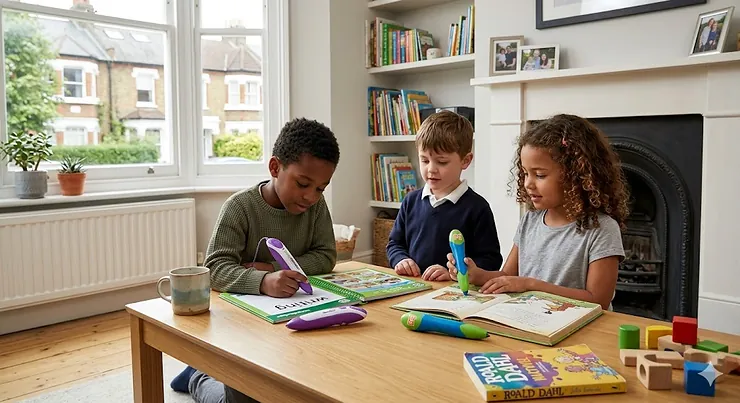
There’s a particular kind of magic that happens when a four-year-old jabs a pen at a page and hears a character’s voice boom out in response. Eyes widen. Pages turn faster. And suddenly, reading isn’t a chore — it’s a treasure hunt. That’s the promise behind the LeapReader vs Tag Reading System debate, and it’s one British parents are having in increasing numbers as screen time guilt mounts and the government’s push on early phonics continues to dominate the headlines.

Here’s the thing: both systems come from the same company — LeapFrog — but they represent two distinct eras of thinking about how children engage with printed books. The Tag Reading System was LeapFrog’s touchstone product for much of the 2010s. The LeapReader arrived as its smarter, more ambitious successor: same pen-meets-page concept, considerably broader skill set. Understanding which suits your child — and which additional products round out a genuinely useful interactive library — requires a bit more nuance than the average Amazon listing provides.
It’s worth noting what the Education Endowment Foundation makes clear in its research: phonics instruction is most effective when it’s systematic, sequenced, and genuinely engaging. A touch-and-read pen that a child actively wants to pick up does rather more for literacy development than a perfectly structured workbook gathering dust on the shelf. That’s the case for this category as a whole — and it’s why choosing the right system matters.
This guide covers seven products available on Amazon.co.uk, assessed honestly for what they actually deliver in British homes in 2026.
Quick Comparison: LeapReader vs Tag Reading System at a Glance
| Feature | LeapReader System | Tag Reading System | LeapStart (Newer) | VTech Bugsby |
|---|---|---|---|---|
| Reading | ✅ Yes | ✅ Yes | ✅ Yes | ✅ Yes |
| Writing Guidance | ✅ Yes | ❌ No | ❌ No | ❌ No |
| Handwriting Paper Included | ✅ Yes | ❌ No | ❌ No | ❌ No |
| Audio Books | ✅ Yes | ❌ No | ❌ No | ❌ No |
| Book Library Size | 150+ titles | 100+ titles | 25+ titles | 30+ titles |
| Rechargeable Battery | ✅ Yes | ❌ (AAA) | ✅ Yes | ❌ (AA) |
| Age Range | 4–8 years | 4–8 years | 2–7 years | 3–7 years |
| Price Range (Amazon.co.uk) | Around £20–£45 | Around £10–£25 (used) | Around £20–£35 | Around £20–£35 |
| Amazon.co.uk Availability | ✅ New | Marketplace/used | ✅ New | ✅ New |
| Best For | Reading + writing development | Pure storytelling / budget entry | Younger starters | Wider book genres |
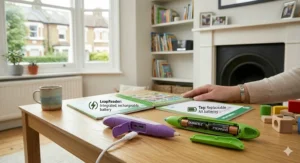
The table above tells most of the story, but one detail deserves emphasis: the LeapReader is fully backward-compatible with Tag books. This is genuinely significant for UK buyers browsing Amazon’s marketplace for second-hand Tag titles — you can build a large library of older Tag books and use them with the newer LeapReader pen, which is a much better device. The Tag system itself, meanwhile, remains on Amazon.co.uk primarily via third-party sellers, and while the pen is largely obsolete, the books retain their value precisely because the LeapReader reads them.
💬 Just one click — help others make better buying decisions too! 😊
✨ Don’t Miss These Exclusive Deals!
🔍 Take your child’s reading journey to the next level with these carefully selected products. Click any highlighted title to check current pricing and availability on Amazon.co.uk. These picks will help you find exactly what your little reader needs!
Top 7 LeapReader & Tag Reading System Products: Expert Analysis
1. LeapFrog LeapReader Reading & Writing System
The LeapReader pen is the centrepiece of this whole ecosystem, and honestly, it earns its place. The stylus is chunky enough for small hands — about the size of a fat marker pen — and reads invisible microdot patterns printed on compatible books. Touch a word, hear it sounded out. Touch a character, hear a voice. Simple concept, executed well.
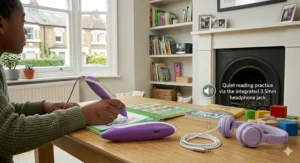
What sets it apart from the older Tag pen is the writing function: the LeapReader comes with LeapFrog Learning Paper, and a companion writing mode guides children stroke-by-stroke through letter formation without a drop of ink in sight. For parents who’ve spent time trying to correct pencil grip and letterform habits later on, having this introduced early is rather useful. The built-in rechargeable battery charges via USB, which is a meaningful upgrade over the Tag’s AAA habit of running dry mid-story.
This is best suited to children aged four to six who are at the early stages of phonics — specifically those who benefit from repetition and multi-sensory engagement. UK parents will find it aligns well with the systematic synthetic phonics approach required in English primary schools, giving children an additional touchpoint outside the classroom. Customer feedback on Amazon.co.uk consistently highlights how children return to it independently.
✅ Includes handwriting guidance on mess-free paper
✅ Rechargeable via USB — no AA batteries to panic-buy
✅ Works with 150+ books plus all compatible Tag titles
❌ Books sold separately; starter costs rise quickly
❌ Requires LeapFrog Connect software to download audio content (desktop/laptop needed)
Price range: around £20–£30 for the pen alone. A solid investment as a long-term literacy tool.

2. LeapFrog LeapReader System Learn-to-Read 5-Book Bundle Pack
If you’re buying the LeapReader pen and want to get going without hours of research, this five-book starter bundle is the sensible first purchase. The books target short vowel sounds — the a-e-i-o-u foundations that underpin most early decoding — and the character voices are cheerful without being grating (a low bar many children’s educational toys fail to clear).
Each book offers three interaction modes: listen along, read along, and guided practice. That tiered approach is thoughtful; it means a child who isn’t ready to decode independently can still engage meaningfully with the text, while a child who’s ready to practise can work through words on their own. What the Amazon listing doesn’t tell you is how well this maps to the typical Reception and Year 1 reading progression in England’s schools — these short vowel texts sit neatly alongside the sorts of phonics screening check preparation that many UK parents are quietly stressing about in the spring term.
Five books won’t occupy an enthusiastic reader for long, but as an introduction to the system, it removes the guesswork from a first purchase.
✅ Clear phonics progression through short vowel sounds
✅ Three interaction modes suit different readiness levels
✅ Compatible with LeapReader and Tag pen
❌ Library expands quickly; factor in ongoing book costs
❌ Some UK reviewers note that certain audio downloads require a working internet connection
Price range: around £15–£25. Excellent value as a starter pack alongside the pen.
3. LeapFrog LeapReader Learn-to-Read 10-Book Mega Pack
Think of this as the proper investment purchase. Ten books covering short vowels, sight words, and simple sentence structures — essentially a curated phonics library that takes children from the very first sounds through to basic independent reading. At double the content of the five-book bundle for a proportionally smaller price premium, the maths here is straightforward.
UK parents in smaller homes — and let’s be realistic, most British houses aren’t exactly palatial — will appreciate that the books themselves are compact. They stack neatly, don’t require separate storage solutions, and unlike plastic electronic toys, they survive the average corner of a small bedroom rather graciously. The storytelling in these books is genuinely charming; these aren’t dry phonics drills dressed up as stories, but actual narratives children want to revisit.
For parents who are committed to the LeapFrog ecosystem, this mega pack represents the best per-book value on Amazon.co.uk. Buy the pen, buy this, and you have a coherent programme that’ll serve a child from around age four through to six or seven.
✅ Best per-book value in the LeapReader range
✅ Clear curriculum alignment with early UK phonics expectations
✅ Works with both LeapReader and Tag pens
❌ Pink and blue colourway options — some parents wish for a neutral version
❌ Characters and stories are US-originated; no British English accent option
Price range: around £25–£40. Worth every penny if the system is going to be used regularly.
4. LeapFrog Tag Reading System (Classic Pen — Marketplace/Used)
The Tag is the ancestor, the original, the one that started it all — and while LeapFrog no longer markets it as a new product, it remains available through Amazon.co.uk’s marketplace from third-party sellers, often at prices that make it an attractive entry point. As Wikipedia’s overview of LeapFrog Tag notes, the stylus scans across pages of proprietary books, activating pre-recorded audio — a deceptively simple mechanism that was genuinely novel when it launched.
The honest caveat: the Tag pen itself is inferior to the LeapReader in almost every measurable way. No writing guidance, no rechargeable battery, no audio book capability. But here’s what experienced buyers know — Tag books are plentiful, often cheap on the second-hand market, and fully readable on the newer LeapReader pen. So buying a bundle of second-hand Tag books to supplement a LeapReader purchase is a clever move. Buying the actual Tag pen in 2026 rather less so, unless you’re working to a very tight budget.
The Tag’s strongest legacy is its library diversity: some older Tag titles covering nature, geography, and story-based content have never been replicated in the LeapReader catalogue, making the second-hand book market legitimately worth raiding.
✅ Large library of older titles available cheaply second-hand
✅ All Tag books compatible with the newer LeapReader pen
✅ Good option if budget is the primary concern
❌ Tag pen itself is obsolete — limited functionality vs LeapReader
❌ Requires AAA batteries; older units may show wear
Price range: around £10–£25 for the pen via marketplace sellers. Budget-friendly entry; books are where the real value lies.
5. LeapFrog LeapStart Interactive Learning System
LeapStart is LeapFrog’s current flagship for younger children — aged roughly two to seven — and while it sits adjacent to the LeapReader vs Tag Reading System comparison rather than directly within it, it deserves a place here because many UK parents purchase it first, then upgrade. The stylus reads invisible dots on LeapStart-specific books, triggering questions, songs, challenges, and jokes. It’s louder, more playful, and less structured than the LeapReader — which is precisely the point for under-fives.
What the spec sheet won’t tell you is that LeapStart’s library of 25+ books covers a wider developmental range than the LeapReader’s reading-focused catalogue. You’ll find early maths, problem-solving, and creative thinking activities alongside literacy. For a child who isn’t quite ready for systematic phonics but is ready to interact with books in a more exploratory way, LeapStart bridges the gap rather elegantly.
British parents should note: LeapStart books and LeapReader books are not cross-compatible. They use different dot systems. If you’re building a multi-child household library across age ranges, you’re looking at two separate investments.
✅ Better suited to under-fives than LeapReader
✅ Broader curriculum coverage beyond pure reading
✅ Available new on Amazon.co.uk with UK compatibility confirmed
❌ Separate book ecosystem — not compatible with LeapReader or Tag titles
❌ Library smaller than LeapReader range
Price range: around £20–£35 for the pen. A sensible first step for children under four.
6. VTech Bugsby Reading System
The Bugsby is VTech’s answer to LeapFrog’s dominance in the touch-and-read space, and it’s a creditable attempt. The pen works with specially designed Bugsby books — currently around 30 titles on Amazon.co.uk — and the reading experience is pleasant: human voices rather than synthesised audio, clear phonics support, and stories that feel genuinely written for children rather than assembled by algorithm.
Where Bugsby distinguishes itself is in the book design. The illustrations are bold and British-market-friendly; the stories include characters and settings that feel less exclusively American than some of the LeapFrog catalogue. For parents who’ve found LeapFrog’s US-flavoured content slightly grating — the spelling, the vocabulary, the cultural references — Bugsby is a genuinely appealing alternative.
The system’s limitation is its library size. Thirty titles is modest compared to LeapFrog’s 150+, and the reading level progression is less systematic. Bugsby excels at story engagement; it’s somewhat weaker at the structured phonics scaffolding that aligns with England’s National Curriculum expectations for Reception and Key Stage 1.
✅ Human voices; enjoyable storytelling
✅ Book design and content feel more UK-appropriate
✅ Available new on Amazon.co.uk
❌ Smaller book library than LeapFrog ecosystem
❌ Phonics scaffolding less systematic; weaker curriculum alignment
Price range: around £20–£35 for the starter set. A solid alternative for parents prioritising story engagement over structured phonics.
7. KOKODI Talking Pen Books Set
The KOKODI set is the budget-conscious wildcard in this list, and it earns its place not through system sophistication but through sheer accessibility. The set typically includes the pen plus eight to ten books covering letters, early words, phonics sounds, and fun facts — all for a price that makes the LeapFrog ecosystem look rather premium. Available via Amazon.co.uk with Prime delivery, it’s a useful option for grandparents buying a starter gift, or for families wanting to test a child’s interest in this kind of interactive reading before committing to a full ecosystem.
The caveat is real: KOKODI’s audio quality and voice recording is noticeably inferior to LeapFrog or VTech. The books feel lighter, the content is thinner, and there’s no structured progression to speak of. Think of it as a gateway product rather than a long-term literacy tool. For a child who’s genuinely enthusiastic, the KOKODI will quickly feel limiting. But as an introduction to the concept — particularly for a three or four-year-old who might equally lose interest after a week — it’s a low-risk investment.
✅ Excellent entry-level price point
✅ Available Prime on Amazon.co.uk for fast delivery
✅ Good gift option for uncertain gift-givers
❌ Audio quality and voice recording noticeably weaker than LeapFrog/VTech
❌ No structured phonics progression; limited book library expansion
Price range: around £15–£25 for pen plus books. Budget-friendly taster; outgrown quickly by engaged readers.
Getting the Most From Your Interactive Reading System: A Practical UK Guide
Here’s what LeapFrog’s product listings don’t mention: the single biggest factor in whether a touch-and-read pen gathers dust or becomes a daily fixture is routine. Not the device itself. Not the books. The habit.
First week: Introduce the pen during a dedicated ten-minute session rather than leaving it accessible at all times. Novelty is the enemy of habit; if a child can access the pen whenever, it becomes background furniture. Introduce it at a regular time — after tea, before bath — and it acquires ritual weight.
Book storage: In British homes, where bookshelves are often sharing space with school bags, PE kits, and approximately seven pairs of shoes, keeping LeapReader books in a small fabric basket on a low shelf works far better than a dedicated unit. Children are far more likely to reach for books they can see and grab independently.
The writing function (LeapReader only): The handwriting paper feature is genuinely underused. Most parents buy the pen for reading and discover the writing mode almost by accident. Set it up deliberately — tape a sheet of Learning Paper to a clipboard and introduce it as a “writing game.” Children aged five to six who are practising letterforms for school find this a significantly less stressful alternative to pencil-on-paper drills.
Audio book downloads: Downloading additional audio books via the LeapFrog app requires a laptop or desktop computer and a stable internet connection. In practice, a Sunday-afternoon session to load a handful of new titles works well and keeps the content feeling fresh.
Battery care: The LeapReader’s rechargeable battery degrades if left uncharged for months — keep it plugged in for a few minutes weekly, even during school holidays when the pen isn’t in active use.
Which System Suits Your Child? Real UK Family Scenarios
The Reception-year starter in Manchester: Child is four, just starting school phonics, bringing home ORT (Oxford Reading Tree) books in their book bag. The LeapFrog LeapReader with the 5-book starter bundle is the ideal companion — it mirrors the short-vowel phonics work happening in school without duplicating it exactly. The writing mode provides useful supplementary letter-formation practice. Budget: around £40–£55 for pen plus starter books.
The enthusiastic six-year-old in a South London flat: Child has already moved through early phonics and wants longer, more varied stories. The LeapReader 10-book mega pack plus a handful of second-hand Tag titles from Amazon marketplace gives a wide enough library to sustain genuine reading enthusiasm for six months or more. The compact book format means the whole collection fits in a shoebox under a cabin bed. Budget: around £50–£70.
The younger sibling (age three) in Edinburgh: Not ready for systematic phonics, but fascinated by watching an older sibling use a reading pen. LeapFrog LeapStart is the right entry point — exploratory, playful, less demanding of sustained phonics focus. When readiness comes, the LeapReader awaits. Budget: around £25–£35.
The budget-conscious grandparent in rural Yorkshire buying a birthday gift: VTech Bugsby or KOKODI are honest options. Both arrive on Amazon.co.uk with Prime delivery; both give an engaging first experience with touch-and-read technology without requiring a substantial commitment. If the child loves it, parents can upgrade. Budget: under £35.
How to Choose the Right Interactive Reading System in the UK
- Assess your child’s phonics stage first. The UK’s National Curriculum for England organises early reading by phase. If your child is in Reception (Phase 2-3 phonics), the LeapReader’s phonics focus is directly relevant. If they’re younger and pre-phonics, LeapStart or Bugsby is a better match.
- Consider the book ecosystem before the pen. The pen is a one-time purchase. The books are the ongoing investment. LeapFrog’s library of 150+ titles gives you room to grow; Bugsby’s 30-title catalogue is workable but limiting. Price out the books you’d actually want before committing to a system.
- Think about longevity. The LeapReader realistically engages children from age four to eight. LeapStart tops out around six or seven. If you have a younger child, the LeapReader may feel premature; if you have a five-year-old, it’ll last longer.
- Factor in the writing function. If letter-formation is a priority — and many UK parents find their Reception-age children struggling with this — the LeapReader’s handwriting guidance is a meaningful differentiator. No other system on this list offers it.
- Decide on the budget ceiling. The LeapReader ecosystem, fully stocked, can run to £80–£100 over time. The KOKODI or Bugsby entry point is sub-£35. Neither is wrong; it depends entirely on how confident you are that the system will be used consistently.
- Check Amazon.co.uk Prime eligibility. For UK buyers, Prime delivery on educational toys is genuinely useful — particularly for birthday gifts on short notice. All the LeapFrog and VTech products listed here are typically Prime-eligible.
- Don’t buy the Tag pen new. The Tag books are valuable; the Tag pen is not. If you want Tag content, get it on the LeapReader.
✨ Don’t Miss These Exclusive Deals!
🔍 Ready to build your child’s interactive reading library? Click any highlighted product above to check current pricing on Amazon.co.uk. Prime members enjoy next-day delivery — so you could have the whole setup sorted by tomorrow evening.
Common Mistakes When Buying Interactive Reading Systems
Buying the pen without budgeting for books. This catches a remarkable number of UK parents out. The pen is the entry cost; the books are the programme. If you’ve bought the LeapReader expecting a self-contained product, you’ll be purchasing books within a fortnight. Plan for both from the start.
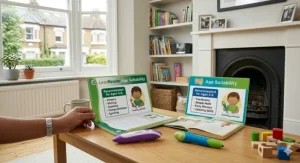
Choosing by age range too rigidly. Both LeapReader and Tag market themselves as “age 4-8,” but a confident four-year-old reader will find the earliest books dull, while a six-year-old who’s still consolidating early phonics might need the basics more than the age label suggests. Gauge by reading stage, not birthday.
Dismissing the older Tag books. The second-hand Tag book market on Amazon.co.uk is genuinely worth exploring. Many titles are no longer in print but remain fully compatible with the current LeapReader pen. Titles covering dinosaurs, space, and popular picture book franchises are available for a pound or two per book — building a varied library for less than the price of a new picture book.
Ignoring the software requirement. The LeapReader requires LeapFrog Connect software for audio downloads. On a household that’s moved entirely to tablets and smartphones, this can be a surprise. Check that you have a functioning laptop or desktop before purchase.
Buying multiple systems simultaneously. It’s tempting to buy LeapStart AND LeapReader AND Bugsby in one enthusiastic Amazon session. Resist. One system, used consistently, outperforms three systems used intermittently — and the book libraries aren’t interchangeable anyway.
LeapReader vs Tag: Long-Term Costs and Building an Interactive Library in the UK
The real cost of either system isn’t the pen — it’s the library. Let’s be honest about the numbers, because this is where UK parents are often caught off-guard.
A LeapReader pen costs around £20–£30. Individual books tend to fall in the £5–£12 range on Amazon.co.uk, with bundle packs offering meaningfully better value. A child who genuinely engages with the system and works through books at a reasonable pace will want ten to fifteen titles over two years. That puts total investment somewhere in the £70–£130 range, depending on how many books you buy new versus second-hand.
For context, that’s roughly equivalent to two months of a children’s book subscription service, or about fifteen standard picture books at full retail price. It’s not cheap — but it’s not extravagant for a two-to-three year literacy programme either.
The UCL Institute of Education’s research on early literacy makes a useful point here: children who engage regularly with phonics-supportive materials at home show measurably stronger reading confidence, and researchers at UCL IOE advocate for a balanced approach combining phonics decoding with genuine story engagement. A well-stocked LeapReader library — mixing decodable phonics books with story-rich Tag titles — delivers exactly that balance.
Building economically: Buy the LeapReader pen new. Buy the LeapReader 10-book mega pack new. Then raid Amazon marketplace for second-hand Tag books in good condition to expand the library at minimal cost. Total outlay for a robust library: around £55–£75. That’s genuinely reasonable.
The Tag pen itself has essentially no resale value worth pursuing in 2026 — but its books, in good condition, retain genuine utility on the LeapReader platform. That’s worth remembering before dismissing the Tag ecosystem entirely.
Frequently Asked Questions
❓ Is the LeapReader compatible with older Tag books?
❓ Are LeapFrog products sold on Amazon.co.uk safe and UK-compatible?
❓ Which is better for a child struggling with phonics — LeapReader or Tag?
❓ Can I download extra books for the LeapReader digitally?
❓ Is the Tag Reading System still available to buy in the UK?
Conclusion
The LeapReader vs Tag Reading System debate has a fairly clear answer in 2026: the LeapReader wins as a device. It reads Tag books, adds handwriting guidance, includes a rechargeable battery, and opens a larger library — all without costing significantly more than the Tag pen did in its prime. The Tag system’s continuing relevance lies entirely in its back catalogue of books, which remain genuinely charming and fully compatible with the modern pen.
What this guide hopefully makes plain is that the choice isn’t really LeapReader versus Tag — it’s LeapReader plus Tag books, supplemented where relevant by LeapStart for younger siblings or Bugsby for parents who want a more British-feeling content palette. Build the library incrementally, introduce the pen with some structure, and let the routine do the work.
The goal, always, is a child who wants to pick up a book. The pen is just the trick that gets them there.
✨ Don’t Miss These Exclusive Deals!
🔍 Found your ideal system? Click any highlighted product in this guide to check current pricing and availability on Amazon.co.uk. All products listed are Prime-eligible for next-day delivery across the UK.
Recommended for You
- Best Phonics Toys for 4 Year Olds: 7 Top UK Picks (2026)
- Letterland vs Jolly Phonics Toys: 7 Best UK Picks in 2026
- LeapFrog vs VTech Alphabet Toys: 7 Best Picks UK 2026
Disclaimer: This article contains affiliate links. As an Amazon Associate, I earn from qualifying purchases. If you purchase products through these links, we may earn a small commission at no additional cost to you.
✨ Found this helpful? Share it with your mates! 💬🤗
