
In This Article
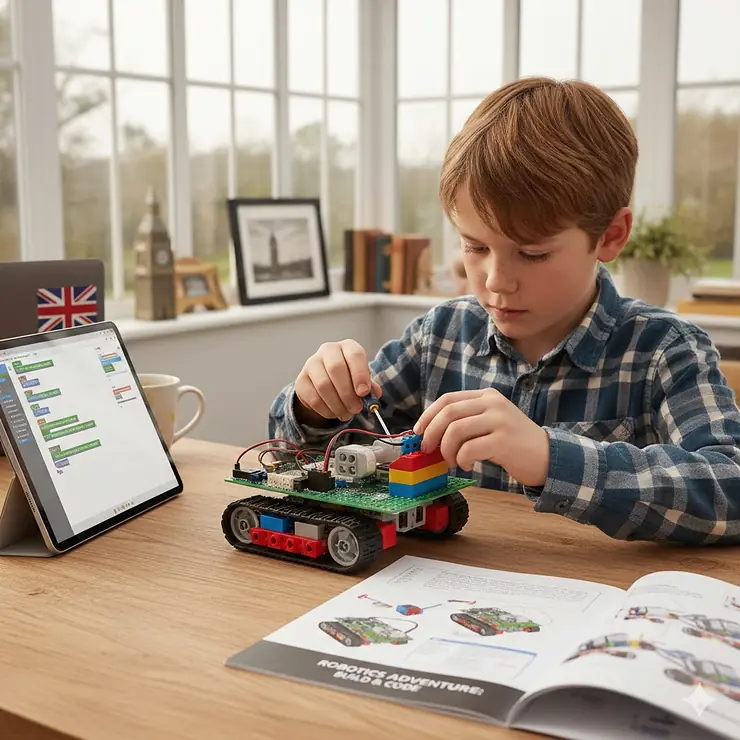
Picture this: your 10-year-old hunched over the kitchen table, completely absorbed in bringing their own robot to life. Not scrolling through TikTok, not glued to a screen—actually building, programming, and problem-solving. That’s the magic of a quality robot kit for 10 year old enthusiasts.
I’ve spent countless hours researching and testing robotics kits with my own children and their mates, and I can tell you there’s never been a better time to introduce youngsters to the world of robotics. According to research published in the International Journal of STEM Education, educational robotics significantly improves students’ learning performance and attitudes in STEM subjects. These kits transform abstract concepts like coding, engineering, and physics into tangible, hands-on experiences that stick.
Whether you’re after a budget-friendly solar-powered option or a premium programmable kit that rivals LEGO Mindstorms (without the hefty price tag), this guide covers seven outstanding choices available right now in the UK. Each has been carefully selected based on real customer feedback, educational value, and that crucial “will they actually use it?” factor.
Quick Comparison Table
| Robot Kit | Price Range | Key Features | Programming | Age Suitability | Rating |
|---|---|---|---|---|---|
| LEGO Mindstorms Robot Inventor 51515 | £270-£300 | 949 pieces, 5 robot designs, app-controlled | Scratch-based | 10+ | 4.7/5 |
| Makeblock mBot Coding Robot | £55-£75 | Obstacle avoidance, line tracking, Bluetooth | Scratch & Arduino | 8-12 | 4.4/5 |
| Sillbird 5-in-1 STEM Robot | £45-£60 | Remote & app control, 435 pieces, LED features | Block-based coding | 8-13 | 4.3/5 |
| ELEGOO Smart Robot Car Kit V4.0 | £60-£80 | Camera FPV, WiFi control, Arduino-based | Arduino C & Python | 12+ | 4.5/5 |
| Sillbird 12-in-1 Solar Robot | £18-£25 | Solar/battery powered, 190 pieces | No programming | 8-12 | 4.3/5 |
| Makeblock mBot Ranger | £100-£130 | 3-in-1 design, advanced sensors, Bluetooth | Scratch & Arduino C | 10+ | 4.2/5 |
| Clementoni Science & Play Robot | £30-£45 | Voice recognition, app-controlled | Visual programming | 8+ | 4.1/5 |
💬 Just one click – help others make better buying decisions too! 😊
Top 7 Robot Kit for 10 Year Old: Expert Analysis
1. LEGO Mindstorms Robot Inventor 51515 – The Premium Choice
Price: £270-£300
Right, let’s address the elephant in the room. LEGO Mindstorms Robot Inventor 51515 isn’t cheap, but crikey, it’s impressive. This is the Rolls-Royce of robot kits for tweens—949 pieces of pure engineering brilliance that’ll keep your 10-year-old (and you, if we’re honest) occupied for months.
The kit includes an intelligent hub with four medium motors, a colour sensor, and a distance sensor. Kids can build five different robot designs: Blast (a missile-firing humanoid), Charlie (a dancing drummer), Tricky (a basketball player), M.V.P (a buggy), and Gelo (a walking quadruped). What makes this stand out is the rechargeable battery—no more frantic battery hunts mid-project.
UK customers rave about the build quality, though several mention the app can be a bit temperamental on older tablets. The programming uses a Scratch-based interface that’s genuinely intuitive. One Manchester parent wrote: “My daughter has built three different robots and is now designing her own. Worth every penny.”
✅ Pros:
- Five unique robot designs with personality
- Rechargeable battery included
- Compatible with other LEGO Technic sets
- Excellent community support online
❌ Cons:
- Premium price point
- Requires significant table space
- App occasionally glitchy on Android devices
2. Makeblock mBot Coding Robot – Best Value for Beginners
Price: £55-£75
The Makeblock mBot Coding Robot is what I’d call the “Goldilocks option”—not too expensive, not too basic, just right for most 10-year-olds starting their robotics journey. This little blue bot assembles in about 15 minutes (brilliant for impatient kids) and immediately gets them coding.
It features obstacle avoidance, line tracking, and can be controlled via smartphone, tablet, or the included IR remote. The mBlock software works with both Scratch-style drag-and-drop and Arduino programming, so it genuinely grows with your child’s skills. UK delivery is typically 2-3 days via Amazon Prime.
Customer reviews from British buyers highlight how this kit strikes the perfect balance. One Birmingham dad noted: “Built it with my 10-year-old on a Saturday morning, she was programming it by lunchtime.” The only niggle is battery life—you’ll want rechargeable AAs as the kit chews through them fairly quickly.
✅ Pros:
- Quick assembly (15 minutes)
- Progressive learning path (Scratch to Arduino)
- Excellent tutorial resources
- Expandable with add-on packs
❌ Cons:
- Battery compartment requires screwdriver access
- Bluetooth can be finicky initially
3. Sillbird 5-in-1 STEM Robot Building Toys – Best for Creative Builders
Price: £45-£60
If your child loves transforming their creations, the Sillbird 5-in-1 STEM Robot is absolutely brilliant. With 435 pieces, kids can build a wall robot (think Wall-E vibes), explorer robot, mech dinosaur, tank, or stunt car. The versatility alone justifies the price—that’s five different projects in one box.
What impresses me most is the app functionality. Beyond simple remote control, it offers programming modes where children can create movement sequences, adjust motor speeds, and even customise LED eye colours. The build quality feels solid, and UK customers consistently praise the clear instructions (though younger builders might need a hand initially).
One lovely review from a Surrey mum mentioned: “My son has built all five models over school holidays. The programming app introduces coding concepts without feeling like homework.” The only downside? You can only build one model at a time, so there’s a fair bit of disassembling and rebuilding involved.
✅ Pros:
- Five distinct building options
- App-based programming with visual interface
- Adjustable difficulty levels
- Vibrant, engaging design
❌ Cons:
- Only one model buildable at a time
- App setup can be tricky on some devices
4. ELEGOO Smart Robot Car Kit V4.0 – Best for Advanced Learners
Price: £60-£80
The ELEGOO Smart Robot Car Kit V4.0 is properly sophisticated—think of it as a stepping stone to genuine electronics engineering. Based on Arduino UNO R3, this kit includes 24 modules: obstacle avoidance, line tracking, infrared control, and even a camera for first-person view driving.
This is where things get a bit more technical. Whilst the kit says ages 8+, I’d genuinely recommend it for confident 10-12 year olds with some electronics experience, or as a parent-child project. The build takes 2-3 hours, and you’ll need a computer for the Arduino programming. But bloomin’ heck, the learning potential is enormous.
UK reviews highlight the comprehensive tutorials (over 100 pages of detailed instructions). One Edinburgh reviewer noted: “My 11-year-old son went from basic remote control to programming autonomous behaviours in a fortnight.” The FPV camera feature is particularly popular—kids absolutely love the “robot’s eye view” on their tablets.
✅ Pros:
- Professional-grade learning platform
- FPV camera for immersive control
- Extensive tutorial materials
- Compatible with Arduino ecosystem
❌ Cons:
- Steeper learning curve
- Requires computer for programming
- Better suited for 11-12 year olds
5. Sillbird 12-in-1 Solar Robot Kit – Best Budget Option
Price: £18-£25
For under £25, the Sillbird 12-in-1 Solar Robot Kit is remarkable value. It’s not programmable (so don’t expect coding lessons), but it brilliantly teaches mechanical engineering, renewable energy, and basic robotics principles. The 190 pieces can create 12 different solar-powered robots—everything from a puppy to a crab to a boat.
The dual-power system is clever: solar panel for outdoor play or battery backup for gloomy British days (you know, most of them). Building complexity ranges from simple beginner models to more challenging designs, perfect for keeping kids engaged across different skill levels.
British customers love this as an introductory kit or a companion to more advanced sets. A Lancashire teacher wrote: “Used these in our Year 6 science club. Brilliant for teaching sustainable energy without being preachy.” The only limitation is the lack of electronic programming—it’s purely mechanical.
✅ Pros:
- Exceptional value for money
- 12 different building options
- Solar power teaches sustainability
- No batteries required (outdoors)
❌ Cons:
- No programming element
- Smaller parts require patience
- Solar performance depends on weather
6. Makeblock mBot Ranger – Best for Outdoor Adventures
Price: £100-£130
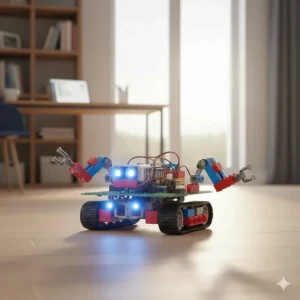
The Makeblock mBot Ranger is the rugged, all-terrain cousin of the standard mBot. This 3-in-1 kit builds into a tank robot (brilliant for rough surfaces), a self-balancing bird, or a three-wheeled racing car. The caterpillar tracks on the tank model mean it can genuinely handle grass, gravel, and even shallow puddles.
With advanced sensors including ultrasonic, line tracking, light sensors, gyroscope, and temperature sensor, this kit offers serious depth. The programming environment supports both graphical (Scratch-based) and Arduino C, making it suitable for growing skills. UK customers particularly appreciate the sturdy construction—this isn’t a delicate kitchen-table-only robot.
However, several reviews mention the Bluetooth connectivity can be temperamental, and battery life remains a concern (rechargeable battery pack sold separately, annoyingly). One Glasgow dad commented: “The self-balancing feature is genuinely impressive. My son spent hours perfecting the calibration.”
✅ Pros:
- Rugged, outdoor-capable design
- Advanced sensor array
- Three distinct building options
- Professional-quality components
❌ Cons:
- Higher price point
- Bluetooth connectivity issues reported
- Rechargeable battery not included
7. Clementoni Science & Play Robot – Best Starter Kit
Price: £30-£45
The Clementoni Science & Play Robot is ideal for children dipping their toes into robotics without overwhelming complexity. This cute, humanoid robot features voice recognition, manual manipulation, and app-controlled programming through a visual interface that’s brilliantly accessible.
With over 50 missions and activities through the companion app, there’s plenty of content to explore. The robot can pick up objects with its magnetic hands, navigate obstacles, and even “learn” patterns through its programming interface. For UK families, it’s an affordable way to gauge a child’s genuine interest before investing in pricier options.
Reviews from British parents consistently mention how well this bridges the gap between toy and educational tool. “My daughter wasn’t sure she’d like robotics,” wrote a Cardiff mum. “This convinced her. Now she wants Mindstorms for Christmas!” The main limitation is that it’s less expandable than competitors—what you see is what you get.
✅ Pros:
- Affordable entry point
- 50+ guided activities
- Voice recognition feature
- Appealing humanoid design
❌ Cons:
- Limited expandability
- Less robust than premium kits
- Programming depth is basic
🌟 Don’t Miss These Exclusive Deals!
🔍 Transform your child’s screen time into valuable STEM learning with these carefully selected robot kits. Click on any highlighted product name above to check current pricing and availability on Amazon.co.uk. These kits will help create genuine learning moments whilst keeping boredom at bay!
What Is Robot Kit for 10 Year Old?
A robot kit for 10 year old is an educational construction set designed to teach children aged 8-12 core STEM (Science, Technology, Engineering, Mathematics) concepts through hands-on building and programming activities. These kits typically include mechanical components, motors, sensors, and programmable control units, allowing children to assemble functioning robots whilst learning coding, engineering principles, and problem-solving skills in an engaging, age-appropriate manner.
Benefits Comparison: Robot Kits vs Traditional Toys
| Aspect | Robot Kits | Traditional Toys |
|---|---|---|
| Educational Value | High – teaches coding, engineering, maths | Variable – primarily entertainment |
| Screen Time Quality | Productive learning focused | Often passive consumption |
| Skill Development | Problem-solving, logic, creativity | Primarily imagination-based |
| Longevity | Months/years of engagement | Often outgrown quickly |
| Parent Interaction | Collaborative learning opportunities | Less educational engagement |
| Future Readiness | Builds career-relevant skills | Limited professional application |
How to Choose Robot Kit for 10 Year Old
Selecting the perfect robot kit requires considering several crucial factors. Here’s your definitive step-by-step guide:
1. Assess Your Child’s Current Skill Level Start by honestly evaluating where they stand. Has your child used LEGO Technic sets? Can they follow multi-step instructions independently? A child comfortable with complex building sets can tackle more advanced kits like ELEGOO or mBot Ranger, whilst complete beginners benefit from simpler options like Sillbird’s solar robots or Clementoni’s entry-level kits.
2. Determine Programming Experience Programming is where most parents feel uncertain. If your 10-year-old has never coded, opt for visual, drag-and-drop interfaces (Scratch-based systems). The mBot and LEGO Mindstorms excel here. Children already familiar with basic coding might appreciate the challenge of Arduino-based kits like ELEGOO, which teach text-based programming languages.
3. Consider Your Budget Realistically Robot kits range from £18 to £300. Budget options (£18-£40) like Sillbird’s solar kits offer brilliant mechanical learning without electronics. Mid-range kits (£50-£80) like mBot provide comprehensive programming introduction. Premium kits (£100+) like LEGO Mindstorms offer professional-grade components and longevity. Remember: expensive doesn’t always mean better for your specific child.
4. Check Expandability Options Will this kit grow with your child? Systems like Makeblock mBot and LEGO Mindstorms offer extensive add-on packs, whilst standalone kits provide fixed experiences. If your child shows sustained interest, expandable systems offer better long-term value despite higher initial costs.
5. Evaluate Educational Goals What do you want them to learn? Pure mechanical engineering? Solar power and sustainability? Coding fundamentals? Advanced electronics? Different kits emphasise different skills. Sillbird solar robots teach renewable energy brilliantly. ELEGOO focuses on electronics. mBot balances coding and mechanics perfectly.
6. Read Actual UK Customer Reviews Don’t just trust star ratings—read detailed reviews from British customers. Look for comments about UK delivery times, compatibility with local curriculum, and whether children actually engaged long-term. Reviews mentioning “still playing with it six months later” are golden.
7. Verify UK Availability and Support Ensure the kit ships to the UK without ridiculous delays or customs charges. Check whether tutorials and customer support accommodate British English spellings and educational standards. Amazon.co.uk sellers with UK warehouses typically offer faster delivery and easier returns than international vendors.
According to research from the National Center for Biotechnology Information, robotics education significantly improves children’s computational thinking and problem-solving abilities, making these considerations well worth your time.
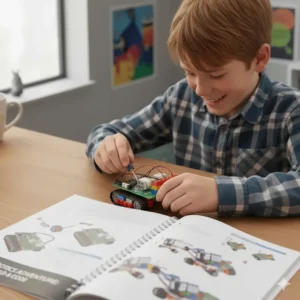
Age-Appropriate Features for 10-Year-Olds
Motor Skills Development At age 10, children have developed fine motor control capable of handling smaller components and precise assembly. Quality kits like LEGO Mindstorms and mBot feature appropriately-sized pieces that challenge without frustrating. Avoid kits designed for younger children (chunky, oversimplified) or advanced enthusiasts (microscopic electronics requiring tweezers).
Cognitive Challenge Level Ten-year-olds are transitioning from concrete to abstract thinking. They can follow multi-step instructions, understand cause-and-effect relationships, and begin grasping programming logic. Kits with visual programming interfaces (Scratch-based) perfectly match this developmental stage, introducing computational thinking without overwhelming with syntax.
Independent Learning Capability Most 10-year-olds can work independently on structured projects whilst knowing when to seek help. The best kits provide clear instructions for basic builds but encourage experimentation and customisation. Look for comprehensive tutorials that children can follow themselves, saving you from constant supervision.
Attention Span Considerations Quality robot kits balance quick wins (assembly completion in 15-60 minutes) with long-term engagement (programming challenges spanning weeks). Initial builds should feel achievable; advanced features maintain interest. Avoid kits requiring marathon 5-hour builds—frustration kills enthusiasm.
Programming Languages: Beginner to Advanced
Visual/Block-Based Programming (Beginner)
Scratch and mBlock Perfect starters for coding novices. Children drag colourful blocks representing commands, seeing immediate results. mBot and LEGO Mindstorms use these brilliantly. No syntax errors, no frustration—just logical thinking development. UK schools commonly teach Scratch from Year 3 onwards, making this familiar territory.
Arduino C (Intermediate)
Text-Based Introduction ELEGOO and advanced mBot projects use Arduino C—simplified C++ specifically for microcontrollers. This bridges visual programming and professional languages. Ten-year-olds can copy-paste code initially, gradually understanding structure. Excellent preparation for GCSE Computer Science.
Python (Advanced)
Future-Proof Learning Some premium kits now support Python, the UK’s preferred A-level programming language. Whilst challenging for most 10-year-olds initially, it’s brilliant for children showing serious interest. Resources like Raspberry Pi Foundation’s educational materials complement robot kit learning superbly.
Price Range & Value Analysis
| Price Bracket | What You Get | Best For | Longevity | Value Rating |
|---|---|---|---|---|
| Under £30 | Basic mechanical kits, solar robots, simple builds | Testing interest, budget-conscious families | 3-6 months typical engagement | ⭐⭐⭐ |
| £30-£60 | Entry-level programmable, mid-complexity builds | Most 10-year-olds, balanced learning | 6-12 months typical engagement | ⭐⭐⭐⭐⭐ |
| £60-£100 | Advanced sensors, Arduino-based, expandable | Tech-savvy kids, serious interest | 12-18 months+ engagement | ⭐⭐⭐⭐ |
| £100-£150 | Professional components, multiple builds | Experienced builders, enthusiasts | 18-24 months+ engagement | ⭐⭐⭐⭐ |
| £150+ | Premium platforms, extensive expansion | Committed hobbyists, parent collaboration | 2+ years engagement | ⭐⭐⭐⭐ (if used) |
Essential Accessories to Consider
Rechargeable Battery Packs Most robot kits devour AA batteries like teenagers consume crisps. Investing £15-£25 in quality rechargeable AAs and a charger saves money and hassle. For kits with proprietary batteries (like some LEGO sets), manufacturer-specific rechargeable packs are worth the premium.
Storage Solutions LEGO-compatible storage boxes keep pieces organised and prevent the dreaded “missing part” scenario. Clear compartment boxes (£8-£15 at Argos or Amazon) make reassembly dramatically easier, especially for kits built and rebuilt multiple times.
Expansion Packs Once initial enthusiasm confirms genuine interest, expansion packs extend value. Makeblock offers sensor packs (£18-£35) adding capabilities like humidity detection or servo motors. LEGO Mindstorms integrates with broader LEGO ecosystem, enabling custom creations.
Programming Peripherals For Arduino-based kits, a dedicated USB cable (included but easy to lose) and potentially a Bluetooth dongle (£8-£12) improve connectivity. Tablet stands help position devices for simultaneous building and programming.
Safety Considerations for Parents
Small Parts Awareness Most robot kits contain small components unsuitable for children under 3 years. If younger siblings are about, establish clear storage protocols. Some kits include tiny screws, sensors, or electronic components that pose choking hazards.
Electrical Safety Kits using rechargeable lithium batteries require proper charging supervision. Never leave charging robots unattended overnight. Teach children proper battery handling—no mixing old and new batteries, correct polarity orientation, and safe disposal of damaged cells.
Sharp Edges and Tools Assembly occasionally requires screwdrivers or craft knives for opening packaging. Supervise these steps with younger 10-year-olds. Premium kits use screwless assembly (clip-together components), reducing tool requirements and injury risks.
Screen Time Balance Whilst robot programming requires screens, it’s productive screen time. Set clear boundaries: 30-45 minute focused sessions work better than marathon hours. Encourage offline building and planning before programming implementation.
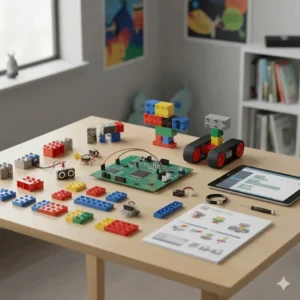
LEGO Mindstorms Alternatives Cheaper
Why Look Beyond LEGO Mindstorms?
LEGO’s premium pricing (£270-£300) puts it beyond many budgets. Fortunately, excellent alternatives deliver 80-90% of the functionality at 30-50% of the cost. You’re sacrificing brand prestige and ecosystem integration, but gaining affordability and often more focused learning paths.
Top Budget Alternatives
Makeblock mBot (£55-£75) Offers comparable programming education with Scratch and Arduino support. Whilst lacking LEGO’s building versatility, it excels at teaching fundamental robotics concepts. The £200+ savings fund expansion packs or future kits.
Sillbird 5-in-1 STEM Robot (£45-£60) Provides similar multi-build concept (five models vs LEGO’s five) at a fraction of cost. Programming depth is slightly less sophisticated, but for learning fundamentals, it’s genuinely excellent value.
ELEGOO Smart Robot Car (£60-£80) Matches LEGO’s advanced programming capabilities through Arduino. Superior for children interested specifically in coding rather than varied construction. The camera module adds functionality LEGO doesn’t offer at comparable price points.
What You’re Trading Off
LEGO’s build quality and ecosystem compatibility are unmatched. Mindstorms integrates with other LEGO sets, potentially adding thousands of pounds worth of compatible pieces. Alternative kits use proprietary components. However, for learning robotics fundamentals, alternatives perform brilliantly—and you can afford two or three different kits for LEGO’s single price.
Robotics Competitions and Clubs
FIRST LEGO League (UK) For children showing serious interest, FIRST LEGO League offers structured competition. Teams (ages 9-16) design robots to complete challenges whilst researching real-world problems. Participation costs vary (£100-£300 per team), but it’s brilliant for sustained engagement and teamwork skills.
Local Robotics Clubs Many UK libraries, community centres, and schools run after-school robotics clubs. Contact your local authority or search “[your town] children’s robotics club”. Some charge nominal fees (£2-£5 per session), whilst others are free. Excellent for socialising learning and maintaining enthusiasm.
Online Communities Reddit’s r/robotics, the Makeblock Community forum, and LEGO Mindstorms subreddits offer UK-based support. Children can share creations, troubleshoot problems, and find inspiration. Supervise younger participants to ensure age-appropriate interaction.
Maintenance and Long-Term Care
Firmware Updates Programmable robots occasionally require firmware updates. Bookmark manufacturer update pages and check quarterly. Updates often add features or fix bugs—particularly important for app-controlled kits like mBot and Sillbird.
Component Care Motors and sensors are delicate. Store robots in boxes rather than leaving them assembled on shelves collecting dust. Periodically check connections—loose wires are the number one cause of “it’s broken!” moments that aren’t actually broken.
Software Preservation Programming environments update regularly. When a kit works perfectly, document the software versions used. Future OS updates sometimes break compatibility—having known-working versions prevents frustration.
Parts Replacement Manufacturers typically sell replacement parts. Missing screws, damaged sensors, or worn motors needn’t end a kit’s life. Amazon often stocks third-party compatible components for popular kits at lower costs than official parts.
Troubleshooting Common Issues
“The Robot Won’t Turn On” Check battery orientation (positive/negative), battery charge level, and power switch position (sounds obvious, but it’s the most common culprit). For rechargeable packs, verify the charging indicator showed completion.
“Bluetooth Won’t Connect” Restart both device and robot. Unpair and re-pair in Bluetooth settings. Check robot’s proximity to device (should be within 5 metres initially). Update the companion app—older versions often have connection bugs.
“Parts Don’t Fit Together” Verify you’re using the correct components per instructions. Some pieces look identical but have subtle differences. Gently flex plastic components before forcing—aggressive assembly breaks parts. Check for protective films on sensors or screens.
“The Program Won’t Upload” USB cable issues cause 70% of programming problems. Try different cables or USB ports. Ensure you’ve selected the correct board type in Arduino software. For Scratch-based systems, verify the browser allows WebUSB connections.
Integrating Robotics with UK Curriculum
Key Stage 2 (Ages 7-11) Alignment Robot kits brilliantly complement UK National Curriculum requirements. Computing programmes of study mandate “design, write and debug programs” and “use sequence, selection, and repetition in programs”—exactly what quality robot kits teach through practical application.
Cross-Curricular Connections Science modules on forces, motion, and electricity connect directly to robotics. Maths concepts like angles, measurements, and geometry become tangible when programming robot movements. Design Technology requirements for “using technology purposefully” are met through robot building and modification.
Home Education Resource For home-educating families, robot kits provide structured STEM learning meeting governmental requirements whilst maintaining child-led interest. They’re particularly effective for kinesthetic learners who struggle with traditional textbook approaches.
Environmental Considerations
Solar-Powered Options Kits like Sillbird’s 12-in-1 Solar Robot introduce renewable energy concepts practically. Research from educational institutions shows hands-on renewable energy projects significantly improve environmental awareness in primary-age children.
Sustainability of Components LEGO leads in sustainable materials, with goals for 100% sustainable materials by 2030. Cheaper alternatives often use less environmentally friendly plastics. Consider this trade-off against affordability—sometimes buying one quality kit that lasts beats multiple disposable options.
Battery Considerations Rechargeable batteries dramatically reduce environmental impact. A single set of quality rechargeables replaces 500+ disposable batteries over a kit’s lifetime. That’s both economically and environmentally sensible.
Longevity and Upgradability The most sustainable kit is one that grows with your child rather than being outgrown and discarded. Expandable systems like Makeblock and LEGO reduce electronic waste whilst providing continued learning value.
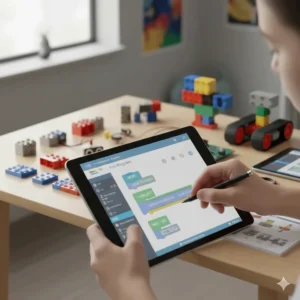
FAQ
❓ What's the best robot kit for complete beginners aged 10?
❓ Can 10-year-olds learn Arduino programming with robot kits?
❓ Are robot kits worth the money for children who might lose interest?
❓ Which robot kits work best for siblings with different ages?
❓ Do robot kits require expensive additional purchases?
Conclusion: Finding Your Perfect Robot Kit for 10 Year Old
After thoroughly reviewing these seven outstanding options, here’s my honest advice: there’s no single “best” robot kit—only the best kit for your specific child’s interests, skills, and your family’s budget.
For complete beginners, the Makeblock mBot remains my top recommendation. It’s affordable, accessible, and genuinely educational without feeling overwhelming. If budget permits and your child has shown sustained interest in building and technology, LEGO Mindstorms delivers unparalleled quality and longevity—though alternatives like the ELEGOO Smart Robot Car offer similar educational value at fraction of the cost for children specifically interested in programming.
Starting cautiously with budget options like Sillbird’s solar robots isn’t “settling”—it’s smart parenting. You’re validating interest before committing hundreds of pounds to kits that might gather dust after initial enthusiasm wanes.
Remember, the genuine value isn’t in the kit itself but in what it unlocks: problem-solving skills, computational thinking, persistence through challenges, and potentially a lifelong passion for technology and engineering. Educational research consistently demonstrates that hands-on robotics education significantly improves STEM learning outcomes—benefits extending far beyond childhood hobbies into future academic and career success.
Whichever kit you choose, the investment in your child’s STEM education will pay dividends for years to come. Now get building!
🎁 Ready to Get Started?
✨ Browse the highlighted robot kits above to check today’s best prices on Amazon.co.uk. Each product has been carefully selected based on real UK customer reviews, educational value, and engagement potential. Give your 10-year-old the gift of hands-on STEM learning that’ll spark creativity and build future-ready skills!
Recommended for You
- 7 Best Coding Toys Age 9 UK | Expert Tested 2026 Guide
- 7 Best STEM Toys Age 7 in 2026 (UK Expert Guide)
- 7 Best Family Board Games Age 6 Plus 2026 UK Guide
Disclaimer: This article contains affiliate links. If you purchase products through these links, we may earn a small commission at no additional cost to you. Prices shown are approximate and may vary.
✨ Found this helpful? Share it with your mates! 💬🤗
