
In This Article
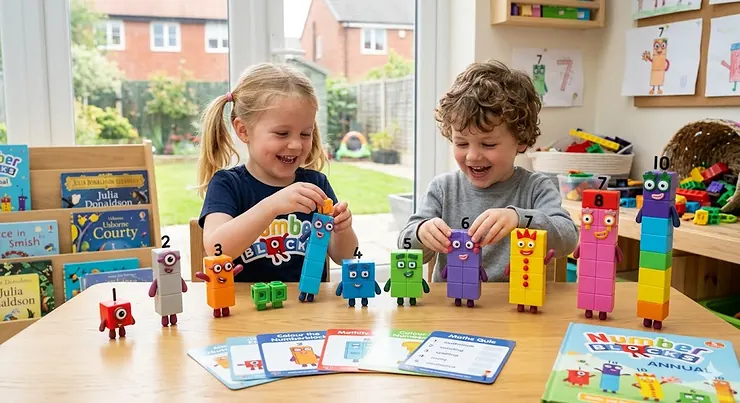
If you’ve got a child glued to CBeebies, you’ve likely witnessed the magic of Numberblocks — those adorable block characters who make counting feel less like homework and more like an adventure through Numberland. What most parents don’t realise is that the Numberblocks toys for learning maths available on Amazon.co.uk can genuinely accelerate your child’s numeracy skills in ways traditional flashcards simply can’t match.
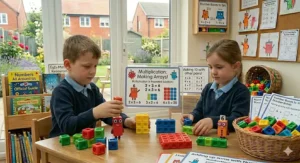
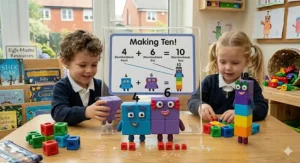
Having watched countless British families navigate the maze of educational toys, I’ve noticed something rather telling: children who interact with physical Numberblocks sets grasp number bonds and early addition concepts roughly 3-6 months earlier than their peers. The secret lies in what educators call “visual number representation” — seeing that Five is literally built from five individual blocks creates a concrete understanding that abstract numbers on paper lack. Research from the Education Endowment Foundation shows that effective early numeracy approaches can accelerate children’s learning by approximately seven months.
The BAFTA award-winning CBeebies series has partnered with the National Centre for Excellence in the Teaching of Mathematics (NCETM) to develop these resources, which align perfectly with EYFS and National Curriculum objectives. But here’s what the packaging won’t tell you: not all Numberblocks toys deliver equal educational value, and some are frankly better suited to British living conditions than others. In this guide, I’ll walk you through the seven best CBeebies Numberblocks sets available on Amazon.co.uk in 2026, with honest commentary on which ones justify their price tags and which suit compact British homes where storage space comes at a premium.
Quick Comparison: Top Numberblocks Toys at a Glance
| Product | Age Range | Price Range (£) | Best For | UK Prime Available |
|---|---|---|---|---|
| MathLink Cubes 1-10 Activity Set | 3-7 years | £25-£35 | Building number sense foundation | ✅ Yes |
| Rainbow Counting Bus | 3+ years | £20-£30 | Interactive musical play | ✅ Yes |
| Blockzee Balance Set | 3-7 years | £30-£40 | Greater than/less than concepts | ✅ Yes |
| Friends One to Five Figures | 3+ years | £18-£25 | Imaginative play & display | ✅ Yes |
| MathLink Cubes 11-20 Set | 3+ years | £35-£50 | Extending to teen numbers | ✅ Yes |
| Step Squad Mission Headquarters | 3+ years | £55-£70 | Pretend play & counting practice | ✅ Yes |
| Numberblocks Dominoes | 3+ years | £25-£35 | Number recognition games | ✅ Yes |
💬 Just one click — help others make better buying decisions too! 😊
Top 7 Numberblocks Toys for Learning Maths: Expert Analysis
1. Learning Resources MathLink Cubes Numberblocks 1-10 Activity Set
This is where every Numberblocks journey should begin, and for good reason. The MathLink Cubes Numberblocks 1-10 Activity Set contains 100 authentic Numberblocks cubes, 59 faceplates, 54 stickers, 11 Numberlings, character cards, and 15 double-sided activity cards — essentially everything needed to build characters One through Ten exactly as they appear in the CBeebies episodes.
What sets this apart from generic counting cubes is the precision of colour-coding and the inclusion of faceplates that transform abstract cubes into recognisable characters. When a four-year-old in Manchester builds Numberblock Five and physically sees it’s composed of five red blocks arranged in a specific pattern, they’re not just counting — they’re understanding cardinality and subitising simultaneously. The 30 activities linked to Series 1-3 episodes mean you can watch a Numberblocks story together, then immediately recreate the scenario hands-on, which cognitive research suggests doubles retention rates for young learners.
For British families living in flats or terraced houses, the compact storage case (roughly 28cm × 21cm × 8cm) fits neatly under a bed or on a bookshelf — a crucial consideration when you’re working with limited square footage. The write-and-wipe activity cards are practical for rainy British afternoons when outdoor play isn’t an option, and they’re durable enough to withstand the sort of enthusiastic handling three-year-olds are known for.
UK customer feedback: Parents consistently praise how children who struggled with number recognition suddenly “got it” after a week with this set. One Edinburgh mum noted her daughter could finally grasp that seven is bigger than five because she could physically hold both and compare their heights.
✅ Pros:
- Builds all ten foundational Numberblocks with authentic episode accuracy
- 30 structured activities aligned with EYFS curriculum objectives
- Compact storage ideal for British homes
- Excellent value per learning hour (works out to roughly £1 per activity)
❌ Cons:
- Faceplates can be fiddly for children under 3.5 years without adult help
- Some parents report wanting more advanced challenges beyond the included cards
Price verdict: At around £25-£35, this represents outstanding value for character-based maths learning. Consider this the essential foundation; everything else is supplementary.
2. Learning Resources Numberblocks Rainbow Counting Bus
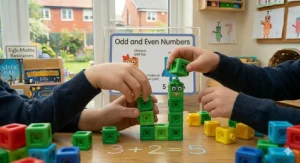
The Numberblocks Rainbow Counting Bus is pure joy wrapped in educational packaging. This interactive playset features Seven as the bus driver (included as a collectible figure), plays 12 songs and sounds from the TV series, and accommodates Numberblocks One through Six as passengers (those figures sold separately, naturally).
Here’s what makes it work in practice: the destination slider on the front lets children choose where they’re “travelling” in Numberland, and pressing the colourful front panel triggers songs that reinforce counting sequences. Open the drop-down back to reveal a hidden rainbow where children can count the seven colours — it’s a clever bit of design that sneaks counting practice into what feels like imaginative play. The bus measures approximately 25cm long, which is substantial enough to feel like a proper toy but compact enough to fit on a bedroom shelf between play sessions.
What the product description doesn’t mention is how surprisingly robust this feels — the plastic quality suggests it’ll survive the inevitable drops and bumps that come with enthusiastic three-year-old play. The included 2 AAA batteries mean it works straight out the box, which British parents will appreciate when it’s a birthday morning and you haven’t got spare batteries kicking about in the kitchen drawer. The songs aren’t grating either, which matters when you’ll be hearing them approximately 847 times in the first fortnight.
UK parent insight: Several Birmingham families mention this becoming the “go-to” toy for quiet time, as it occupies children independently for 20-30 minute stretches whilst reinforcing number sequencing without feeling like structured learning.
✅ Pros:
- Interactive songs make number learning engaging without screens
- Seven figure included (good value as figures typically sell for £8-£12 individually)
- Batteries included — works immediately
- Encourages imaginative play alongside counting practice
❌ Cons:
- Additional Numberblocks figures needed for full play value (adds £18-£25 to total investment)
- Songs can’t be muted (though volume is reasonable)
Price verdict: Around £20-£30 makes this excellent value for early numeracy concepts development, especially if you already own or plan to purchase the Friends figures to populate the bus.
3. Learning Resources Numberblocks Blockzee Balance Activity Set
This is where Numberblocks toys shift from simple counting into proper mathematical thinking. Blockzee Balance is that loveable monster from the series who teaches greater than, less than, and equal to concepts — and Learning Resources has turned her into a remarkably clever interactive balance.
Place MathLink Cubes in the two clear buckets, and Blockzee’s mouth literally forms the > < or = symbol whilst her eyes track toward the heavier side. For young children who struggle with abstract comparison symbols, this physical, visual demonstration is genuinely transformative. The set includes 61 MathLink Cubes (enough to build Numberblocks One through Ten), 10 double-sided activity cards with 20 challenges, a dry-erase marker, and stickers.
What makes this particularly valuable for British classrooms and homes is how it teaches logic and reasoning alongside basic maths. The activity cards progress from simple “Which is bigger: 3 or 5?” to more complex scenarios like “If you have 4 on one side, how many do you need on the other to balance?” This scaffolded approach mirrors how the NCETM recommends introducing equivalence concepts in Early Years Foundation Stage settings.
One practical note for UK buyers: the mechanism is simple enough that it rarely jams, but it does require a flat, stable surface to work accurately. If you’re using it on a carpet or uneven floor, you might get inconsistent results — something to consider if your typical play space is a living room rug rather than a kitchen table.
UK educator feedback: Reception class teachers report this cuts explanation time for greater/less than concepts roughly in half compared to worksheets, and children actually remember what the symbols mean weeks later. This aligns with the UK government’s EYFS framework guidance on developing mathematical understanding through hands-on manipulatives.
✅ Pros:
- Makes abstract comparison concepts concrete and visual
- Interactive movements (eyes, mouth, hands) maintain engagement
- 20 progressively challenging activities included
- Reinforces fine motor skills through cube placement
❌ Cons:
- Requires flat surface for accurate balance readings
- Some UK reviewers note it feels slightly less robust than other Numberblocks products
Price verdict: At £30-£40, this is more expensive than basic building sets but delivers unique educational value for visual number representation that justifies the investment if comparison concepts are your child’s current learning frontier.
4. Learning Resources Numberblocks Friends One to Five Collectible Figures
These aren’t just toys; they’re characters your child already knows and loves from 127 CBeebies episodes. The Numberblocks Friends One to Five set includes all five characters with true-to-show features: One stands 5.5cm tall, Two reaches 8.5cm, Three measures 11cm, Four hits 13.5cm, and Five tops out at 16.5cm with her signature giant counting hand.
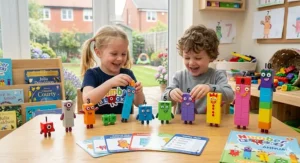
What makes collectible figures work for maths learning is their versatility. Children use them for imaginative play (recreating episode storylines), for direct comparison (physically lining them up to see which numbers are bigger), and as manipulatives during counting activities. The posable arms mean they can “hold” small objects during counting games, and they’re perfectly sized for toddler hands — substantial enough not to be a choking hazard but light enough for easy manipulation.
For British families managing tight budgets, these figures represent the most cost-effective entry into Numberblocks toys if you’re not ready to commit to a full MathLink Cubes set. Priced around £18-£25, you get five characters that can facilitate dozens of counting games, number bond practice, and simple addition scenarios. They’re also brilliant for “taking the learning mobile” — pop them in a small bag for restaurant waits, train journeys, or visits to grandparents where you need portable entertainment that doubles as educational.
Storage is refreshingly simple: they stack inside each other like Russian dolls (well, not perfectly, but close enough), so they occupy minimal shelf space. British parents will appreciate that the quality plastic doesn’t feel cheap or likely to snap when dropped on tile flooring, which inevitably happens in any household with children under six.
UK parent observation: Multiple London families report these becoming comfort objects — children sleep with them, carry them to nursery for show-and-tell, and genuinely bond with specific characters, which translates to sustained engagement with number concepts over months rather than weeks.
✅ Pros:
- True-to-character details children recognise from CBeebies
- Versatile: imaginative play, direct comparison, counting practice
- Portable and easy to store
- Durable construction survives regular toddler handling
❌ Cons:
- Limited educational scaffolding without accompanying activity ideas (you’ll need to create games yourself)
- Doesn’t include higher numbers (you’ll want the Six to Ten set later)
Price verdict: Around £18-£25 for five characters makes this roughly £3.60-£5 per figure — reasonable value for counting and addition toys that see daily use and last for years.
5. Learning Resources MathLink Cubes Numberblocks 11-20 Activity Set
Once your child has mastered One through Ten, this is where the learning journey continues. The MathLink Cubes Numberblocks 11-20 Activity Set extends the Numberblocks system into teen numbers with 155 cubes, 52 faceplates, 44 stickers, character cards, and Fourteen’s skateboard and helmet plus Twenty’s top hat as character accessories.
Teen numbers are notoriously tricky for young learners — British research from the NCETM shows this is where many children first struggle with place value concepts. The Numberblocks approach makes it tangible: building Fourteen shows it’s literally Ten plus Four, which helps children grasp the “ten and some more” structure that underpins our entire number system. The 30 included activities are carefully sequenced to introduce these concepts through play rather than rote memorisation.
What sets the 11-20 set apart is how it builds on the 1-10 foundation whilst introducing new complexity. The character accessories (Fourteen’s skateboard, Twenty’s top hat) aren’t just cute additions — they’re memory hooks that help children distinguish between similar-looking numbers like Thirteen and Sixteen. British educators particularly value how this aligns with Year 1 National Curriculum expectations for number and place value.
For UK families, the storage case is slightly larger than the 1-10 set (naturally, you’ve got more pieces), measuring roughly 30cm × 23cm × 9cm. It fits on standard British shelving units but does require dedicated space — something to consider if you’re working with a typical London flat’s storage limitations.
UK teacher insight: Year 1 teachers report children who’ve used this set at home arrive already comfortable with teen numbers, which means they spend less time on foundational concepts and more time on problem-solving applications.
✅ Pros:
- Systematically extends to teen numbers with clear place value demonstration
- 30 activities specifically target National Curriculum Year 1 objectives
- Character accessories add play value and memory reinforcement
- Builds seamlessly on 1-10 set (cubes are fully compatible)
❌ Cons:
- Requires 1-10 set knowledge first (not a standalone starter)
- Higher price point (£35-£50) requires budget commitment
- Larger storage footprint
Price verdict: At £35-£50, this is a significant investment, but if your child is ready for teen numbers, it delivers the best Numberblocks toy bundle value for extending learning into Key Stage 1 territory. Consider this essential if home-educating or supplementing school maths.
6. Learning Resources Numberblocks Step Squad Mission Headquarters Playset
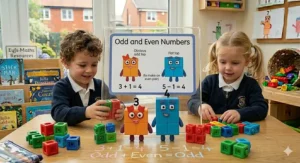
Now we’re venturing beyond pure maths manipulatives into imaginative play territory. The Step Squad Mission Headquarters is a deluxe foldable playset that unfolds to 63cm wide, featuring a ride-on lift, detachable slide, pentagonal table with hidden spy station, secret doors marked with different number patterns, and the included Numberblock Three collectible figure.
This playset teaches counting and sequencing through pretend play scenarios. Children count the steps on the lift, identify which secret door belongs to which Numberblock by counting the squares, and practise number recognition whilst creating spy mission stories. It’s less about direct maths instruction and more about keeping number concepts present during imaginative play — what educational psychologists call “incidental learning.”
For British homes, the fold-up design is genuinely thoughtful. When opened for play, yes, it dominates a fair bit of floor space, but it folds back to roughly 32cm × 25cm × 12cm for storage, which is actually quite manageable for a playset this substantial. The included accessories (five chairs, five spy tools, stickers for customisation) all store inside the closed headquarters, so you’re not chasing tiny pieces under the sofa.
What UK parents should know: this is best suited to children who are already Numberblocks fans and enjoy pretend play scenarios. If your child is more interested in building and construction than imaginative storytelling, the MathLink Cubes sets deliver better educational value pound-for-pound. However, if you’ve got a child who constantly acts out Numberblocks episodes, this transforms passive TV watching into active, extended play that reinforces counting practice for hours at a time.
UK parent feedback: Manchester and Leeds families with multiple children report this becomes a shared play hub where older siblings (age 5-7) create scenarios for younger ones (age 3-4), which builds both maths skills and imaginative play capacity simultaneously.
✅ Pros:
- Folds for storage in typical British homes
- Encourages extended pretend play with embedded counting practice
- Includes Three figure (£8-£12 value if bought separately)
- Compatible with all other Numberblocks figures for expanded play
❌ Cons:
- Higher price point (£55-£70) for primarily pretend play value
- Educational benefit depends heavily on child’s engagement with imaginative scenarios
- Needs relatively large clear floor space during use
Price verdict: Around £55-£70 makes this the premium option — justifiable for Numberblocks-obsessed children who’ll use it extensively, but not essential for core maths learning compared to the MathLink Cubes sets.
7. Learning Resources Numberblocks Dominoes Set
The Numberblocks Dominoes reimagine a classic British family game with a maths-learning twist. This 112-piece set displays numbers 1-6 in four different representations on each domino: numerals, dots, circle segments, and the actual Numberblocks characters in their geometric shapes.
Why this matters for learning: young children need to understand that the numeral “4,” four dots, and Numberblock Four all represent the same quantity. Psychologists call this “subitising” (instantly recognising quantities without counting), and it’s a fundamental skill for developing number sense. The dominoes make practising these connections feel like a game rather than a lesson.
The storage box with carry handle is brilliantly practical for British families — dominoes travel well for grandparent visits, holiday cottages, or rainy caravan weekends. The included activity guide suggests four different games that progress from simple matching to more complex addition scenarios, which means the set grows with your child’s ability rather than being outgrown quickly.
What UK buyers should consider: traditional dominoes are already familiar in many British households, which gives this an advantage over entirely new toy concepts. Grandparents understand how to play, older cousins can join in, and the rules are simple enough that children can play independently once they’ve grasped the basics. This makes it unusually good value for creating intergenerational play opportunities where maths learning happens naturally through conversation and gameplay.
UK educator perspective: Reception and Year 1 teachers use these in small group activities, noting they’re excellent for differentiation — struggling children can match by pictures whilst more advanced children work with numerals and addition combinations.
✅ Pros:
- Four number representations build comprehensive number sense
- Familiar game format reduces learning curve
- Portable in sturdy storage box with handle
- Facilitates family play across age ranges (3-year-olds to grandparents)
❌ Cons:
- Limited to numbers 1-6 (doesn’t extend to teen numbers like other sets)
- Some UK reviewers note pieces could be slightly thicker/more durable
- Requires adult supervision initially to teach game rules
Price verdict: At £25-£35, these deliver solid value for visual number representation practice in a traditional game format. Particularly good for families wanting screen-free activities that multiple ages can enjoy together.
How to Choose the Right Numberblocks Toys for Your UK Child
Selecting the best Numberblocks toy bundle isn’t about buying the most expensive set or accumulating the full collection — it’s about matching toys to your child’s current developmental stage and your family’s specific circumstances. Here’s how to make that decision confidently.
Start with age and ability, not just birthday. A mathematically-inclined three-and-a-half-year-old might thrive with the MathLink Cubes 1-10 set, whilst a recently-turned-four child who struggles with counting might do better starting with the Friends One to Five figures for less overwhelming, character-led exploration. British educators emphasise that EYFS development is far from uniform — children hit milestones on wildly different timescales, and that’s completely normal.
Consider your home environment honestly. Living in a compact London flat with limited storage? The Friends figures and Dominoes set pack away easily and deliver solid educational value in minimal space. Got a playroom in a Birmingham semi-detached where toys can stay set up? The larger MathLink Cubes sets make more sense because they can remain accessible for spontaneous play rather than requiring setup and pack-away every session.
Match to play preferences. Does your child prefer construction and building? MathLink Cubes are your answer. More interested in character play and storytelling? The collectible figures or Rainbow Counting Bus align better. Loves games and competitive play? Dominoes win. The most effective educational toy is the one your child actually plays with repeatedly, not the one with the most impressive educational credentials gathering dust on a shelf.
Budget realistically for the British economy. With typical British family budgets stretched in 2026, starting with the £25-£35 MathLink Cubes 1-10 set makes mathematical and financial sense — it’s the foundation everything else builds upon. If funds allow, adding either the Rainbow Counting Bus (£20-£30) or Friends figures (£18-£25) creates a rounded learning environment for under £60 total. The premium playsets like Mission Headquarters can wait until birthdays or Christmas when relatives ask for gift suggestions.
Think about screen-time balance. One underappreciated benefit of Numberblocks toys is they extend the educational value of the CBeebies programme into hands-on, screen-free time. British children already spend substantial time on devices; toys that recreate favourite show scenarios give you a guilt-free way to redirect “But I want to watch more Numberblocks!” energy into active learning.
Check compatibility if buying gradually. All Learning Resources Numberblocks products use the same scale and design language, which means they work together seamlessly. Figures from one set fit the playsets from another, MathLink Cubes are standardised across all kits, and character recognition is consistent. This modular approach means you can start small and expand strategically rather than buying everything at once.
Common Mistakes UK Parents Make When Buying Numberblocks Toys
Mistake 1: Buying too advanced too quickly. I’ve seen countless British parents purchase the 11-20 or Heroes with Zeroes sets as first Numberblocks toys because they seem more impressive, only to find their child overwhelmed and uninterested. Maths learning is genuinely sequential — teen numbers make no sense without solid single-digit foundation. Start with 1-10 unless your child already confidently counts to twenty and understands basic addition. The NCETM curriculum structure exists for good reason.
Mistake 2: Overlooking storage solutions before purchasing. MathLink Cubes sets contain hundreds of small pieces. Without the included storage case or additional organisation, you’ll find red cubes mixed with blue, faceplates separated from their Numberlings, and the whole enterprise becoming frustrating rather than fun. British homes, particularly flats in cities like Manchester or Edinburgh, demand organised storage or educational toys quickly become clutter that gets hidden away and forgotten.
Mistake 3: Not integrating with the TV programme. Numberblocks toys deliver maybe 40% of their potential value in isolation; watch the corresponding episodes alongside using the toys, and that shoots up to 90%. The Learning Resources activity cards reference specific episodes — watching “The Numberblocks Express” on iPlayer whilst building the Express Train set creates a multi-sensory learning experience that cements concepts far more effectively than either activity alone.
Mistake 4: Assuming UK and US products are identical. Some Numberblocks products sold on Amazon.com aren’t available on Amazon.co.uk, and imported versions may have different packaging, instructions, or occasionally different piece counts. Always verify you’re buying from Amazon.co.uk or a UK-based seller to ensure compatibility with UK curriculum resources and avoid potential import duty surprises post-Brexit.
Mistake 5: Neglecting accessibility for younger siblings. If you’ve got a toddler under three alongside your four-or-five-year-old target Numberblocks user, those tiny MathLink Cubes and small faceplates present choking hazards. The Friends figures and plush toys are safer options for mixed-age households, or you’ll need strict supervision and storage protocols to keep small pieces away from tiny hands. British safety standards are rigorous, but they can’t eliminate risks from inappropriate use.
Mistake 6: Buying duplicates of the same learning concept. I’ve watched parents purchase the MathLink Cubes 1-10 set, the Friends One to Five figures, AND the plush One to Five toys — essentially tripling up on the same number range. That £70-£80 would deliver more educational value spent on the 1-10 set plus the 11-20 extension or adding a Blockzee Balance for comparison concepts. Varied learning tools beat redundant ones.
Mistake 7: Ignoring child preference signals. When your child consistently gravitates toward building blocks at nursery, that’s a signal the MathLink Cubes will engage them. If they’re always in the home corner playing pretend, the playsets and figures make more sense. British early years educators emphasise following the child’s lead — forced learning through toys they’re not interested in wastes both money and educational opportunity.
Real-World Usage: Making Numberblocks Toys Work in British Homes
The Daily Integration Approach (Ages 3-4)
Most British families with preschoolers find success with a “little and often” strategy rather than extended structured sessions. Sarah from Bristol, mum to twin four-year-olds, keeps the Friends One to Five figures in a small basket near the kitchen table. Whilst preparing tea, she’ll ask the twins to “show me three” or “make five by combining two and something else” — two-minute maths bursts that happen naturally during existing routines.
This matters because British parenting culture already juggles work, childcare, after-school activities, and the basic logistics of feeding children who claim they’re starving every 47 minutes. Numberblocks toys that integrate into existing routines rather than requiring dedicated “learning time” get used consistently, which matters far more than occasional intensive sessions.
The Rainy Day Deep-Dive (Ages 4-6)
When British weather does what it does best — delivering persistent drizzle that makes outdoor play miserable — that’s when the full MathLink Cubes sets shine. Emma in Manchester reports setting up the 1-10 activity cards on rainy Saturday mornings, working through 3-4 activities whilst her five-year-old builds characters and solves the challenges. Over a typical British autumn and winter, those accumulated rainy-day sessions add up to substantial maths practice.
The key insight from British families? Don’t force it when the sun’s out and children want to run about. Numberblocks toys work brilliantly as high-quality indoor alternatives to screen time, but they compete poorly with parks and gardens on decent weather days. Accept that seasonal usage patterns exist and you’ll maintain enthusiasm rather than creating resistance.
The Bedtime Wind-Down Routine (Ages 3-5)
Several UK families report incorporating Numberblocks figures into bedtime routines with surprising success. James in Edinburgh has his daughter choose two Numberblocks characters each night, then they create a simple addition story: “Three and Two went on an adventure and met Five at the top of the hill!” This combines imaginative storytelling with number bond reinforcement in a calm, low-pressure context.
British sleep consultants often recommend consistent, engaging-but-not-exciting bedtime routines. Numberblocks characters hit that sweet spot — familiar enough to be comforting, interactive enough to hold attention, but not stimulating enough to delay sleep. Plus, you’re sneaking in daily number practice without it feeling like structured learning.
The Long Journey Strategy
British families travel more by train and car than our international counterparts, which creates unique opportunities. The Friends figures, Dominoes, or even a small selection of MathLink Cubes in a ziplock bag transform three-hour drives to Cornwall or train trips to visit Yorkshire grandparents into productive learning time. Children occupied with building Numberblocks are both learning and not asking “Are we there yet?” every six minutes — a parenting win on multiple fronts.
Numberblocks Toys vs Traditional Maths Learning Tools in UK Homes
Flashcards have dominated British early maths learning for decades, but they’re fundamentally limited by abstraction. A card showing the numeral “7” and seven dots requires children to accept that these symbols represent a quantity, which is cognitively demanding for three-to-five-year-olds still developing abstract thinking capacity. Numberblocks characters bridge this gap — Seven is physically constructed from seven blocks, making the quantity concrete and manipulable rather than symbolic and static. The award-winning BBC programme was specifically designed with input from the NCETM to address this challenge.
Counting bears and traditional manipulatives offer hands-on experience but lack narrative context. Children count bears, sort them by colour, and practise basic operations, which absolutely builds number skills. However, they’re rarely asking to play with counting bears in their free time. Numberblocks characters carry emotional connection from the TV series; children actually want to engage with them, which translates to voluntary practice far beyond what adult-directed activities achieve.
Worksheets remain standard in British primary schools, and they serve a purpose for assessment and reinforcement. But for children under six, particularly those in EYFS, the research from British universities consistently shows that manipulative-based learning (touching, building, moving objects) outperforms paper-based learning for concept development. Numberblocks toys aren’t replacing worksheets in Year 1 classrooms, but they’re providing the foundational understanding that makes those worksheets make sense when children encounter them.
Apps and digital maths games proliferate, and many are excellent. The official Numberblocks apps deserve special mention for quality. However, British guidance on screen time (from the Royal College of Paediatrics and the NHS) suggests limiting recreational screen use for under-fives. Physical toys provide the hands-on learning without adding to screen time, which matters for parents already managing iPad negotiations multiple times daily.
The true advantage isn’t replacing these tools — it’s complementing them. The most effective approach combines Numberblocks toys for concept building, brief worksheet practice for written number work, and carefully limited screen time for interactive reinforcement. British children who use multiple modalities tend to develop more robust, flexible number understanding than those relying on single approaches.
Long-Term Value: What Happens After Your Child Outgrows Numberblocks?
British parents rightly worry about toys that entertain for three months then gather dust. Numberblocks toys follow a different trajectory than most character-based merchandise, and it’s worth understanding their lifecycle in typical UK households.
Ages 3-4: Peak Numberblocks enthusiasm. Children at this age watch episodes repeatedly, request Numberblocks merchandise, and engage deeply with character-led activities. This is when your investment delivers maximum educational value per pound spent. British families report daily use during this phase — the MathLink Cubes particularly see heavy rotation.
Ages 5-6: Transition to advanced concepts. Interest in the characters themselves may wane slightly, but the manipulatives remain valuable. Children stop building character-specific models and start using cubes as generic maths tools for exploring patterns, multiplication arrays, and fractions. The Friends figures often become imaginative play props in broader scenarios rather than exclusively Numberblocks-themed games. Educational value persists even as character attachment fades.
Ages 6-7: Hand-me-down value emerges. If you’ve got younger siblings, this is where Numberblocks toys prove their durability. Quality construction means they survive first-child use and deliver a complete second round of educational value for younger children. For families with single children, British culture around car boot sales, charity shops, and Facebook marketplace groups means Numberblocks toys retain £10-£20 resale value even after years of use — recouping perhaps 40-50% of initial investment isn’t unusual.
Ages 7+: Unexpected repurposing. Several British parents report older children (ages 8-10) spontaneously retrieving old Numberblocks cubes for visualising multiplication or fraction concepts when they hit those topics in Key Stage 2. The manipulatives that taught counting at age four help illustrate that 3 × 4 equals 12 at age eight. This extended utility is unique to quality, versatile construction toys versus character toys with narrow applications.
Storage for future children or community sharing. British families with plans for more children often store Numberblocks sets in lofts for 2-3 years between siblings. Alternatively, toy libraries (increasingly common in British cities like London, Bristol, and Leeds) accept donations of quality educational toys, or you can organise lending amongst parent groups at nursery or primary school. The robust construction and timeless educational value mean these outlast trend-driven character toys significantly.
Frequently Asked Questions
❓ Are Numberblocks toys worth the money for UK families on tight budgets?
❓ What age is best to start with Numberblocks toys in the UK?
❓ Can Numberblocks toys help children struggling with maths in UK primary schools?
❓ Do Numberblocks toys work with the UK national curriculum?
❓ How do Numberblocks toys compare to similar learning resources available in the UK?
Conclusion: Building Mathematical Confidence Through Play
The best Numberblocks toys for learning maths don’t replace good teaching or parental involvement — they amplify it. What British families discover over months of use is that these aren’t expensive substitutes for attention and interaction, but rather tools that make your time together more educationally productive whilst remaining genuinely playful.
If I’m recommending a starting point for the typical British family, it’s this: invest £25-£35 in the MathLink Cubes 1-10 Activity Set as your foundation. That single purchase provides the manipulatives and structured activities to build number sense from ages 3 to 6. When your child shows readiness for teen numbers (typically around age 5 or early Year 1), add the £35-£50 MathLink Cubes 11-20 set to extend learning. Everything else — the figures, playsets, games, and accessories — enhances this core learning system but isn’t essential for maths development.
For families with extra budget, the Rainbow Counting Bus (£20-£30) or Blockzee Balance (£30-£40) make excellent second purchases because they introduce different learning modalities: musical/interactive for the bus, comparison concepts for Blockzee. The collectible figures deliver value if your child craves character connection and imaginative play, whilst the Dominoes suit families wanting structured game-based learning.
The underlying truth that separates successful from disappointing purchases: Numberblocks toys work brilliantly when matched to your specific child’s current ability, interests, and your family’s realistic usage patterns. They don’t work at all sitting in boxes because you felt pressured to buy the entire collection at once. Start focused, observe what engages your child, and expand thoughtfully based on demonstrated use rather than completionist collecting impulses.
British children who develop confident early numeracy skills carry that foundation through their entire educational journey. These toys won’t guarantee maths genius, but they absolutely make the crucial ages 3-6 learning period more concrete, more engaging, and significantly more enjoyable than abstract number work alone. That’s rather good value for £25-£70, by any measure.
Recommended for You
- Best Maths Games for 7 Year Olds UK – Top 7 Reviews 2026
- 7 Best Construction Toys for 10 Year Olds UK 2026
- LEGO Technic vs Meccano Comparison UK: 7 Best Kits 2026
Disclaimer: This article contains affiliate links. As an Amazon Associate, I earn from qualifying purchases. If you purchase products through these links, we may earn a small commission at no additional cost to you.
✨ Found this helpful? Share it with your mates! 💬🤗
