
In This Article
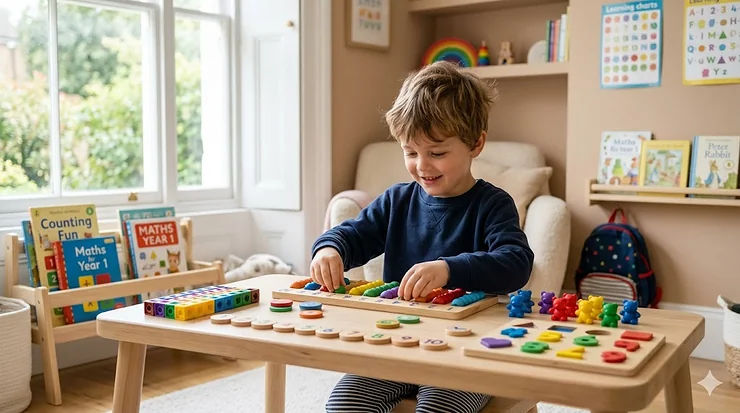
Five is that magical age where abstract mathematical concepts suddenly click into place—provided your child has the right tools. At this stage, they’re transitioning from simple rote counting to understanding number relationships, addition, subtraction, and even the beginnings of multiplication. The difference between a child who struggles with maths and one who thrives often comes down to having quality tactile number learning resources during these formative years.
What most parents overlook is that British five-year-olds are entering Year 1, where they’re expected to count reliably to 100, understand place value, and work with number bonds to 20. That’s a significant leap from Reception. The concrete maths resources you choose now directly impact whether your child meets these foundation stage numeracy milestones with confidence or anxiety. According to the UK Government’s Early Years Foundation Stage framework, hands-on mathematical experiences are crucial for developing number sense at this age.
This guide features seven rigorously evaluated counting toys for 5 year olds, each selected for availability on Amazon.co.uk, compatibility with the UK curriculum, and proven effectiveness in British homes and classrooms. You’ll find everything from traditional manipulatives to innovative products inspired by CBeebies’ Numberblocks—all with the expert commentary and practical advice that Amazon product listings simply cannot provide.
Quick Comparison: Top Counting Toys at a Glance
| Product | Best For | Price Range | Key Strength | UK Curriculum Fit |
|---|---|---|---|---|
| Learning Resources MathLink Cubes Numberblocks 1-10 | Numberblocks fans | £18-£25 | TV show integration | Excellent for Year 1 |
| Orchard Toys Counting Mountain | Game-based learning | £12-£16 | Makes addition fun | Foundation to Year 2 |
| Melissa & Doug Wooden Abacus | Visual learners | £24-£32 | Classic, durable | Reception to Year 3 |
| Learning Resources Baby Bear Counters | Sorting & patterns | £8-£14 | Versatile manipulative | Early Years onwards |
| Three Bear Family Rainbow Set | Multi-size comparison | £15-£22 | Teaches magnitude | Foundation Stage |
| Jaques of London Wooden Abacus | Premium quality | £28-£38 | British heritage | All primary years |
| Orchard Toys Number Bears Game | Number bonds practice | £14-£19 | Social maths learning | Year 1-2 focus |
💬 Just one click — help others make better buying decisions too! 😊
Top 7 Counting Toys for 5 Year Olds: Expert Analysis
1. Learning Resources MathLink Cubes Numberblocks 1-10 Activity Set
The Learning Resources MathLink Cubes Numberblocks 1-10 Activity Set transforms the beloved CBeebies characters into hands-on maths manipulatives. This comprehensive kit includes 100 MathLink cubes in authentic Numberblocks colours, 59 character faceplates, 54 stickers, 11 numberlings, and 15 double-sided activity cards with 30 curriculum-linked activities.
What makes this set stand out is how it bridges screen time and hands-on learning. If your five-year-old already knows the Numberblocks characters from telly, they’ll instantly recognise the number shapes and can physically build Numberblocks One through Ten. The cubes connect securely—crucial when little hands are constructing Number Seven for the hundredth time—and the faceplates snap on without frustration. In practice, this means your child isn’t just watching maths happen on screen; they’re manipulating concrete objects that represent abstract numerical concepts.
UK parents particularly appreciate that the activity cards align brilliantly with Year 1 objectives. Each activity ties to specific Numberblocks episodes, so you can reinforce what they’ve watched with tactile exploration. The write-and-wipe cards are also rather handy for rainy British afternoons when you need an engaging indoor activity that actually teaches something useful.
British customers on Amazon.co.uk consistently praise the product’s durability—one reviewer mentioned their set surviving two years of enthusiastic play, including being stepped on, thrown in toy boxes, and subjected to the general chaos of family life. The only occasional complaint concerns the stickers, which some children apply incorrectly (pro tip: adults should help with initial setup).
Pros:
✅ Official Numberblocks licensing means instant recognition and engagement
✅ 30 structured activities keep learning fresh and curriculum-aligned
✅ Durable construction withstands typical five-year-old enthusiasm
Cons:
❌ Stickers require careful application (adult supervision recommended)
❌ Higher price point than generic manipulative cubes
Around £18-£25 depending on Amazon.co.uk deals, this represents solid value for a comprehensive early years mathematics resource that grows with your child through foundation stage numeracy and beyond.
2. Orchard Toys Counting Mountain Game
The Orchard Toys Counting Mountain Game cleverly disguises maths practice as an adventure race to the summit. Players turn over footprint cards, add the numbers shown, and move their climber up the 3D mountain accordingly—but watch out for those pesky yeti cards that send everyone tumbling back down!
This British-made game excels at making addition feel less like work and more like play. What the product listing won’t tell you is how this transforms the typical “maths homework battle” that plagues many British households. When your Year 1 child needs to practise sums to 10, pulling out this game generates genuine enthusiasm rather than groans. The 3D mountain element adds a physical dimension that pure worksheet practice simply cannot match.
Orchard Toys, a trusted British brand, has designed this specifically for UK curriculum needs. The game naturally reinforces counting from 1-10 and simple addition whilst also teaching children to cope with setbacks (those yeti cards) and celebrate others’ successes—surprisingly valuable social skills for this age group.
The compact box size is rather considerate for British homes where storage space comes at a premium. Unlike bulkier educational toys that dominate playroom shelves, this tucks neatly away yet remains accessible for regular use. Setup takes mere minutes, and games typically last 15-20 minutes—perfect for the typical five-year-old’s attention span.
UK reviewers frequently mention using this game with siblings of different ages, as the simple rules allow Reception-age children to participate alongside Year 2 students. One Cambridge parent noted their child’s marked improvement in mental addition after just a few weeks of regular play.
Pros:
✅ Makes addition practice genuinely fun rather than tedious
✅ British-designed for UK curriculum alignment
✅ Compact storage suitable for smaller British homes
Cons:
❌ Limited to addition practice (doesn’t cover subtraction or other operations)
❌ 3D mountain assembly required each time (though children often enjoy this)
Priced around £12-£16 on Amazon.co.uk, this represents exceptional value for a game that’ll see regular use throughout Year 1 and beyond. It’s also frequently Prime-eligible for next-day delivery.
3. Melissa & Doug Wooden Abacus
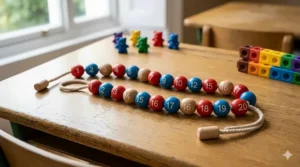
The Melissa & Doug Wooden Abacus is refreshingly traditional in a world of flashy electronic toys. This classic counting frame features 100 brightly coloured wooden beads arranged in 10 rows of 10, mounted on a sturdy hardwood frame that’ll survive years of enthusiastic use.
Don’t be fooled by its simplicity—this abacus is a powerhouse for teaching place value, the concept British five-year-olds often find trickiest when entering Year 1. By physically sliding beads into groups of ten, children develop a visceral understanding of how our base-ten number system actually works. This concrete experience makes abstract concepts like “37 = 3 tens and 7 ones” suddenly click in ways that written explanations rarely achieve.
What most Amazon listings won’t mention is how this tool adapts as your child’s skills develop. Initially, it’s perfect for simple counting and one-to-one correspondence. By mid-Year 1, it supports addition and subtraction within 20. Come Year 2, it’s brilliant for skip counting, early multiplication, and understanding number patterns. That longevity justifies the higher price point—you’re essentially buying a single tool that serves from Reception through Key Stage 1.
British parents appreciate the robust construction, which withstands the inevitable drops, crashes, and general rough treatment that accompanies childhood. One London reviewer mentioned their abacus surviving three children over eight years, still looking presentable enough to pass on to grandchildren. The smooth beads slide easily—crucial when you’re dealing with developing fine motor skills—but they don’t slide so freely that they lose position during use.
The only frustration for UK buyers is that it’s manufactured in China despite being a Western brand. Some parents would prefer British-made educational toys, though at this price point, domestic manufacturing is increasingly rare.
Pros:
✅ Exceptional durability lasts through multiple children
✅ Grows with your child from Reception through Year 3
✅ Teaches place value concepts crucial for UK curriculum
Cons:
❌ No guided activities included (parents must create their own lessons)
❌ Manufactured overseas despite Western branding
Expect to pay £24-£32 on Amazon.co.uk. Whilst pricier than some alternatives, the multi-year usability and indestructible quality make this a genuine investment rather than a disposable toy.
4. Learning Resources Baby Bear Counters (102 Pieces)
The Learning Resources Baby Bear Counters might seem simple—just 102 small plastic bears in six colours—but don’t underestimate their educational punch. These cheerful manipulatives are workhorses for teaching sorting, patterns, counting, basic operations, and probability concepts that five-year-olds need to master.
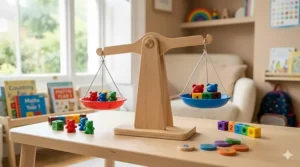
At approximately 2.5cm tall, these bears are perfectly sized for five-year-old hands whilst being large enough to avoid choking hazards (though still rated 3+ due to small parts). Each bear weighs exactly 4 grams, which matters more than you’d think—this proportional weighting makes them brilliant for introducing balance scales and early measurement concepts, activities specifically mentioned in the UK National Curriculum for mathematics.
What transforms these from “just plastic bears” into genuine early years mathematics resources is their versatility. Use them for creating AB colour patterns (red-blue-red-blue). Practise addition by combining groups (5 red bears + 3 yellow bears = 8 bears total). Introduce early probability by having children predict which colour they’ll draw from a bag. Teach greater than/less than by comparing group sizes. The included activity guide provides dozens of ideas, but creative parents and teachers continuously discover new applications.
British educators particularly value these for home-school connections. Many primary schools use similar counters in Reception and Year 1, so having a set at home allows children to replicate classroom activities—especially valuable during those uncertain times when home learning becomes necessary. They’re also remarkably affordable, making quality maths manipulatives accessible regardless of household budget.
The storage bucket is rather thoughtful, preventing the inevitable “102 bears scattered across the lounge” scenario. Though be warned: that distinctive rattle sound when shaking the bucket is apparently irresistible to five-year-olds.
Pros:
✅ Exceptional versatility supports dozens of different maths concepts
✅ Proportional weighting enables balance activities
✅ Budget-friendly price makes quality manipulatives accessible
Cons:
❌ No structured curriculum included (requires parent/teacher creativity)
❌ Small parts mean constant supervision for younger siblings
At just £8-£14 on Amazon.co.uk, these represent perhaps the best value-for-money in early years mathematics resources. They’re frequently bundled with sorting bowls or tweezers for extended learning opportunities.
5. Three Bear Family Rainbow Counter Set (96 Pieces)
The Three Bear Family Rainbow Counter Set takes the concept of counting bears up a notch by including three different sizes—24 papa bears, 24 mama bears, and 48 baby bears—all in six vibrant colours. This size variation transforms basic counting into lessons about magnitude, comparison, and classification that align perfectly with foundation stage numeracy objectives.
Where the product description falls short is explaining why size variation matters pedagogically. When your five-year-old physically handles a papa bear versus a baby bear, they’re experiencing size relationships in three dimensions. This concrete experience underpins understanding of concepts like “greater than” and “less than” far more effectively than abstract symbols on worksheets. The bears are also proportionally weighted—papa bears genuinely weigh more than baby bears—which introduces measurement concepts through natural discovery.
British parents often use these for creating complex sorting and classification activities. “Sort by colour,” is the obvious starting point, but five-year-olds ready for more challenge can tackle “sort by size within each colour group” or “create a pattern using colour AND size.” These multi-attribute sorting tasks develop logical thinking skills that transfer well beyond mathematics into general problem-solving.
The rainbow colour scheme—red, orange, yellow, green, blue, and purple—conveniently matches colour terminology used in British early years settings. Some cheaper imported sets use non-standard colour names that confuse rather than help. This attention to detail matters when you’re reinforcing vocabulary alongside numeracy skills.
Storage remains a consideration with 96 individual pieces, though the included plastic container keeps bears reasonably contained. Pro tip from a Manchester parent: photograph the bears sorted by colour and size, then challenge your child to recreate the pattern—brilliant for developing visual memory alongside maths skills.
Pros:
✅ Three sizes teach magnitude and comparison concepts
✅ Proportional weighting enables balance and measurement activities
✅ Sufficient quantity for group activities or multiple children
Cons:
❌ More pieces mean more potential for loss (keep that storage container handy)
❌ Requires slightly more adult guidance than simpler single-size counters
Priced £15-£22 on Amazon.co.uk, this sits in the mid-range but delivers complexity and learning depth that justifies the cost compared to basic counters.
6. Jaques of London Wooden Abacus
The Jaques of London Wooden Abacus represents traditional British craftsmanship applied to educational toys. Jaques of London, established in 1795, brings over two centuries of toy-making expertise to this classic counting frame—and the quality difference is immediately apparent when you handle it.
What distinguishes this premium abacus from budget alternatives is the attention to detail. The wooden beads are flawlessly smooth, hand-finished to eliminate any rough edges that might snag developing fingers. The hardwood frame features proper joinery rather than cheap glued corners, ensuring it remains square and sturdy even after years of use. The metal rods are stainless steel rather than cheaper metals that might bend or rust in damp British conditions—a consideration often overlooked in imported alternatives.
For British families seeking heirloom-quality educational resources, this abacus represents that increasingly rare category of “buy once, use for decades.” Multiple UK reviewers mention passing these down through generations, with grandparents using them to teach parents who now use them with their own children. That longevity transforms the higher upfront cost into remarkable value per year of use.
The classic 10-row, 10-bead configuration remains ideal for teaching British curriculum concepts. Each row clearly represents ten, making place value lessons intuitive. The colour coding follows a consistent pattern that helps children recognise number patterns—fives are typically mid-row, tens complete each row—supporting skip counting and early multiplication readiness.
Jaques of London packaging is notably superior, arriving in attractive boxes suitable for gift-giving without additional wrapping. Rather considerate for birthdays or Christmas presents where presentation matters.
Pros:
✅ Exceptional build quality ensures multi-generational use
✅ British heritage brand with quality standards
✅ Premium materials withstand damp UK climate
Cons:
❌ Significantly higher price point than basic abacuses
❌ No included activities (assumes traditional use knowledge)
Expect £28-£38 on Amazon.co.uk—premium pricing for premium quality. For families prioritising durability and traditional British craftsmanship, this justifies every penny.
7. Orchard Toys Number Bears Game
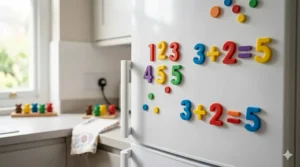
The Orchard Toys Number Bears Game specifically targets number bonds to 20—one of the key objectives for British children in Year 1. Players collect bears to make specific numbers, developing fluency with different combinations that create the same total (e.g., 7+3=10, 6+4=10, 5+5=10).
This game brilliantly addresses a common struggle point in UK primary mathematics. Number bonds are fundamental to mental arithmetic, yet many children find them tedious to memorise through traditional methods. By embedding number bond practice within an engaging game format, Orchard Toys has created something children genuinely want to play rather than endure. One Birmingham teacher mentioned using this during wet break times, with children queuing to play—hardly typical behaviour for maths practice!
The game mechanics encourage strategic thinking beyond simple calculation. Players must consider which bears to collect based on what numbers they’re building toward, introducing probability and decision-making elements. This mirrors the type of mathematical reasoning valued in UK curriculum progressions, where process matters as much as correct answers.
Setup is straightforward, games progress at a decent pace (typically 15-20 minutes), and the rules accommodate 2-4 players—perfect for siblings or playdates. The bear theme maintains engagement with five-year-olds who might resist more obviously “educational” materials. As one Surrey parent noted, “My daughter thinks she’s just playing a game. I know she’s memorising number bonds. Everyone wins.”
The cards and bears are durable cardboard and plastic respectively, surviving typical classroom abuse. Orchard Toys products generally withstand British schools’ usage patterns, which is rather more rigorous testing than most toys ever face.
Pros:
✅ Specifically targets number bonds to 20 (Year 1 objective)
✅ Game format makes repetitive practice engaging
✅ Suitable for mixed-ability groups or sibling play
Cons:
❌ Focused scope (excellent for number bonds, less versatile overall)
❌ Requires 2+ players (not ideal for only children or independent practice)
Priced around £14-£19 on Amazon.co.uk, this fills a specific niche brilliantly. For children struggling with number bonds or parents seeking alternatives to worksheets, it’s worth every penny.
How Counting Toys Transform Year 1 Maths Anxiety
Perhaps the most significant value these concrete maths resources provide isn’t immediately obvious from product specifications—it’s their ability to eliminate the anxiety many British children develop around mathematics during Year 1. The jump from Reception’s play-based learning to Year 1’s more structured lessons can be jarring. Suddenly, children face formal assessments, expected progress benchmarks, and the pressure of keeping pace with classmates.
Quality counting toys for 5 year olds bridge this transition by making abstract concepts tangible. When a child can physically build the number 15 using Numberblocks cubes, move fifteen beads on an abacus, or count out fifteen bears, the number becomes real rather than merely a symbol on paper. This concrete understanding forms the foundation upon which all later mathematics builds. According to research published by the National Centre for Excellence in the Teaching of Mathematics, manipulative-based learning significantly improves number sense compared to worksheet-only approaches.
Consider a typical Year 1 scenario: your child comes home frustrated because they “don’t understand” place value. With an abacus or counting beads, you can physically demonstrate how 23 means “2 groups of ten and 3 ones.” They can slide two full rows (20 beads) and three additional beads (3 ones), seeing and feeling the concept rather than just hearing abstract explanations. This multi-sensory learning approach works particularly well for British children who may struggle with purely verbal or written instruction.
The social aspect also matters more than parents often realise. Games like Counting Mountain or Number Bears transform solitary maths practice into family time. Rather than a child working alone through homework whilst parents cook dinner, everyone gathers round for a game that happens to teach addition, subtraction, or number bonds. This shifts the emotional association with mathematics from “difficult solo work” to “fun family activity”—a subtle but powerful psychological difference that can influence mathematical confidence for years.
British educators increasingly recognise that mathematical anxiety often starts young and compounds over time. A five-year-old who struggles with early concepts but receives no engaging alternative methods may develop lasting beliefs like “I’m bad at maths” or “maths is boring.” Quality manipulatives provide that crucial alternative approach, offering multiple pathways to understanding that accommodate different learning styles and paces.
Common Mistakes British Parents Make When Choosing Counting Toys
Mistake 1: Prioritising “Educational” Labels Over Actual Learning Value
Many British parents gravitate toward products prominently labelled “educational” without examining what learning actually occurs. A flashy electronic toy that counts aloud when buttons are pressed might seem educational, but passive button-pushing develops far less mathematical understanding than actively sorting, grouping, or comparing physical objects. The maths manipulatives for home learning featured in this guide require active manipulation—children must physically construct, deconstruct, count, and recount, engaging far more cognitive processes than passive consumption.
Mistake 2: Overlooking UK Curriculum Alignment
Not all counting toys align with British mathematical progression. Some American-designed products focus on concepts taught at different ages in US schools, creating confusion rather than reinforcement. For example, US kindergarten (equivalent to our Year 1) has different objectives than UK Year 1. The products recommended here specifically support foundation stage numeracy through Year 2 objectives as defined by the UK National Curriculum.
Mistake 3: Buying Age-Inappropriate Complexity
Some parents, eager to “get ahead,” purchase resources designed for older children, hoping their five-year-old will “grow into them.” This usually backfires. An overly complex counting toy sits unused because it’s frustrating rather than engaging. The sweet spot for five-year-olds is resources that offer immediate accessibility with room for growth—like the MathLink Cubes that start simple (build Number 3) but extend to complex operations (use Number 3 and Number 7 to explore 3×7).
Mistake 4: Neglecting Durability in Wet British Climate
British humidity and the inevitable spilled juice, muddy hands, and garden adventures mean educational toys must survive rougher conditions than product descriptions suggest. Cheap wooden abacuses warp in damp conditions. Flimsy plastic counters crack in cold British winters. The products featured here specifically survive typical British household conditions—a consideration often overlooked when browsing Amazon.co.uk.
Mistake 5: Assuming Electronic Features Equal Better Learning
Britain’s screens-everywhere culture makes electronic counting toys tempting, but research consistently shows hands-on manipulatives produce superior mathematical understanding for young children. The physical act of moving objects, combined with the immediate visual feedback of rearranged materials, creates stronger neural pathways than watching screens respond to button presses. Save electronic resources for supplementary use rather than primary learning tools.
Practical Guide: Maximising Learning from Counting Toys
Setting Up a Maths Corner in British Homes
British homes typically lack dedicated playrooms, so creating effective learning spaces requires creativity. Designate a small area—perhaps a shelf unit in the lounge or a basket system in your child’s bedroom—for maths manipulatives. Keep resources visible and accessible; toys hidden in cupboards rarely get used. Rotate materials weekly to maintain interest: Week 1 features bears and sorting bowls, Week 2 brings out the abacus, Week 3 introduces game-based learning.
Storage solutions for compact British homes: Clear plastic boxes (IKEA’s SAMLA series works brilliantly) allow children to see contents whilst keeping pieces contained. Label each box with photos of the contents—useful for pre-readers and helpful when tidying up becomes a counting exercise itself (“Let’s count how many bears we’re putting away!”).
Rainy Day Maths Activities (Ideal for British Weather)
British weather guarantees indoor days, perfect opportunities for extended maths play:
Activity 1 – Bear Patterns Theatre: Use counting bears to create patterns, then have your child “perform” the pattern by acting out colours (jump for red, spin for blue). Combines maths with physical movement—brilliant for energetic five-year-olds trapped indoors.
Activity 2 – Abacus Races: Set up two abacuses (or take turns with one). Call out numbers; first person to show that number wins. Develops speed recognition whilst maintaining the competitive element British children enjoy.
Activity 3 – Numberblocks Building Challenges: If you have MathLink Cubes, create building challenges: “Can you build Number 8 using only red and yellow cubes?” This develops problem-solving alongside number construction.
Connecting Home Learning to School
Most British primary schools communicate weekly plans or half-term overviews. Use these to align home manipulative play with classroom topics. If Week 3 focuses on number bonds to 10, bring out games or counters that reinforce these specific combinations. If the class is working on greater than/less than concepts, sorting bears by quantity supports this learning.
Some enlightened British teachers actually request specific manipulatives for home practice. One Manchester Year 1 teacher sends home “manipulative of the week” suggestions, recognising that consistent home-school reinforcement dramatically improves outcomes. If your child’s school doesn’t do this, consider suggesting it at the next parents’ evening.
British Seasonal Learning Opportunities
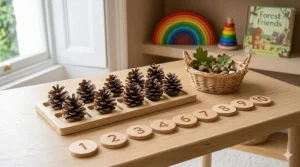
Autumn half-term: Use conkers, acorns, or fallen leaves alongside counting toys to make seasonal patterns and groupings. British natural materials combine beautifully with manufactured manipulatives.
Winter holiday period: December’s excitement makes structured learning challenging, but game-based counting toys like Counting Mountain or Number Bears feel festive rather than academic. Some families wrap educational games as Christmas presents, integrating learning into holiday traditions.
Spring and Summer: British gardens, small as they may be, offer extension opportunities. Take counting bears outside for “bear adventures” involving counting flowers, pebbles, or garden ornaments. Abacuses work surprisingly well on garden tables during those rare sunny British afternoons.
Understanding British Foundation Stage Numeracy Requirements
British five-year-olds transitioning from Reception to Year 1 face specific mathematical expectations defined by the Department for Education. Understanding these requirements helps parents select truly useful tactile number learning resources rather than toys that merely look educational.
Reception to Year 1 Transition
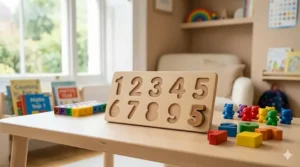
By the end of Reception, children should reliably count objects to 10, recognise numerals 0-20, and solve simple addition and subtraction problems. Year 1 escalates dramatically: children must count to 100, understand place value (tens and ones), learn number bonds to 20, and begin basic multiplication concepts (doubling, counting in 2s, 5s, and 10s).
This is where appropriate counting toys for 5 year olds become crucial. The gap between “count to 10 with support” and “count to 100 independently whilst understanding place value” is substantial. Quality manipulatives bridge this gap by providing the concrete experiences that make abstract concepts tangible.
Key Year 1 Mathematics Objectives Supported by Counting Toys
Number bonds to 20: Games like Orchard Toys’ Number Bears specifically target this. Children need automatic recall of combinations (7+3=10, 6+4=10, etc.). Manipulatives make these abstract facts concrete and memorable.
Place value: Abacuses excel here. Ten beads per row visually demonstrates our base-10 system. Children physically construct numbers like 47 (4 full rows + 7 ones), cementing understanding that worksheets alone cannot achieve.
Counting in multiples: Numberblocks sets support skip counting (count the Number 5s: 5, 10, 15, 20). Bears work brilliantly for creating groups of 2, 5, or 10, then counting the total.
Comparison (greater than/less than): Bears, blocks, or beads can be physically arranged for side-by-side comparison. “Which group has more?” becomes obvious when you can see the difference.
Assessment Without Anxiety
British schools conduct periodic assessments throughout Year 1, which can create stress for children (and parents). Regular manipulative play at home develops fluency that makes these assessments feel natural rather than intimidating. A child who’s built numbers with MathLink Cubes hundreds of times during play won’t panic when asked to “show me 15” during school assessment—they’ve done it countless times for fun.
The assessment-anxiety cycle that plagues many British children often starts in Year 1. Parents who integrate quality maths manipulatives into regular family time help their children develop mathematical confidence before anxiety has chance to establish itself.
Fraction Learning Games and Advanced Concepts
Whilst five-year-olds aren’t formally studying fractions in the British curriculum, introducing early fraction learning games through manipulatives prepares them beautifully for Year 2 and beyond. Quality counting toys naturally support these emerging concepts without requiring separate fraction-specific resources.
Using Standard Counting Toys for Fraction Introduction
Halving with bears: “We have 10 bears. Can we share them fairly between Two?” Children physically divide the group, experiencing halving concretely. This foundation makes formal fraction notation (½) meaningful when introduced later.
Quarters through colours: “Can we split our 20 bears into 4 equal colour groups?” Even without using the word “quarter,” children experience dividing a whole into four equal parts—the conceptual foundation for ¼.
Pattern blocks and fraction relationships: Whilst not strictly “counting toys,” many British parents combine counting manipulatives with basic geometric shapes. Six small triangles can create one large hexagon, introducing the concrete reality that 1/6 + 1/6 + 1/6 + 1/6 + 1/6 + 1/6 = 1 whole.
These early, play-based fraction experiences mean that when formal fraction teaching begins in Year 2 and Year 3, British children already possess intuitive understanding of sharing, equal parts, and relationships between fractions and wholes. They’re not starting from zero—they’re simply attaching formal vocabulary and notation to concepts they’ve experienced physically through manipulative play.
Frequently Asked Questions
❓ Are Numberblocks toys actually educational or just branded merchandise?
❓ How long will my child actually use counting toys before outgrowing them?
❓ Will counting toys help if my child is already struggling with Year 1 maths?
❓ Which counting toys work best in British classrooms versus home settings?
❓ Do wooden counting toys survive typical British damp conditions better than plastic?
Conclusion: Investing in Mathematical Confidence
Choosing the right counting toys for 5 year olds represents far more than purchasing another toy—you’re investing in your child’s mathematical foundation during the crucial foundation stage numeracy period. British five-year-olds entering Year 1 face significant mathematical expectations, and quality maths manipulatives for home learning make meeting these objectives feel achievable rather than overwhelming.
The seven products featured here—from traditional British-made abacuses to innovative Numberblocks sets—each offer genuine educational value beyond superficial “learning toy” marketing. They transform abstract mathematical concepts into concrete, hands-on experiences that align with how young children actually learn. Whether you choose the game-based engagement of Orchard Toys products, the versatile simplicity of counting bears, or the multi-year durability of premium abacuses, you’re providing your child with tools that develop genuine understanding rather than mere rote memorisation.
For British parents navigating the transition from Reception’s play-based learning to Year 1’s more formal mathematics instruction, these resources bridge that gap beautifully. They make maths feel less like work and more like discovery—precisely the attitude that produces confident, capable mathematicians throughout primary school and beyond.
Remember that the “best” counting toy isn’t necessarily the most expensive or the flashiest—it’s the one your child actually uses. A £10 set of bears used daily generates far more learning than a £35 premium product gathering dust on a shelf. Observe what engages your child, align with their current mathematical level, and choose resources that fit naturally into your family’s routines and Britain’s compact living spaces.
Recommended for You
- Best Numberblocks Toys for Learning Maths UK 2026: Top 7 Picks
- Best Maths Games for 7 Year Olds UK – Top 7 Reviews 2026
- 7 Best Construction Toys for 10 Year Olds UK 2026
Disclaimer: This article contains affiliate links. As an Amazon Associate, I earn from qualifying purchases. If you purchase products through these links, we may earn a small commission at no additional cost to you.
✨ Found this helpful? Share it with your mates! 💬🤗
